

NSW Hot Water System Rebates 2025: Complete Guide to Heat Pump & Energy-Efficient Upgrade Incentives
Key Savings at a Glance
- Up to $640 NSW Government discount when replacing electric systems
- Up to $330 when replacing gas systems
- $800-$1,600+ additional savings from federal STCs
- $2,000-$2,500+ total potential savings when combined
Are you tired of watching your energy bills climb every quarter? If you're a NSW homeowner still running an old electric or gas hot water system, you could be missing out on significant government savings. The NSW hot water rebate in 2025 offers substantial upfront discounts—up to $640 from the state government alone—when you upgrade to an energy-efficient heat pump system.
But here's what many homeowners don't realise: you can potentially stack multiple incentives together, combining NSW state rebates with federal Small-scale Technology Certificates (STCs) to save thousands on your installation. With electricity prices continuing to rise and the summer season putting extra demand on your hot water system, there's never been a better time to make the switch.
In this comprehensive guide, we'll walk you through everything you need to know about claiming these valuable incentives, including eligibility requirements, step-by-step application processes, and how to maximise your total savings. Whether you're replacing a failing system or proactively upgrading for efficiency, this guide will help you navigate the rebate landscape with confidence.
Understanding NSW Hot Water System Rebates in 2025
The NSW Government's hot water upgrade program is part of the broader Energy Savings Scheme (ESS), designed to help households reduce energy consumption and lower their carbon footprint. Unlike traditional rebates where you receive money back after purchase, this incentive works as an upfront discount applied directly to your installation quote.
This approach makes the upgrade more accessible because you don't need to pay the full amount and wait for reimbursement. The discount is arranged through your installer, who partners with an Accredited Certificate Provider (ACP) to process the incentive on your behalf.
How Much Can You Save?
The NSW Government hot water upgrade incentive provides:
- Up to $640 when replacing an old electric water heater with an air source heat pump water heater
- Up to $330 when replacing a gas water heater with an air source heat pump water heater
These amounts are indicative and your actual discount may vary depending on several factors including your chosen installer, location, the specific model you select, and the complexity of your installation. Some premium installers may offer larger discounts depending on their arrangement with Accredited Certificate Providers.
It's important to note that the discount from replacing electric systems is higher than gas because electric storage systems typically consume significantly more energy, meaning greater potential savings from the switch.
Federal Government STCs: Your Second Layer of Savings
Beyond the NSW state incentive, Australian homeowners can also benefit from the federal Small-scale Renewable Energy Scheme (SRES). This program provides Small-scale Technology Certificates (STCs) for eligible renewable energy installations, including heat pump hot water systems.
How STCs Work
When you install an eligible heat pump water heater, your system generates a certain number of STCs based on its energy efficiency and expected lifespan. These certificates have a market value—currently trading around $36-$40 per STC as of late 2025—and can be assigned to your installer in exchange for an upfront discount on your purchase.
The number of STCs your heat pump generates depends on:
- The system's energy efficiency rating
- Your postcode zone (affecting the deemed energy savings)
- The deeming period remaining until 2030 (when the scheme phases out)
A typical residential heat pump hot water system can generate anywhere from 20-40+ STCs, potentially adding $800-$1,600 or more to your total savings. This is in addition to the NSW state incentive, meaning your combined savings could exceed $2,000-$2,500 on a single installation.
Eligibility Requirements: Who Can Claim the Rebate?
To qualify for the NSW hot water system rebate, you must meet certain criteria. Understanding these requirements before you begin will save time and ensure a smooth application process.
NSW State Incentive Eligibility
- Property Location: Your property must be located within New South Wales
- Existing System: You must be replacing an existing electric or gas hot water system (not installing in a new build without a pre-existing system)
- System Type: The new system must be an air source heat pump water heater listed on the Clean Energy Regulator's register
- Licensed Installation: Installation must be performed by a licensed plumber and/or electrician
- Accredited Provider: Your installer must be partnered with an Accredited Certificate Provider (ACP)
- Minimum Warranty: The heat pump must come with a minimum 5-year warranty against defects
- Property Type: Available to both residential homeowners and small business owners
Federal STC Eligibility
- The heat pump must be on the Clean Energy Regulator's approved list
- Installation must be completed by a licensed tradesperson
- The system must meet Australian standards for hot water systems
- STCs must be created within 12 months of installation
- The system cannot have previously had STCs created for it
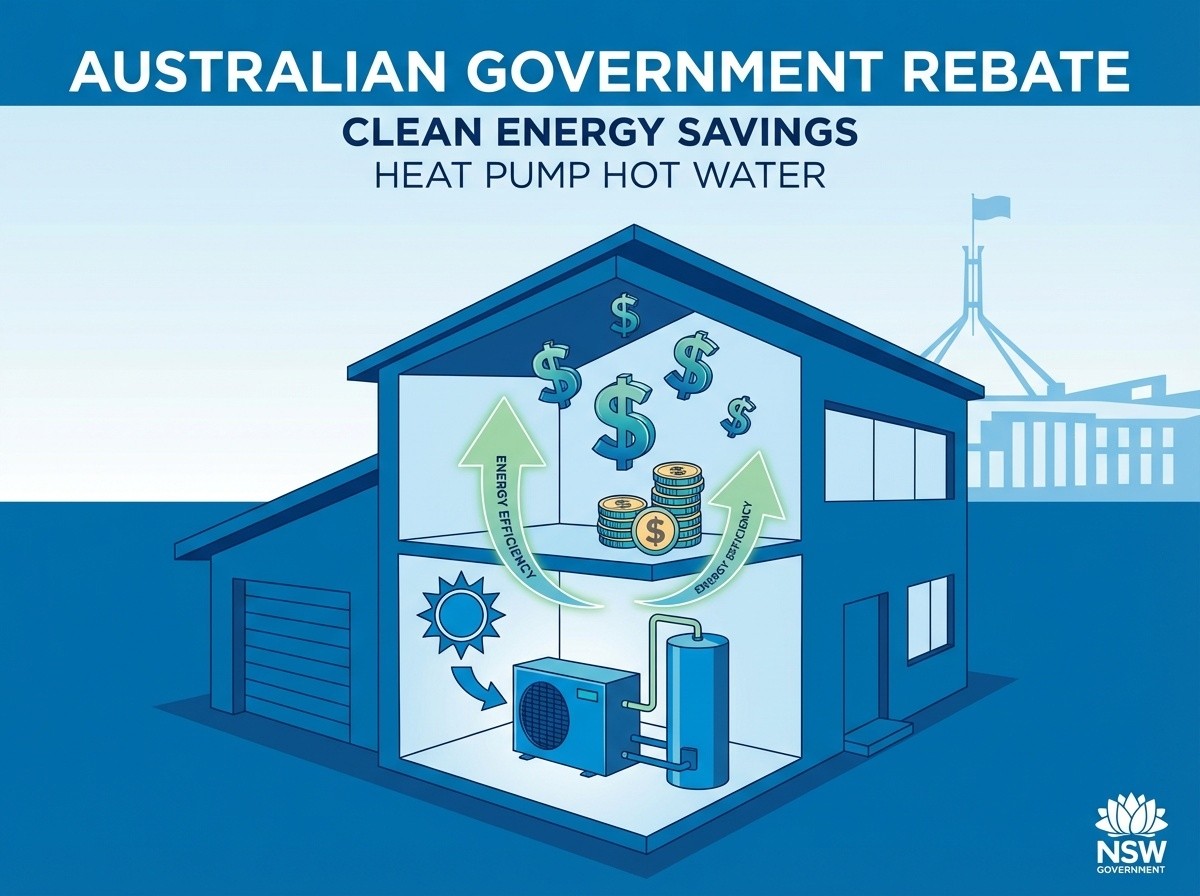
NSW Government rebates and federal STCs can be combined for maximum savings
Step-by-Step Guide: How to Claim Your Hot Water Rebate
Claiming your NSW hot water rebate is straightforward when you follow the correct process. Here's your complete roadmap to securing your incentive:
1Get Multiple Quotes from Participating Installers
The first and most important step is obtaining quotes from multiple installers who participate in the rebate program. Not all hot water installers are partnered with Accredited Certificate Providers, so you need to specifically ask whether they offer the NSW Government incentive.
When requesting quotes, ensure you:
- Ask explicitly if the installer offers the NSW Government hot water upgrade incentive
- Request that any applicable discounts be itemised separately on the quote
- Compare at least 3 different installers to find the best value
- Check that the installer holds a current plumbing license (verify on Service NSW website)
2Choose the Right Heat Pump System
Selecting the right heat pump is crucial for both maximising your rebate and ensuring long-term satisfaction. Consider these factors:
- Tank Size: Match the tank capacity to your household's needs. A 4-person household typically needs a 250-315L tank. Learn more in our tank size comparison guide.
- Energy Efficiency: More efficient models generate more STCs and save more on running costs. Look for systems with high star ratings and COP (Coefficient of Performance) ratings above 3.5.
- Noise Levels: Heat pumps operate with an outdoor compressor unit. Check the dB rating if the unit will be near bedrooms or neighbours.
- Warranty: Ensure the system comes with at least a 5-year warranty to qualify for the NSW incentive. Many premium brands offer 7-10 year warranties.
- Climate Suitability: Some heat pumps perform better in colder climates. If you're in Sydney's outer suburbs or regional NSW, discuss climate performance with your installer.
3Complete the Nomination Form
Once you've selected your installer and system, you'll need to complete a nomination form. This document authorises your installer to claim the incentive on your behalf.
⚠️ Important
You MUST sign the nomination form BEFORE installation begins. If work is completed before the paperwork is processed, you cannot claim the rebate retrospectively.
The nomination form typically requires:
- Your personal details and property address
- Details of your existing hot water system
- Confirmation of the new system being installed
- Your signature authorising the discount claim
4Installation Day
On installation day, the licensed plumber will:
- Remove your old hot water system safely
- Install the new heat pump unit in the approved location
- Connect all plumbing, electrical, and drainage requirements
- Commission the system and set optimal temperature (60°C recommended)
- Demonstrate how to operate and maintain your new system
- Arrange proper disposal or recycling of your old unit
Following installation, you'll be asked to sign a Post Implementation Declaration confirming the work was completed satisfactorily. The installer will also take photos as proof of installation. Learn more about what to expect during installation.
5Enjoy Your Savings
With your new heat pump installed, you'll immediately begin saving on your energy bills. Most households see reductions of $200-$800 per year compared to traditional electric storage systems.
To maximise your ongoing savings:
- Use the timer function to heat water during peak solar hours if you have solar panels
- Set your thermostat to 60°C for the optimal balance of efficiency and safety
- Keep the area around the outdoor unit clear for proper airflow
- Schedule annual maintenance to keep the system running efficiently
Best Heat Pump Brands Eligible for NSW Rebates
When choosing a heat pump for your NSW home, consider these leading brands that are eligible for government incentives. For a comprehensive comparison, check out our guide to the best hot water systems in Australia.
- Rheem: One of Australia's most trusted hot water brands, Rheem offers a range of heat pump models with excellent warranty coverage and local support networks across NSW.
- Reclaim Energy: Known for their Australian-designed CO2 heat pumps, Reclaim Energy systems are highly efficient and perform well in Australian climates.
- Stiebel Eltron: A German-engineered option offering premium quality and exceptional efficiency, particularly suited for households wanting top-tier performance.
- iStore: Popular for their competitive pricing and solid performance, iStore heat pumps are a common choice for budget-conscious NSW homeowners.
- Dux: An established Australian brand offering reliable heat pump systems with good availability through local plumbing suppliers.
When selecting a brand, always verify that the specific model you're considering is listed on the Clean Energy Regulator's register of eligible systems.
Real Savings Examples: What NSW Homeowners Are Saving
To illustrate the real-world impact of these rebates, let's look at some typical scenarios for Sydney-area homeowners:
Scenario 1: Replacing an Old Electric Storage System
The Johnson family in Parramatta had a 20-year-old 250L electric storage hot water system consuming approximately $650 per year in electricity.
Their upgrade costs:
- Heat pump system (installed): $4,200
- NSW Government discount: -$580
- Federal STCs (28 certificates × $38): -$1,064
- Net cost after incentives: $2,556
Annual running cost with heat pump: $130
Annual savings: $520
Payback period: 4.9 years
Over a 15-year system lifespan, the Johnsons will save approximately $7,800 in running costs while reducing their carbon footprint by 75%. Compare this with our analysis of electric off-peak vs heat pump savings.
Scenario 2: Switching from Gas to Heat Pump
The Chen family in Newcastle wanted to eliminate their gas connection entirely. They replaced their gas storage system with a premium heat pump.
Their upgrade costs:
- Heat pump system (installed): $4,800
- NSW Government discount: -$310
- Federal STCs (32 certificates × $38): -$1,216
- Gas disconnection savings (no more supply charge): $180/year
- Net cost after incentives: $3,274
The Chens now run their entire home on electricity and have installed solar panels to further reduce costs. Their combined energy savings exceed $800 annually. Read our heat pump vs gas total 10-year cost comparison for more details.
Frequently Asked Questions About NSW Hot Water Rebates
Here are answers to the most common questions NSW homeowners ask about hot water system rebates:
Can I claim both the NSW rebate and federal STCs?
Yes, absolutely. The NSW state incentive and federal Small-scale Technology Certificates (STCs) are separate programs. You can combine both to maximise your savings on a single heat pump installation.
Do I need to be a homeowner to claim the rebate?
Homeowners are the primary eligible group. However, renters should speak with their landlord, as the property owner would need to arrange and approve the installation. Small business owners can also access these incentives.
How long does the rebate program run?
The NSW Energy Savings Scheme is ongoing, though incentive amounts may change over time. The federal STC scheme is scheduled to phase out by 2030, with the number of certificates reducing each year. Acting sooner means accessing higher STC values.
Can I install the heat pump myself to save money?
No. To qualify for any government incentives, the installation must be completed by a licensed plumber and/or electrician. DIY installations are not eligible and may also void manufacturer warranties.
What if my current hot water system still works?
You don't need to wait until your system fails. Many homeowners proactively upgrade working systems to start saving on energy bills immediately. This also avoids emergency replacement situations where you have less time to compare options.
Is there a means test or income limit for the rebate?
No, the standard NSW hot water upgrade incentive is not means-tested. It's available to all eligible NSW homeowners regardless of income level.
How noisy are heat pump hot water systems?
Modern heat pumps typically operate between 40-55 decibels—similar to a quiet conversation or refrigerator. Many models also have 'quiet mode' settings for nighttime operation.
Do heat pumps work in winter?
Yes. Heat pumps extract warmth from ambient air and can operate efficiently even in temperatures as low as -7°C to -10°C. Sydney and NSW coastal areas rarely experience temperatures that would impact heat pump performance.
Take Action: Claim Your NSW Hot Water Rebate Today
The NSW hot water system rebates available in 2025 represent a significant opportunity for homeowners to upgrade to energy-efficient technology at substantially reduced costs. By combining state and federal incentives, you could save $2,000 or more on your heat pump installation—all while slashing your ongoing energy bills by hundreds of dollars annually.
With electricity prices showing no signs of decreasing and the federal STC scheme gradually phasing out, the window for maximum savings is now. Every year you delay means fewer STCs and potentially missed savings opportunities.
Here's what to do next:
- Request free quotes from licensed installers who participate in the NSW rebate program
- Compare your options for both price and system quality
- Ensure your chosen installer handles all rebate paperwork
- Enjoy immediate energy bill savings from day one
At Infinity Hot Water, we're proud to help Sydney, Newcastle, and Central Coast homeowners navigate the rebate process seamlessly. Our licensed plumbers are partnered with Accredited Certificate Providers, meaning we can apply your full NSW Government discount and federal STCs directly to your quote—no chasing paperwork or waiting for reimbursements. Serving Sydney since 2014.
Ready to Start Saving?
Get a free, no-obligation quote and let us help you maximise your rebate savings. Our licensed plumbers handle all the paperwork for you.
Related Articles
Heat Pump vs Gas: Total 10-Year Cost in Sydney
Complete cost breakdown including purchase, installation, running costs & rebates for Sydney homeowners.
Electric Off-Peak vs Heat Pump: Bill Savings Explained
Real examples of electricity bill savings and which system saves more money in 2025.
50L vs 80L vs 125L vs 250L Tanks: Size Guide
Expert guide to choosing the right hot water tank size for your home.
Solar + Heat Pump Hybrid: Is It Worth It?
Cost-benefit analysis of combining solar and heat pump for maximum efficiency.