
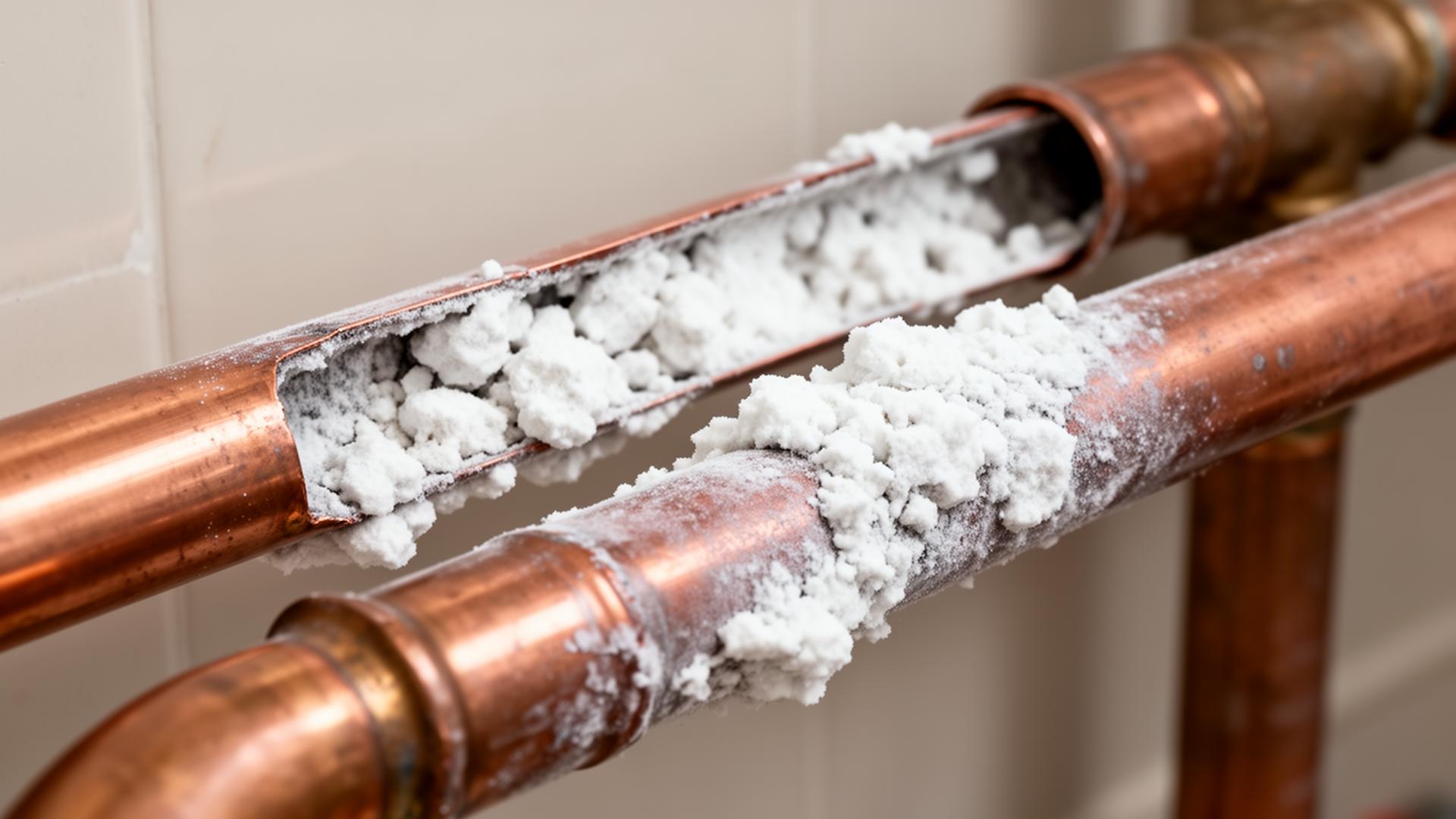
If you've noticed white crusty deposits on your taps, reduced hot water flow, or skyrocketing energy bills, you're likely dealing with hard water damage to your hot water system. On the Central Coast, hard water affects many households—particularly in areas supplied by bore water or older infrastructure—causing premature system failure, inefficiency, and costly repairs.
Hard water contains high concentrations of dissolved minerals, primarily calcium and magnesium. When heated in your hot water system, these minerals crystallize and form scale deposits that accumulate inside tanks, pipes, and heating elements. Over time, this buildup reduces system efficiency by up to 30%, shortens lifespan by 3-5 years, and can lead to complete system failure.
This comprehensive guide reveals everything Australian homeowners need to know about hard water and hot water systems: how to identify damage, prevent scale buildup, protect your investment, and choose the right solutions for your home. Whether you're in a hard water region or simply want to maximize your system's performance, this article will save you thousands in preventable repairs and replacements.
What Is Hard Water and How Does It Form?
Hard water is water that contains elevated levels of dissolved minerals, specifically calcium and magnesium carbonates. These minerals enter water supplies as rainwater percolates through limestone, chalk, and other mineral-rich geological formations. The more minerals present, the "harder" the water becomes.
In Australia, water hardness is measured in parts per million (ppm) or milligrams per litre (mg/L). You can check your local water quality through resources like Water Victoria's quality reports:
Water Hardness Classification
Water hardness varies across the Central Coast. Areas supplied by Mangrove Creek Dam typically enjoy softer water (30-60 mg/L), while properties using bore water or in older suburbs may experience moderately hard to hard water (60-120+ mg/L). Rural properties with private bores often have the hardest water, sometimes exceeding 200 mg/L.
The problem intensifies when hard water meets heat. As water temperature rises in your hot water system, calcium and magnesium carbonates become less soluble and precipitate out as solid scale deposits—a process called thermal decomposition. This is why hot water systems suffer more severe damage than cold water pipes.
How Hard Water Damages Hot Water Systems
Scale Buildup and Sediment Accumulation
Scale deposits are the primary culprit behind hard water damage. These white, chalky mineral formations accumulate on every surface that contacts heated water—inside storage tanks, on heating elements, within heat exchangers, and throughout connecting pipes.
In storage tank systems, scale forms a thick insulating layer on tank walls and heating elements. This mineral barrier prevents efficient heat transfer, forcing your system to work harder and consume more energy. A 6mm layer of scale can reduce energy efficiency by up to 30%, adding hundreds of dollars to annual energy bills.
Electric hot water systems suffer particularly severe damage. Scale encrusts heating elements, creating hot spots that accelerate element burnout. What should be a 5-8 year element lifespan can shrink to just 2-3 years in very hard water areas.
Gas continuous flow systems face different but equally serious challenges. Scale accumulates inside the narrow pipes of the heat exchanger, restricting water flow and reducing heating capacity. This triggers error codes, system shutdowns, and eventually requires expensive heat exchanger replacement ($800-$2,500). Learn more in our guide to instantaneous vs storage tank systems.
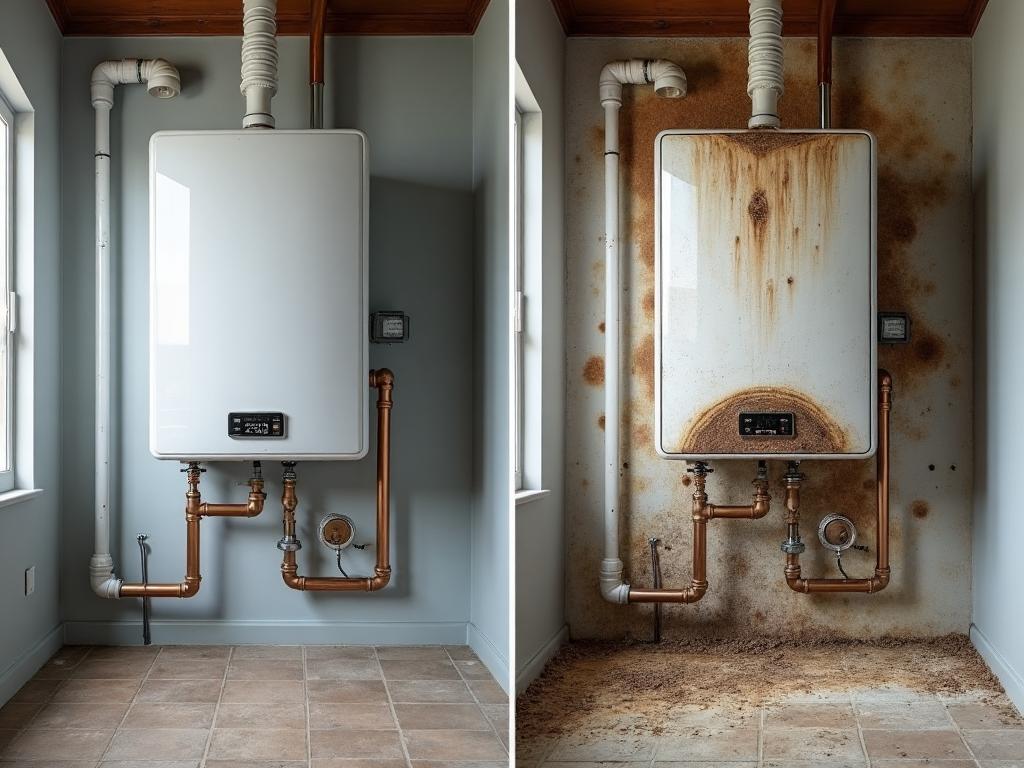
Reduced System Efficiency and Performance
Reduced Hot Water Volume
Scale displaces usable water capacity. A 250L tank can lose 20-40L due to scale accumulation.
Inconsistent Temperature
Scale deposits create uneven heating, resulting in water that fluctuates between scalding and lukewarm.
Longer Heating Times
The insulating effect of scale means water takes longer to reach temperature, increasing energy consumption.
Strange Noises
Popping, rumbling, or banging sounds indicate scale causing water to boil beneath mineral layers.
Shortened System Lifespan
Australian hot water systems typically last 8-15 years depending on type and maintenance. Hard water can reduce this lifespan by 30-40%, resulting in premature replacement costs of $1,200-$4,500. For more on system longevity, see our guide on how long hot water systems last.
The damage mechanisms are cumulative:
- Corrosion acceleration: Scale deposits create localized corrosion beneath mineral layers, leading to pinhole leaks and tank failure.
- Anode rod depletion: In storage tanks, the sacrificial anode rod protects against corrosion. Hard water accelerates anode depletion.
- Component stress: Restricted flow and overworked heating elements place constant stress on system components.
- Valve and seal damage: Mineral deposits interfere with pressure relief valves, thermostats, and seals.
Hard Water Across the Central Coast: Regional Impact
Gosford, Erina & Terrigal
The Gosford area generally enjoys moderate water quality (40-70 mg/L) sourced primarily from Mangrove Creek Dam. Check Central Coast Council's water quality data for your area.
- Tank flushing every 12 months is usually sufficient
- Standard maintenance schedules apply
- Hot water systems typically achieve full lifespan
Wyong, Tuggerah & The Entrance
The Wyong area can experience slightly harder water (50-90 mg/L), particularly in older suburbs with aging infrastructure. Properties closer to Tuggerah Lake may have different water characteristics.
- Tank flushing every 6-12 months recommended
- Annual element inspection advisable
- Consider anode rod checks every 3-4 years
Rural Properties & Bore Water Areas
Properties in rural Central Coast areas using bore water or private water supplies often experience the hardest water (100-250+ mg/L). This includes areas around Dooralong, Yarramalong, and parts of Kulnura.
- Tank flushing every 6 months essential
- Element inspection every 6-12 months
- Anode rod replacement every 2-3 years
- Strongly consider water softening for system longevity
Comparison: Sydney & Newcastle
For reference, Sydney and Newcastle enjoy some of Australia's softest water (11-50 mg/L) sourced from protected catchments. Visit Sydney Water's hardness information for comparison.
If you've moved from Sydney to the Central Coast, you may notice increased scaling on taps and appliances—especially if your new property uses bore water.
7 Warning Signs Your Hot Water System Has Hard Water Damage
Early detection prevents catastrophic failure. Watch for these indicators. For a complete troubleshooting guide, see our signs your hot water system needs repair.
White crusty deposits on taps, showerheads, and fixtures
Visible mineral accumulation indicating hard water throughout your system
Reduced hot water volume
Running out of hot water faster than usual suggests scale is displacing tank capacity
Fluctuating water temperature
Inconsistent heating indicates scale is interfering with heat distribution
Increased energy bills
Up to 30% higher costs due to reduced heating efficiency from scale insulation
Strange popping or rumbling noises
Water boiling beneath scale layers—a serious warning sign
Decreased water pressure
Mineral deposits narrowing pipes and restricting flow
Discolored or rusty water
Indicates advanced corrosion beneath scale deposits—system failure imminent
If you're experiencing three or more of these symptoms, professional inspection is urgent. A licensed plumber can assess internal damage, test water hardness, and recommend solutions before complete system failure occurs.
How to Prevent Hard Water Damage to Your Hot Water System
Prevention is far more cost-effective than repair or replacement. These strategies protect your investment. For seasonal advice, check our summer hot water maintenance tips.
Regular Tank Flushing and Descaling
Flushing removes sediment before it hardens into scale:
- Bore water / rural areas: Flush every 6 months
- Wyong, Tuggerah areas: Flush every 6-12 months
- Gosford, Erina, Terrigal: Flush every 12 months
DIY Flushing Process
- 1Turn off power/gas supply
- 2Turn off cold water inlet valve
- 3Connect hose to drain valve
- 4Open pressure relief valve
- 5Drain 20-30 liters of water
- 6Check for sediment in discharged water
- 7Repeat until water runs clear
Cost: DIY flushing is free; professional descaling ranges $150-$350.
Water Softener Installation
Water softeners remove calcium and magnesium before they reach your hot water system. This is the most effective long-term solution for very hard water areas.
Ion-Exchange Softeners
Most common and effective. Replace calcium/magnesium ions with sodium ions.
$1,200-$2,500 installed
Electronic/Magnetic Descalers
Controversial effectiveness. Claim to alter mineral structure without removing minerals.
$300-$800
Reverse Osmosis
Ultra-pure water but expensive. Usually only for drinking water.
Higher cost
Temperature Optimization
Adjusting your hot water temperature can reduce scale formation. According to Australian plumbing regulations, storage tanks require 60°C to prevent Legionella bacteria. However, scale forms most rapidly at temperatures above 60°C.
Setting your system to exactly 60°C (rather than 65-70°C) minimizes scale while maintaining safety compliance. Lower temperatures reduce scale formation by approximately 15-20%.
Choosing Hard Water-Resistant Systems
If you're replacing your hot water system and live in a hard water area, specific system types perform better. For comprehensive comparisons, see our guides on heat pump vs gas systems and best hot water systems in Australia.
- Heat pump systems: Stainless steel or enamel-lined tanks with corrosion-resistant components
- Gas continuous flow: Smaller contact surface area, easier to descale
- Quality storage tanks: Premium enamel lining and powered anodes
Solutions for Existing Hard Water Damage
Professional Descaling Service
For moderate to severe scale buildup, professional descaling is the most effective solution:
What Professional Descaling Includes
Cost: $250-$500 depending on system type and damage severity
In very hard water areas, professional descaling every 2-3 years maintains system health. This is significantly cheaper than premature replacement.
Component Replacement
Heating Elements
$200-$400
Including labor. Replace if elements show pitting or scale that won't dissolve.
Anode Rods
$150-$300
Consider powered (electronic) anodes ($400-$600) that never need replacement.
Thermostat
$180-$350
Scale interference can cause thermostat failure.
System Replacement Considerations
Sometimes the damage is too severe for cost-effective repair. When replacing, invest in a system designed for hard water conditions. For guidance, see gas vs electric hot water systems.
New System Costs
The $300-$800 premium for hard water-resistant features pays for itself through extended lifespan and lower maintenance costs.
The True Cost of Hard Water: Financial Impact Analysis
Hard water doesn't just damage systems—it costs money in multiple ways. Check Energy Rating's hot water efficiency data for more on energy consumption.
Energy Cost Increases
Scale Buildup Impact on Energy Bills
Over a 10-year system lifespan, that's $1,500-$3,500 in preventable energy waste—enough to pay for multiple professional descaling services or a partial water softener installation.
Prevention vs. Damage: Cost Comparison
Prevention Costs (10 years)
- Water softener installation$1,200-$2,500
- Annual salt costs (×10)$500-$1,000
- Professional descaling (×3-4)$750-$2,000
Damage Costs (10 years)
- Extra energy costs$1,500-$3,500
- Emergency repairs$300-$2,400
- Premature replacement$1,200-$5,500
The financial case for prevention is clear—especially in very hard water areas. Prevention saves $3,000-$6,000+ over a system's lifetime.
Frequently Asked Questions: Hard Water & Hot Water Systems
How do I know if I have hard water on the Central Coast?
Check with Central Coast Council's water quality reports or purchase a water hardness test kit ($15-$30) from hardware stores. Visual signs include white crusty deposits on taps, reduced soap lathering, and spotty dishes after washing. If you're on bore water or in rural areas of the Central Coast, you may have moderately hard to hard water.
Can I descale my hot water system myself?
Basic tank flushing is a safe DIY task for most homeowners. However, complete descaling with chemical solutions should be left to licensed plumbers due to safety concerns, warranty requirements, and the need to disassemble components. DIY descaling risks include burns from hot water, incorrect chemical handling, and voiding manufacturer warranties.
How often should I descale my hot water system in hard water areas?
Professional descaling frequency depends on water hardness: Very hard water (180+ mg/L): Every 12-24 months; Hard water (120-180 mg/L): Every 24-36 months; Moderate hardness (60-120 mg/L): Every 36-48 months. Annual tank flushing extends time between professional services.
Will a water softener damage my hot water system?
No, quality water softeners protect hot water systems by removing damaging minerals. Ensure proper installation with bypass valves for maintenance and that sodium levels in softened water remain safe for drinking (under 200mg/L). Some people prefer a dedicated drinking water tap with unsoftened water for taste preferences.
What hot water system is best for very hard water areas?
Heat pump systems with stainless steel or quality enamel-lined tanks perform best in very hard water. They combine energy efficiency with durability. Gas continuous flow systems are second-best, as they minimize surface area for scale accumulation. Avoid basic electric storage tanks unless paired with a water softener.
Does hard water affect tankless/continuous flow hot water systems?
Yes, though differently than storage systems. Hard water causes scale buildup inside the narrow heat exchanger pipes, reducing flow rate and heating capacity. Annual descaling (flushing with vinegar solution) is essential for continuous flow systems in hard water areas. The advantage is that descaling is easier and cheaper ($150-$250 vs $300-$500).
Can hard water damage cause my hot water system to explode?
Extremely unlikely but not impossible. Severe scale buildup can interfere with pressure relief valves and thermostats, potentially causing dangerous pressure buildup. This is why regular maintenance is critical. Warning signs include hissing sounds, excessive steam, and pressure relief valve discharge. If you observe these, shut off the system immediately and call a licensed plumber.
How much does it cost to install a whole-house water softener?
Installation costs range from $1,200-$2,500 for quality ion-exchange softeners, plus $50-$100 annually for salt. Higher-end systems with smart controls and low-salt technology cost $2,500-$4,000. This investment is worthwhile in very hard water areas, protecting not just your hot water system but also appliances, plumbing, and reducing soap/detergent costs.
Conclusion: Protect Your Hot Water Investment
Hard water is one of the most overlooked household problems on the Central Coast, silently damaging hot water systems and costing homeowners thousands in preventable repairs, energy waste, and premature replacements. Whether you're in a bore water area or simply in an older suburb with harder water, proactive management is essential.
The evidence is clear: regular maintenance, strategic upgrades, and water treatment solutions deliver substantial returns on investment. A $250 annual descaling service can prevent $4,000+ in premature system replacement. A $2,000 water softener installation pays for itself within 3-5 years through extended equipment life and energy savings.
Don't wait for system failure. Test your water hardness, schedule a professional inspection, and implement prevention strategies today. Your hot water system—and your wallet—will thank you.
Need Expert Advice on Hard Water Protection?
Infinity Hot Water's licensed technicians service all major Australian cities with specialized solutions for hard water challenges. Contact us today for a free water quality assessment and customized protection plan.