
Summer Hot Water System Maintenance: 7 Essential Tips to Prevent Costly Breakdowns in the Australian Heat
Why Summer Maintenance Matters
- 35% increase in hot water system failures during NSW summer months
- Prevent 80% of common summer hot water failures with proper maintenance
- Extend lifespan by 3-5 years with regular summer care
- Reduce energy consumption by up to 25%
As temperatures soar across Sydney, Newcastle, and the Central Coast this summer, your hot water system faces unique challenges that many homeowners overlook. While most Australians worry about their air conditioning during the scorching months, your water heater is silently working harder than ever—and without proper summer hot water system maintenance, you could be facing an unexpected cold shower or an expensive emergency repair bill.
The Australian summer puts exceptional stress on hot water systems. High ambient temperatures can cause overheating issues, increased sediment buildup accelerates during warmer months, and the thermal expansion from extreme heat tests every component of your system. According to industry data, hot water system failures increase by up to 35% during the summer months in NSW, with emergency callouts peaking between December and February.
Whether you have an electric storage tank, gas instantaneous system, heat pump, or solar hot water unit, this comprehensive maintenance guide will help you identify potential problems before they become costly disasters. At Infinity Hot Water, we've serviced over 5,000 systems across greater Sydney, and we're sharing the exact summer maintenance checklist our licensed technicians use to keep systems running efficiently all season long.
Why Summer Is Actually the Hardest Season for Your Hot Water System
Many homeowners assume winter is the toughest time for hot water systems, but Australian summers present a unique set of challenges that can significantly impact your unit's performance and longevity.
During summer, the incoming water supply is warmer—typically 20-25°C compared to 12-15°C in winter. While this might seem like it would reduce workload, it actually creates problems. Your system's thermostat must work harder to prevent overheating, and the temperature differential causes increased thermal expansion and contraction cycles that stress tank components.
Additionally, higher humidity levels during the Australian summer accelerate corrosion inside storage tanks. The combination of heat and moisture creates ideal conditions for sediment accumulation, which can reduce heating efficiency by up to 25% and shorten your system's lifespan by several years.
For outdoor units—common in Sydney backyards—direct sun exposure can push external temperatures above 50°C, causing pressure relief valves to activate frequently and potentially leading to water wastage and component wear.
Tip 1: Check and Test Your Temperature Pressure Relief (TPR) Valve
The TPR valve is your hot water system's most critical safety device, and summer heat makes it work overtime. This valve releases pressure when temperatures or pressure levels become dangerous, preventing potential tank explosions.
To test your TPR valve:
- Locate the valve on the side or top of your tank (it has a small lever and discharge pipe)
- Place a bucket under the discharge pipe
- Lift the lever briefly—you should hear water release and see it flow
- Release the lever—the flow should stop immediately
Important: If no water flows, or if the valve continues to leak after testing, call a licensed plumber immediately. A faulty TPR valve during summer's extreme temperatures is a serious safety hazard. Australian Standards AS/NZS 3500 require TPR valves to be tested annually, but we recommend checking them quarterly during summer months.
Tip 2: Flush Sediment from Your Storage Tank
Sediment buildup is accelerated during summer due to increased mineral precipitation at higher temperatures. In hard water areas across the Central Coast, this problem is significantly worse. This sediment settles at the bottom of your tank, creating an insulating layer between the heating element and the water—forcing your system to work harder and use more energy.
For DIY tank flushing:
- Turn off the power supply (electricity or gas) to your hot water system
- Connect a garden hose to the drain valve at the tank's base
- Run the hose to a suitable drainage area (not onto plants—the water may be very hot)
- Open the drain valve and allow water to flow until it runs clear
- Close the valve, remove the hose, and restore power
Professional tip: If the water contains significant rust-coloured sediment or doesn't clear after several minutes, your anode rod may be depleted and your tank could be corroding internally. This requires professional assessment.
Tip 3: Inspect Your Anode Rod (The Unsung Hero)
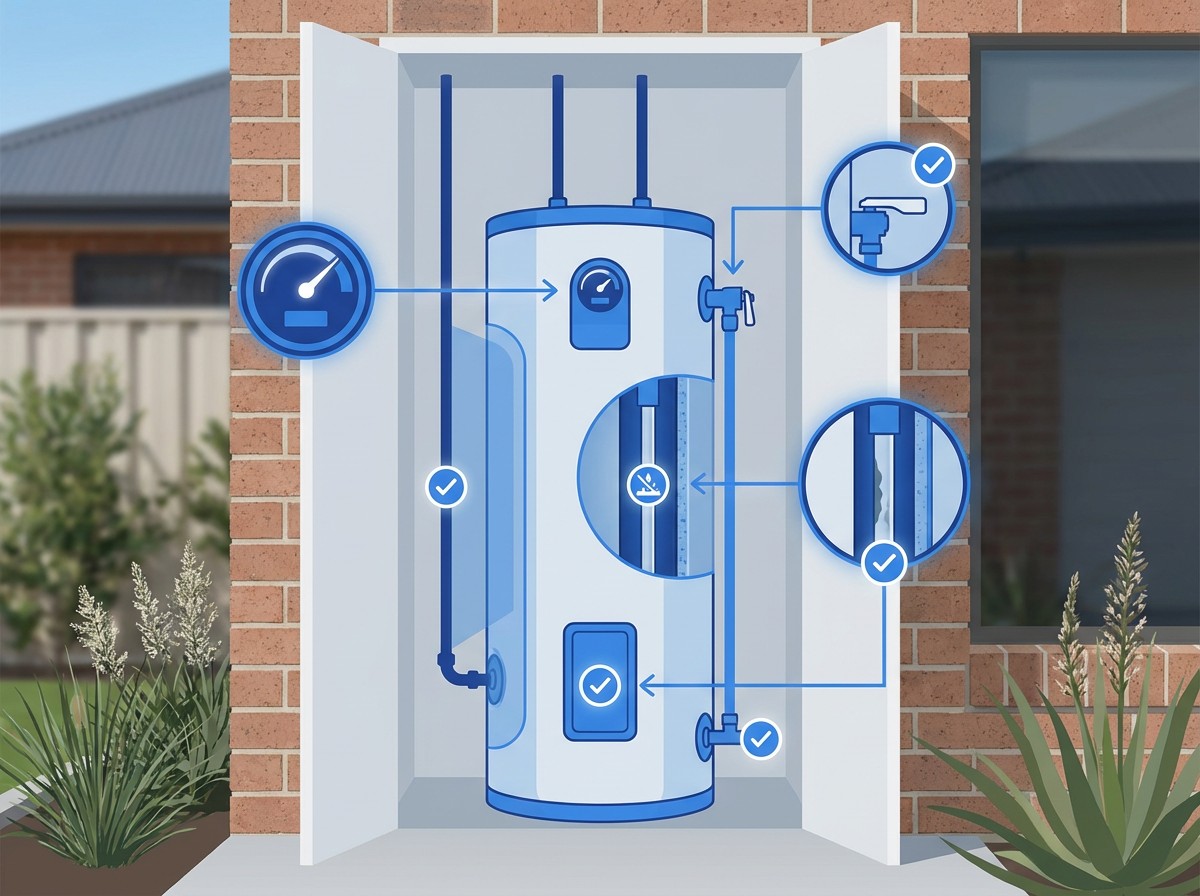
The sacrificial anode rod is designed to corrode instead of your tank's interior—it's literally sacrificing itself to extend your system's life. In summer's harsh conditions, anode depletion accelerates significantly.
Signs your anode rod needs replacement:
- Your hot water has a sulphur or "rotten egg" smell
- You notice rust-coloured water when running hot taps
- Your system is over 3-5 years old and has never had the anode checked
- You hear rumbling or popping sounds from the tank
Anode inspection requires partially draining the tank and removing the rod from the top of the unit. While some homeowners can perform this task, we recommend professional inspection as it provides an opportunity to assess overall tank condition.
At Infinity Hot Water, we include anode rod inspection in all our summer maintenance services—it's one of the most cost-effective ways to extend your system's lifespan by 3-5 years.
Tip 4: Adjust Your Thermostat Settings for Summer Efficiency
Australian regulations require storage hot water systems to maintain water at 60°C minimum to prevent Legionella bacteria growth. However, the delivery temperature to taps must not exceed 50°C—this is managed by tempering valves.
During summer, you may be able to optimise efficiency without compromising safety:
For electric off-peak systems:
- Consider whether your timer settings align with your summer usage patterns
- Off-peak heating overnight may be sufficient for smaller households in summer
- Ensure boost function is only used when genuinely needed
For gas systems:
- Check that your thermostat hasn't been accidentally adjusted
- Verify pilot light is burning with a clean blue flame (yellow indicates servicing needed)
- Ensure adequate ventilation around outdoor units
For heat pumps:
- Summer is when your heat pump operates most efficiently—it extracts heat from ambient air
- Running costs can be 50-70% lower in summer compared to winter
- This is the ideal time to run heat pump systems during daytime hours
Important: Never reduce storage temperature below 60°C, even in summer. The energy savings aren't worth the health risks of bacterial growth.
Tip 5: Protect Outdoor Units from Direct Sun Exposure
Many Sydney homes have outdoor hot water systems exposed to the harsh Australian sun. While these units are designed for outdoor installation, excessive heat exposure can cause several issues:
- Premature degradation of plastic components and seals
- Overheating and frequent TPR valve activation
- Accelerated fading and corrosion of external casing
- Reduced efficiency as the system struggles to regulate temperature
Protective measures for outdoor units:
- Install a shade structure or positioning system to block afternoon sun
- Ensure minimum 300mm clearance around units for ventilation
- Check that the area is clear of debris, leaves, and vegetation
- Consider installing a reflective heat shield behind the unit
For heat pump systems specifically, ensure the fan unit has adequate airflow—the system needs to draw ambient air to function efficiently. Don't fully enclose heat pumps, as this defeats their operating principle.
Tip 6: Inspect All Connections, Valves, and Pipes
Summer's temperature extremes cause significant expansion and contraction in pipes and fittings. What might be a minor drip in winter can become a serious leak when summer heat causes joints to expand.
Visual inspection points:
- Check all visible pipe connections for moisture or mineral deposits (white crusty buildup indicates hard water scale)
- Inspect isolation valves for signs of corrosion or seepage
- Look for water stains on nearby walls or flooring
- Check the concrete pad or surface beneath outdoor units for wet spots
Common leak locations:
- Connection points between pipes and tank
- TPR valve discharge pipe
- Drain valve at tank base
- Tempering valve outlet
- Expansion control valve (if fitted)
If you discover any leaks—even small ones—address them immediately. Summer heat will only accelerate the problem, and a minor drip can become a flood within days. Emergency hot water repairs during peak summer can have wait times of several hours, so preventive action is always preferable.
Tip 7: Schedule Professional Pre-Summer Servicing
While DIY maintenance covers the basics, professional servicing provides comprehensive protection that homeowners simply cannot replicate. Licensed hot water technicians have specialised equipment to test components, measure efficiency, and identify problems before they cause system failure.
A professional summer service typically includes:
- Complete TPR valve testing and replacement if required
- Anode rod inspection and assessment
- Full sediment flush using professional equipment
- Thermostat calibration and efficiency testing
- Electrical connection inspection (for electric systems)
- Gas pressure and combustion testing (for gas systems)
- Heat exchanger inspection (for instantaneous systems)
- Comprehensive safety check against Australian Standards
The ideal time to schedule your summer service is late November or early December—before the peak holiday period when technicians are in highest demand and temperatures are at their most extreme.
At Infinity Hot Water, our summer maintenance packages start from $149 and include a 12-month workmanship guarantee. We service all major brands including Rheem, Rinnai, Bosch, Dux, and Thermann across Sydney, Newcastle, and the Central Coast.
Summer Maintenance Tips by System Type
Electric Storage Hot Water Systems
Electric storage systems are the most common in Australian homes, and summer maintenance is straightforward but essential:
- Ensure your off-peak timer is functioning correctly—summer's longer days mean off-peak periods may shift
- Check the heating element indicator light operates normally
- Test both upper and lower elements if your system has dual heating
- Inspect the sacrificial anode (electric systems rely heavily on these)
- Consider upgrading to a heat pump to take advantage of summer's ambient heat
Electric systems should be professionally serviced every 5 years at minimum, with annual owner inspections recommended. Learn more in our electric vs heat pump comparison.
Gas Hot Water Systems (Storage and Instantaneous)
Gas systems require specific summer attention due to their combustion components:
For gas storage systems:
- Check pilot light burns steadily with a blue flame
- Ensure adequate ventilation around the burner area
- Inspect flue for blockages (birds and insects are active in summer)
- Test thermostat response time
For instantaneous (continuous flow) systems:
- Clean or replace inlet filter screens
- Check for error codes on the digital display
- Ensure adequate water pressure for activation
- Inspect condensate drain (for condensing models)
Gas systems must be serviced by licensed gas fitters—this is a legal requirement in NSW. Annual servicing is recommended for safety and efficiency. If your pilot light keeps going out, check our troubleshooting guide.
Heat Pump Hot Water Systems
Summer is when heat pump systems truly shine—they're designed to extract heat from ambient air, making warm summer conditions ideal for efficient operation:
- Clean the evaporator coils and fan to maintain airflow
- Check refrigerant levels (requires licensed technician)
- Ensure adequate clearance around the unit
- Take advantage of daytime running during summer (when COP is highest)
- Monitor energy consumption—any unexpected increases indicate potential issues
Heat pump owners in NSW may still be eligible for government rebates if upgrading from an older system—check current NSW Energy Savings Scheme incentives.
Solar Hot Water Systems
Solar systems require summer-specific attention to handle the increased heat collection:
- Check collector panels for damage, debris, or shading
- Inspect glycol levels in closed-loop systems (summer heat can accelerate degradation)
- Test the booster element function
- Clean panels to maximise collection efficiency
- Check the solar controller display for error messages
- Ensure the circulation pump operates when collectors are hot
Solar hot water systems can overheat in summer if not properly maintained. If your system's temperature gauge shows readings above 80°C at the tank, contact a professional immediately.
Warning Signs Your Hot Water System Needs Immediate Summer Attention
Don't ignore these symptoms—in summer conditions, they can escalate rapidly:
Critical warning signs (call immediately):
- No hot water at all
- Water leaking from the tank or connections
- Burning smell from the system
- Unusual sounds (banging, rumbling, whistling)
- TPR valve discharging frequently
- Visible rust or corrosion on the tank
Concerning signs (schedule service soon):
- Water not as hot as usual
- Hot water runs out faster than normal
- Discoloured or smelly hot water
- Fluctuating water temperatures
- Higher than expected energy bills
- Pilot light won't stay lit (gas systems)
If you notice any critical warning signs, turn off the power supply to your system and contact a licensed plumber immediately. Infinity Hot Water offers 24/7 emergency service with a 90-minute response guarantee across Sydney, Newcastle, and the Central Coast. For more guidance, see our guide on signs your hot water system needs repair.
Frequently Asked Questions: Summer Hot Water Maintenance
How often should I service my hot water system in summer?
We recommend at least one professional service before summer begins (November-December) and monthly owner inspections during the peak heat months. Storage tanks should have sediment flushed every 6-12 months.
Can extreme heat damage my hot water system?
Yes. Sustained temperatures above 40°C can cause overheating, accelerated component wear, and increased pressure that activates safety valves. Outdoor units are particularly vulnerable without adequate shade protection.
Should I turn off my hot water system when going on holiday?
For electric storage systems, you can turn off power during extended absences. For gas systems, turning to 'pilot' mode reduces energy use. Heat pumps can be turned off completely. Always run hot water for several minutes upon return to flush stagnant water.
Why does my hot water smell bad in summer?
Summer heat accelerates bacterial growth and anode rod degradation, both of which can cause odours. A sulphur smell typically indicates anode issues, while a musty smell suggests bacterial growth. Both require professional attention.
Is it worth upgrading my hot water system before summer?
If your system is over 10 years old, showing signs of wear, or inefficient, summer is actually an excellent time to upgrade. Heat pump systems perform best in warm weather, and you may qualify for NSW government rebates of up to $640.
Protect Your Hot Water System This Summer
Summer hot water system maintenance isn't optional—it's essential protection for one of your home's most critical appliances. The Australian summer creates unique challenges that can significantly shorten system lifespan and lead to unexpected failures at the worst possible times.
By following this comprehensive maintenance guide, you can:
- Prevent up to 80% of common summer hot water failures
- Extend your system's lifespan by 3-5 years
- Reduce energy consumption by up to 25%
- Avoid emergency repair costs during peak periods
- Ensure safe, reliable hot water for your family
Remember, while DIY maintenance covers the basics, professional servicing provides the comprehensive care your system needs to perform reliably through the demanding summer months.
At Infinity Hot Water, we're committed to keeping Sydney, Newcastle, and Central Coast homes supplied with reliable hot water year-round. Our licensed technicians are available 24/7 for emergency repairs, and our summer maintenance packages are designed to give you complete peace of mind during the hottest months.
Ready to Schedule Your Summer Maintenance?
Don't wait for a breakdown. Contact Infinity Hot Water to schedule your summer hot water maintenance service today.
Related Articles
Signs Your Hot Water System Needs Repair
Learn to identify warning signs before they become costly disasters.
NSW Hot Water Rebates 2025
Save up to $3,000+ on heat pump upgrades with government incentives.
Electric Off-Peak vs Heat Pump
Compare running costs and find out which saves more money.
Heat Pump vs Gas: 10-Year Cost Comparison
Complete cost breakdown for Sydney homeowners.