
Hot Water System Rebates & Incentives NSW 2026: Complete Guide to Save Thousands
Discover how to save $1,000–$2,500 on your hot water upgrade with NSW government rebates. Eligibility, step-by-step claims, and EOFY strategies explained.

Upgrading your hot water system in NSW has never been more affordable. With government rebates and incentives available through the NSW Energy Savings Scheme (ESS) and federal Small-scale Technology Certificates (STCs), homeowners can save between $1,000 to $2,500 on energy-efficient hot water system installations in 2026.
Whether you're replacing an old electric or gas water heater with a modern heat pump or solar hot water system, understanding the available rebates can significantly reduce your upfront costs while delivering long-term energy savings. With the financial year ending on June 30, 2026, now is the perfect time to explore your upgrade options and maximise your savings.
This comprehensive guide breaks down everything NSW homeowners and small business owners need to know about hot water system rebates in 2026, including eligibility criteria, rebate amounts, application processes, and how to choose the right system for maximum savings.
Understanding NSW Hot Water Rebates & Incentives in 2026
NSW residents have access to two primary financial incentives when upgrading to energy-efficient hot water systems:
1. NSW Energy Savings Scheme (ESS) Hot Water Upgrade Incentive
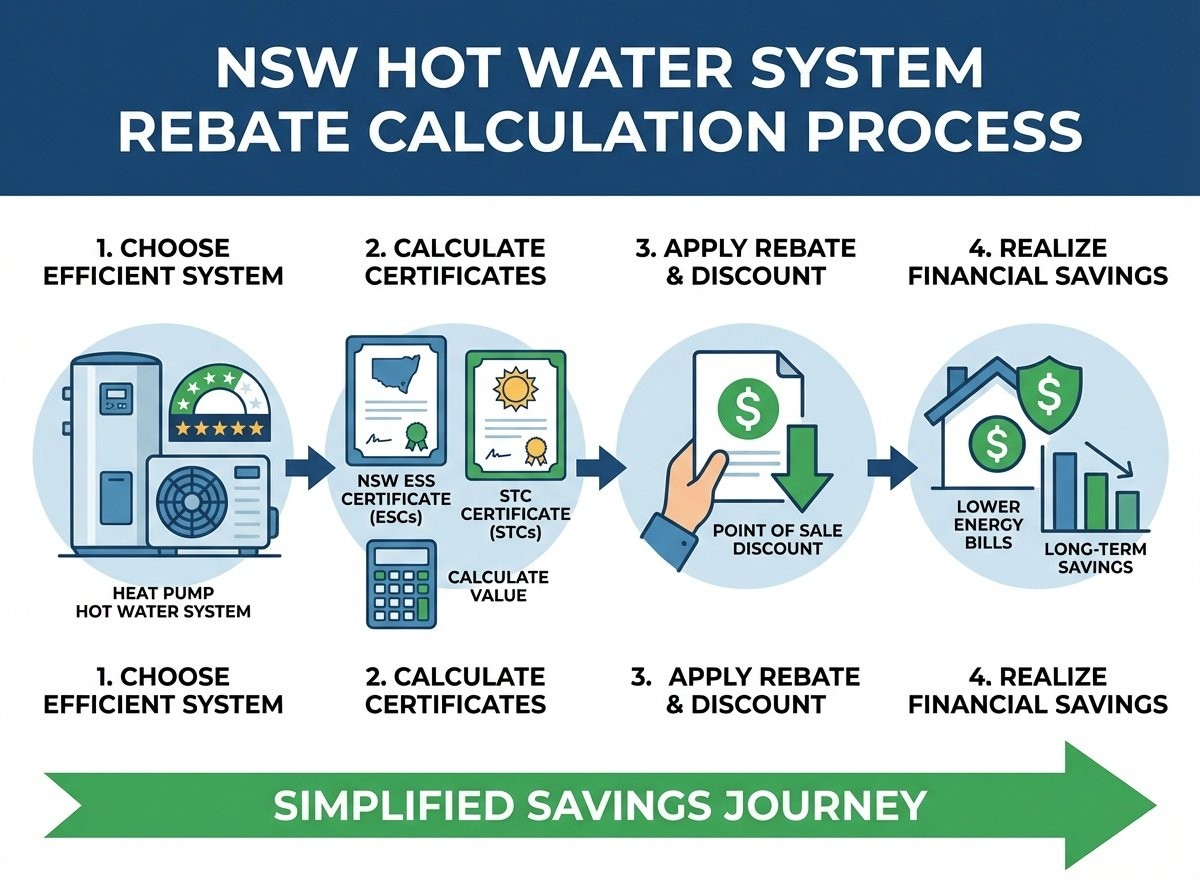
The NSW Government's Energy Savings Scheme provides upfront discounts when you replace an existing electric or gas hot water system with an energy-efficient heat pump or solar hot water system. This incentive is delivered as a point-of-sale discount through Accredited Certificate Providers (ACPs), meaning you receive the savings immediately—not as a rebate you claim later.
Typical ESS Discount Amounts:
- Up to $640 when replacing an electric water heater with a heat pump system
- Up to $330 when replacing a gas water heater with a heat pump system
- Discounts vary based on system size, location, installer, and administrative costs
2. Small-scale Technology Certificates (STCs)
STCs are federal government incentives administered by the Clean Energy Regulator. These certificates are created when you install eligible renewable energy systems, including solar hot water heaters and air source heat pumps. Most installers will handle the STC creation and assign you the benefit as an upfront discount.
Typical STC Values for Hot Water Systems:
- Heat pump systems (up to 425L): $800 – $1,200 discount
- Solar hot water systems (up to 700L): $1,000 – $1,500 discount
- STC values fluctuate based on market conditions (typically $35–$40 per certificate)
- Number of STCs depends on system size, efficiency, and your location zone
Combined Savings Potential
When you combine both the NSW ESS discount and federal STCs, total savings typically range from $1,400 to $2,500 depending on your existing system type, the new system you choose, and your specific circumstances.
| Incentive Type | Estimated Savings |
|---|---|
| NSW ESS Discount | $500 – $640 |
| Federal STCs (approx. 28 certificates) | $980 – $1,120 |
| Total Combined Savings | $1,480 – $1,760 |
| Your Out-of-Pocket Cost | $2,000 – $3,000 (after incentives) |
Who Is Eligible for NSW Hot Water Rebates in 2026?
Both homeowners and small business operators in NSW can access hot water system rebates, but eligibility depends on several factors:
Basic Eligibility Requirements
- Property Location: Must be located in NSW
- Existing System: Must be replacing an existing electric resistance or gas hot water system
- New System Type: Must install an eligible heat pump or solar hot water system
- System Registration: Heat pump systems must be listed on the Clean Energy Regulator's register
- Warranty: Heat pumps must come with a minimum 5-year warranty covering heat pump unit, tank, and components
- Licensed Installation: Installation must be performed by licensed plumbers and/or electricians
- Accredited Provider: Installer must work with an Accredited Certificate Provider (ACP) for ESS discounts
Who May NOT Be Eligible
- Properties that already have an energy-efficient heat pump or solar hot water system
- New builds without an existing hot water system to replace (different criteria apply)
- Installations not performed by licensed tradespeople
- Systems not listed on eligible product registers
Important: Eligibility for the NSW ESS incentive is assessed by your installer's Accredited Certificate Provider. They will evaluate your specific situation, existing system, and proposed upgrade to determine your discount amount.
What Hot Water Systems Qualify for Rebates?
Heat Pump Hot Water Systems
Heat pump water heaters are the most popular choice for NSW rebates. They extract heat from the air and transfer it to water, using up to 70% less energy than traditional electric water heaters.
Popular Heat Pump Brands & Models (2026):
- Rheem Ambiheat: 250L, 315L models
- Stiebel Eltron WWK: 220L, 300L models
- iStore: 180L, 270L models
- Reclaim Energy CO2: 250L, 315L models
- Sanden Eco Plus: 250L, 315L models
Solar Hot Water Systems
Solar hot water systems use roof-mounted collectors to capture the sun's energy. These systems are eligible for higher STC values but may have higher upfront costs.
- Flat plate collectors: More affordable, good for temperate climates
- Evacuated tube collectors: More efficient, better for cooler areas
- Split systems: Storage tank separate from collectors
- Close-coupled systems: Tank mounted directly on roof
System Capacity Limits
- Heat pump systems: Up to 425 litres capacity
- Solar hot water systems: Up to 700 litres capacity (over 700L requires additional documentation)
- Systems must be listed on the Clean Energy Regulator's register of eligible products
Check Eligibility: Before purchasing, verify your chosen model is on the Clean Energy Regulator's register. Also read our energy efficiency star ratings guide to compare system performance.
How to Claim Your Hot Water Rebate in NSW (Step-by-Step)
Unlike traditional rebates that require post-purchase applications, NSW hot water incentives are applied as upfront discounts during the purchase and installation process. Here's exactly how it works:
Step 1: Research and Compare Installers
Start by getting quotes from at least 3–5 installers who participate in the NSW Energy Savings Scheme. Make sure to ask each installer:
- Do you offer the NSW ESS hot water upgrade incentive?
- Is the ESS discount included in your quote?
- What is the exact discount amount for my situation?
- Are you partnered with an Accredited Certificate Provider?
- Do you handle the STC assignment process?
- What is the total out-of-pocket cost after all incentives?
Step 2: Choose Your System and Installer
After comparing quotes, select the installer and system that best meets your needs. Consider:
- Total out-of-pocket cost (after all incentives)
- System warranty requirements and coverage
- Installer reputation and reviews
- Appropriate system size for your household
- Brand reliability and energy efficiency rating
- Noise levels (especially for heat pumps)
- Installation location requirements
Step 3: Complete the Nomination Form
Before installation begins, your installer will provide a nomination form. This critical document:
- Assigns your right to create STCs to a registered agent (usually arranged by installer)
- Registers your installation under the NSW ESS
- Must be signed BEFORE installation begins (no retrospective rebates)
- Secures your discount amount
IMPORTANT: Do not proceed with installation until you have signed the nomination form and received confirmation of your discount amount. Once installed, you cannot claim rebates retroactively.
Step 4: Installation Day
On installation day, the licensed plumber and/or electrician will:
- Safely disconnect and remove your old hot water system
- Install the new heat pump or solar hot water system in the optimal location
- Complete all plumbing and electrical connections to Australian Standards
- Test the system to ensure proper operation
- Demonstrate how to use your new system
- Arrange safe disposal or recycling of your old system
- Take photos for compliance documentation
Step 5: Receive Your Discount & Pay Final Amount
Your final invoice will show:
- Original system and installation cost
- NSW ESS discount applied
- Federal STC discount applied
- Final amount due
You pay only the discounted amount—all rebates are deducted at point of sale.
Step 6: Register Your Warranty & Enjoy Savings
- Register your warranty with the manufacturer
- Keep all installation documentation
- Schedule annual maintenance to maximise system lifespan
- Monitor your energy bills to see the savings
Why Upgrade Before June 30, 2026 (EOFY)?
The end of financial year (June 30, 2026) presents a strategic opportunity for hot water system upgrades in NSW. Here's why homeowners should consider acting before EOFY:
1. STC Value Decreases Annually
Small-scale Technology Certificates are calculated based on the remaining years until 2030 (when the scheme ends). Every January 1st, STC values decrease as the deeming period shortens. Installing before June 30, 2026 means you benefit from the current year's higher STC multiplier.
Example: A heat pump system eligible for 28 STCs
- 2026 value: $980 – $1,120 (at $35–$40 per STC)
- 2027 value: Reduced by approximately 20%
- Potential savings by acting now: $200 – $250 extra benefit
2. Increased Demand = Longer Wait Times
April through June traditionally sees a surge in hot water system installations as homeowners aim to complete upgrades before EOFY. This increased demand can mean:
- Longer waiting times for installation (3–6 weeks instead of 1–2 weeks)
- Reduced installer availability
- Potential for higher quotes due to demand
- Risk of missing the June 30 deadline if you delay
Pro Tip: Book your installation consultation in March–April to secure a spot before the EOFY rush.
3. Budget Allocation & Tax Planning
For rental property owners and small business operators, completing hot water system upgrades before EOFY allows you to claim the expense in the current financial year. Consult your accountant about potential tax deductions.
4. Beat Winter Demand Spike
Hot water system failures spike during winter months (June–August) when systems work harder. By upgrading in Autumn (March–May), you avoid the risk of a winter hot water failure and get ahead of the rush for emergency hot water services.
How Much Will You Actually Save?
Upfront Cost Savings (Installation)
Real-World Example: 4-Person Household in Sydney
| Cost Item | Amount |
|---|---|
| 270L Heat Pump System Cost | $4,500 |
| Installation Labour | $1,200 |
| Total Before Incentives | $5,700 |
| Less: NSW ESS Discount | – $600 |
| Less: Federal STCs (28 certificates @ $38) | – $1,064 |
| FINAL OUT-OF-POCKET COST | $4,036 |
| Total Upfront Savings | $1,664 (29% discount) |
Ongoing Energy Bill Savings
Beyond the upfront rebates, energy-efficient hot water systems deliver ongoing savings on your electricity or gas bills.
| System Type | Annual Energy Cost | Savings vs Electric | 10-Year Savings |
|---|---|---|---|
| Old Electric Storage | $750 – $900 | Baseline | $0 |
| New Heat Pump | $150 – $250 | $500 – $650/year | $5,000 – $6,500 |
| Solar Hot Water | $100 – $200 | $550 – $700/year | $5,500 – $7,000 |
| New Gas Storage | $350 – $450 | $300 – $450/year | $3,000 – $4,500 |
Total 10-Year Return on Investment (Heat Pump)
- Initial out-of-pocket cost: $4,036
- Annual energy bill savings: $575/year (average)
- Payback period: 7 years
- 10-year savings after payback: $1,714 profit
- Total lifetime savings (15-year lifespan): $4,589
Result: After rebates and ongoing energy savings, you effectively get a new premium hot water system AND put money back in your pocket over its lifetime. Read our detailed best hot water systems for NSW comparison for more.
Common Mistakes to Avoid When Claiming Rebates
1. Installing Before Signing the Nomination Form
This is the #1 costliest mistake. NSW ESS and STC rebates CANNOT be claimed retrospectively. You must sign the nomination form and assign your certificates BEFORE installation. Installing first means you forfeit $1,000–$2,500 in rebates.
2. Not Comparing Multiple Quotes
Different installers offer different discount amounts for the same system. The ESS discount amount includes installer margins and administrative costs, which vary. Always get 3–5 quotes and compare the final out-of-pocket cost.
3. Choosing an Ineligible System Model
Not all heat pump and solar systems qualify for rebates. Always verify your chosen model is listed on the Clean Energy Regulator's register BEFORE purchasing. An ineligible system means zero rebates.
4. Using an Unlicensed or Unaccredited Installer
Only licensed plumbers and electricians can install rebate-eligible systems. Additionally, for NSW ESS discounts, the installer must work with an ACP. Check licences at verify.licence.nsw.gov.au.
5. Undersizing or Oversizing the System
A system too small means running out of hot water. Too large means paying more upfront unnecessarily. Discuss your household size, usage patterns, and peak demand with installers to right-size your system.
6. Ignoring Warranty Requirements
For NSW ESS eligibility, heat pump systems MUST have a minimum 5-year warranty covering all major components. Cheaper systems with 2–3 year warranties are NOT eligible for ESS discounts. Read our warranty guide for details.
7. Waiting Until the Last Minute
Booking installation in late May or early June often means missing EOFY deadlines due to installer backlogs. Start the process 6–8 weeks before June 30 to ensure completion.
Frequently Asked Questions
Q1: Can I claim both NSW ESS and Federal STCs for the same installation?
Yes! These are two separate incentive programs and can be combined. The NSW ESS discount applies through the Energy Savings Scheme, while STCs are a federal incentive. Most installers will apply both discounts automatically in your quote.
Q2: Do I get a cash rebate or is it a discount?
Both NSW ESS and STCs are applied as upfront discounts, not cash rebates you claim later. The discounts appear directly on your installer's quote and final invoice, reducing what you pay out-of-pocket.
Q3: Can renters access hot water rebates in NSW?
Rebates are typically claimed by property owners, not tenants. If you're renting and your hot water system fails, contact your landlord about upgrading with rebates. For rental properties, owners can claim the incentives and benefit from long-term energy savings.
Q4: What if my property doesn't have an existing hot water system?
New builds or properties adding a first hot water system have different eligibility criteria. The NSW ESS hot water upgrade pathway specifically requires replacing an existing electric or gas system. Contact installers to discuss new installation options and STC eligibility.
Q5: How long does the installation process take?
From initial quote to completed installation typically takes 2–4 weeks. The actual installation day usually takes 3–6 hours depending on system complexity and location. During peak periods (April–June), allow 4–6 weeks for the entire process.
Q6: Do solar panels affect my hot water rebate eligibility?
No, having rooftop solar doesn't affect rebate eligibility. In fact, combining solar panels with a heat pump hot water system is ideal—you can run the heat pump during daytime on free solar electricity, potentially achieving zero hot water energy costs.
Q7: What happens if my new system breaks down?
Your system is covered by the manufacturer's warranty (minimum 5 years for heat pumps). Contact the manufacturer directly for warranty claims. Also check with your installer, as they may provide additional service warranties. Annual maintenance helps prevent breakdowns and keeps warranties valid.
Q8: Are there rebates for commercial properties?
Yes! Small businesses in NSW can access the same ESS hot water upgrade incentives as households. Larger commercial installations may qualify for additional programs. Contact your installer or an Accredited Certificate Provider to discuss commercial eligibility.
Q9: Can I install the system myself to save money?
No. Hot water systems MUST be installed by licensed plumbers and/or electricians to comply with Australian Standards and building codes. DIY installation voids warranties, violates regulations, and makes you ineligible for rebates. Always use licensed professionals.
Q10: What if I already have a heat pump installed?
If you already have an energy-efficient system (heat pump or solar), you're generally not eligible for ESS incentives because the program is based on energy savings from upgrading less efficient systems.
Take Action: Upgrade Your Hot Water System Before EOFY 2026
With up to $2,500 in combined government rebates available and annual energy savings of $500–$700, there has never been a better time to upgrade your NSW hot water system to an energy-efficient heat pump or solar model.
Your Next Steps:
- Get 3–5 Quotes: Contact licensed installers who participate in NSW ESS
- Verify System Eligibility: Check your chosen model is on the Clean Energy Regulator register
- Confirm Discount Amounts: Ensure quotes clearly show both ESS and STC discounts applied
- Sign Nomination Form BEFORE Installation: This is critical—do not proceed without it
- Schedule Installation: Book early if aiming to complete before June 30, 2026 EOFY
- Register Warranty: After installation, register your warranty and schedule annual maintenance
Need Expert Help? Infinity Hot Water specialises in heat pump and solar hot water installations throughout Sydney and NSW. Our team works with Accredited Certificate Providers to ensure you receive maximum rebates and incentives. We handle all paperwork, coordinate with ACPs, and deliver turn-key installations with zero hassle.