

As winter approaches across Australia, your hot water system faces its biggest annual test. Cold weather doesn't just increase demand—it significantly impacts how efficiently your system operates, potentially leading to unexpected breakdowns, higher energy bills, and the nightmare scenario of cold showers on freezing mornings.
A comprehensive winter hot water system checklist isn't just recommended—it's essential for homeowners across NSW, particularly in areas like the Central Coast where winter temperatures can plummet overnight. Without proper preparation, systems that worked perfectly through summer can suddenly struggle, leaving families without adequate hot water when they need it most.
This complete guide provides everything you need to prepare your hot water system for winter 2026. Whether you have a gas storage system, electric heat pump, or instantaneous unit, following this professional checklist will help prevent costly emergency callouts, extend your system's lifespan, and ensure reliable hot water throughout the coldest months.
Why Winter Preparation Matters for Hot Water Systems
Winter places unique stresses on hot water systems that don't exist during warmer months. Understanding these challenges explains why a pre-winter checklist is crucial rather than optional.
Cold Inlet Water Temperature
Cold inlet water temperature is the primary factor. During summer, your incoming mains water might be 20-22°C. In winter, this drops to 10-12°C across most of NSW. This means your system must work significantly harder—and consume more energy—to heat water to the same 60°C storage temperature required for safety and comfort.
For electric systems, this translates to heating elements running longer. Gas systems burn more fuel. Heat pumps face reduced efficiency as ambient air temperatures drop, particularly overnight. The result? Higher running costs and increased wear on components.
Increased Winter Demand
Component Fatigue
Component fatigue accelerates in winter. Thermostats cycle more frequently. Heating elements work harder. Anode rods corrode faster in systems working overtime. Small issues that wouldn't cause summer failures can trigger complete winter breakdowns.
Limited Availability
Emergency service availability becomes limited. Peak demand means licensed plumbers book out quickly, and urgent repairs cost significantly more. A $250 preventative service in autumn beats an $800+ emergency callout in July.
Warranty Protection
Pre-Winter Hot Water System Inspection Checklist
Complete this comprehensive inspection at least 4-6 weeks before winter peak demand begins (ideally by late April). This timing allows you to schedule any necessary professional services before plumbers enter their busy season.
Visual External Inspection (DIY)
Start with what you can safely check yourself without tools or technical knowledge.
Check for leaks around the base of your tank, pipe connections, and pressure relief valve. Small drips worsen significantly under winter's increased operating pressure. Look for rust stains, water pooling, or damp patches that weren't present in summer.
Inspect the pressure relief valve (PRV) outlet pipe. This should extend to ground level and show no signs of constant dripping. Occasional discharge is normal, but continuous leaking indicates valve failure or excessive system pressure—both requiring immediate professional attention.
Examine visible pipework for corrosion, particularly at joints and fittings. Green oxidation on copper pipes or rust on steel fittings indicates deterioration that accelerates when systems work harder in winter.
Look for proper clearances around your unit. Storage tanks and heat pumps need adequate ventilation. Remove accumulated leaves, debris, or items stored too close to the unit that could restrict airflow or create fire hazards for gas systems.
Check electrical connections on electric and heat pump systems. Look for corrosion, loose wiring, or damaged insulation on visible cables. Never touch electrical components—note issues for your licensed technician.
Inspect your tempering valve location and access. Required on all Australian installations to limit tap temperature to 50°C, these valves occasionally need adjustment or replacement. Ensure yours is accessible for professional testing.
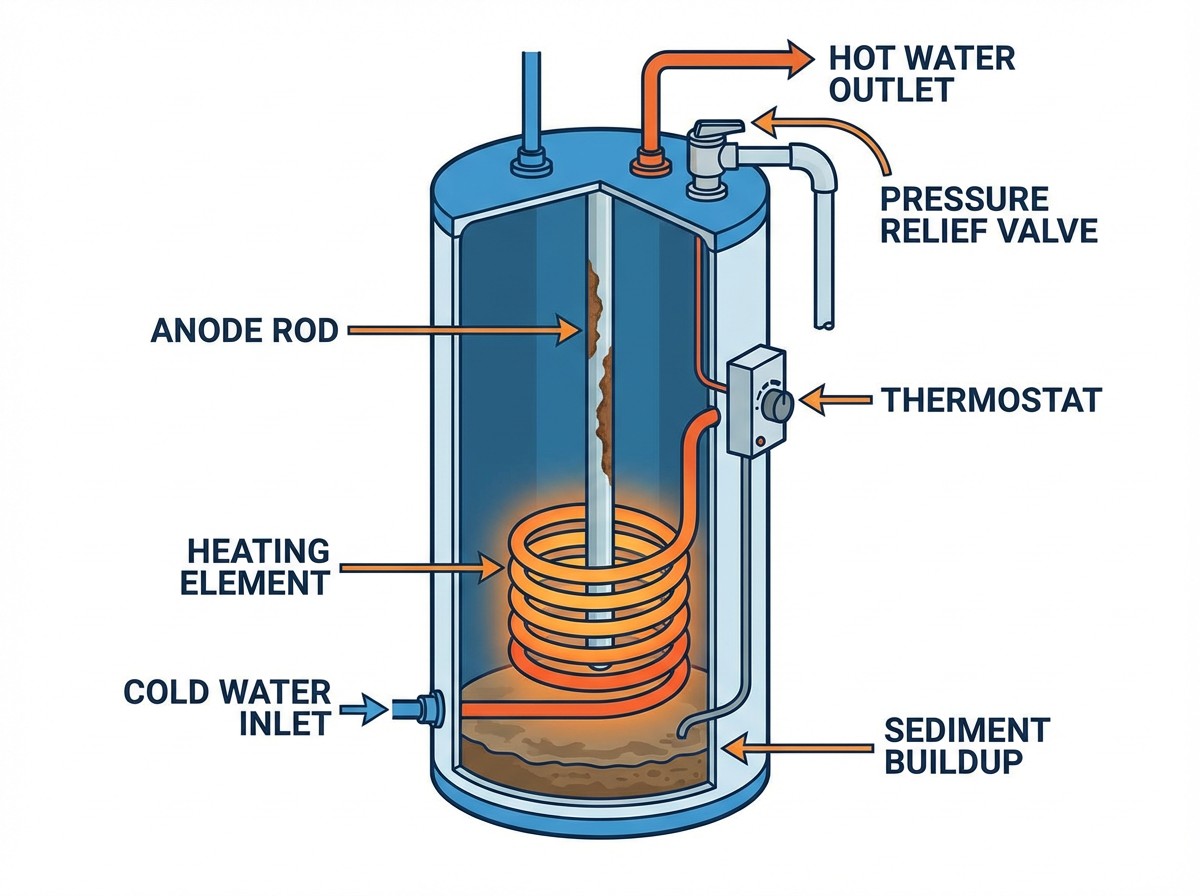
Key hot water system components to inspect before winter
Temperature & Performance Testing (DIY)
Measure your hot water performance with simple tests that reveal developing problems.
Test tap temperature at your farthest fixture from the hot water system. Run the hot tap for 2 minutes, then carefully measure temperature with a cooking thermometer. You should achieve 45-50°C (tempering valve reduces the 60°C storage temperature). Significantly lower readings indicate thermostat problems, failing heating elements, or undersized systems struggling with increased winter demand.
Time your system recovery. Use a typical shower volume (50-70 litres), then time how long until your system delivers full-temperature hot water again. Compare this to your experience from summer. Dramatically longer recovery times signal component wear or capacity issues that will worsen throughout winter.
Check for temperature fluctuations during use. Modern systems should maintain consistent temperature throughout a shower. Sudden cold bursts indicate element failure in electric systems, pilot light issues in gas systems, or heat pump defrost cycles running too frequently.
Professional Inspection Components
Schedule a licensed plumber for these critical checks that require technical expertise and specialized tools.
| Inspection Task | Why It Matters |
|---|---|
| Anode Rod Inspection | The single most important maintenance task. This sacrificial metal rod prevents tank corrosion. Most manufacturers recommend inspection every 1-2 years and replacement every 3-5 years. A depleted anode rod can lead to tank failure within 12 months. |
| Pressure Relief Valve Testing | Must be performed annually by a licensed professional. This critical safety device prevents dangerous pressure buildup that could cause tank rupture. |
| Thermostat Calibration | Ensures your system heats to the correct 60°C storage temperature—hot enough to kill Legionella bacteria but not wastefully higher. Thermostats drift over time. |
| Tank Flushing | Prevents efficiency loss and extends tank life. Sediment accumulation at tank bottoms acts as insulation, making heating elements work harder and reducing available hot water capacity. |
| Electrical/Gas Testing | Includes heating element resistance testing, thermostat continuity checks, or gas burner inspection and carbon monoxide testing. Marginal components that survived summer often fail under winter's increased load. |
System-Specific Winter Preparation Requirements
Electric Storage Systems
Electric storage tank systems are Australia's most common hot water type, but they're also the most affected by winter's increased demand.
- Element inspection is critical. Most electric tanks have two elements—a lower main element and upper backup. Winter demand often reveals marginal elements that barely managed during summer.
- Thermostat accuracy requires professional testing. Electric thermostats should be set to 60°C for storage tanks, with upper and lower thermostats properly coordinated.
- Insulation inspection helps maintain efficiency. Consider an insulation blanket for older tanks, which can reduce standby heat loss by 25-45%.
- Off-peak timer verification ensures your system heats during cheaper electricity periods if you have off-peak hot water.
Gas Storage and Instantaneous Systems
Gas systems generally handle winter better than electric but require specific safety checks.
Annual Gas Safety Inspection Is Not Optional
- Instantaneous system descaling is critical for continuous flow units. Scale buildup in heat exchangers dramatically reduces efficiency and can cause complete failure.
- Gas pressure verification ensures adequate supply, especially if you've added gas appliances since installation.
- Freeze protection checks matter for outdoor instantaneous units, particularly in elevated Central Coast locations that experience overnight frosts.
Heat Pump Systems
Heat pump hot water systems are highly efficient but have specific winter performance characteristics requiring attention.
- Coefficient of Performance (COP) drops significantly as ambient temperature decreases. A heat pump achieving COP 3.5 in summer might drop to COP 2.0-2.5 in winter. This is normal but means longer run times.
- Defrost cycle inspection is critical. Faulty defrost systems cause the backup electric element to run constantly—eliminating all efficiency benefits.
- Backup element testing verifies this emergency heating element only activates during defrost cycles, not as primary heating.
- Fan motor and refrigerant pressure checking ensures proper airflow and efficiency. Low refrigerant from leaks causes compressor damage.
Solar Hot Water Systems
Solar hot water systems face winter challenges from shorter days and lower sun angles.
- Collector inspection is essential before winter. Check glazing for cracks, seals for degradation, and mounting for security. Remove any debris or dirt that has accumulated on collector surfaces.
- Booster system verification is critical because winter's reduced solar gain means your electric or gas booster will run much more frequently—often daily.
- Pipe insulation inspection is crucial for roof-mounted collectors. Uninsulated pipes lose substantial heat overnight when roof temperatures drop.
Winterization Actions: What to Adjust Before Peak Season
Beyond inspection, make these active adjustments to optimize winter performance.
Thermostat Temperature Setting
While 60°C storage temperature is required for Legionella prevention, verify your system reaches this consistently in winter. Some homeowners temporarily increase thermostats to 62-63°C in peak winter.
Timer Schedule Optimization
For off-peak electric systems, consider adding a midday heating cycle if you have midday usage (retired households, work-from-home). Gas and instantaneous systems don't need timer adjustments.
Pipe Insulation Installation
Insulate hot water pipes, especially the first 2 meters from the tank. Pipe insulation costs $20-50 for DIY installation and reduces heat loss by up to 70%. Also insulate cold inlet pipes in unheated areas to prevent freezing damage.
Usage Pattern Review
Spread usage throughout the day rather than concentrated demand periods. Stagger showers in large families. Run dishwashers and washing machines on hot cycles during off-peak periods if possible.
Common Winter Hot Water Problems & Prevention
Understanding common winter failures helps you prevent them.
Running Out of Hot Water Faster
This is the most common winter complaint and has several causes.
- Increased usage is the primary factor. Winter showers are longer and hotter. A system adequately sized for summer may be undersized for winter demand.
- Colder inlet water means your tank takes longer to reheat. Your system's recovery time can double.
- Failing heating elements in electric systems often become apparent in winter. An element that was borderline functional through summer can't meet winter demand.
- Thermostat drift causes the system to stop heating at 53°C instead of 60°C, reducing available hot water capacity by 10-15%.
Unusual Noises
Winter brings increased reports of hot water system noises.
- Popping or rumbling sounds indicate sediment buildup being superheated at tank bottoms. Prevention involves annual tank flushing.
- Whistling or screeching suggests pressure issues, often from partially closed valves or scale buildup in pipes.
- Banging or hammering (water hammer) occurs from thermal expansion when systems heat water.
- Clicking or ticking from heat pumps during defrost cycles is normal in winter, though more frequent than summer.
When to Call a Professional vs. DIY Maintenance
Safe DIY Tasks
- • Visual inspection for leaks, corrosion, damage
- • Temperature testing at multiple locations
- • Aerator and filter cleaning
- • Basic pipe insulation installation
- • Usage monitoring and tracking
- • Reading manufacturer's manual
- • Learning emergency shutoff locations
Professional-Only Tasks
- • Anode rod inspection and replacement
- • Pressure relief valve testing
- • Any electrical work (illegal DIY in NSW)
- • All gas fitting work (illegal DIY)
- • Thermostat replacement or adjustment
- • Tank flushing and sediment removal
- • Heat pump refrigerant work
- • Tempering valve adjustment
Winter Energy Efficiency Tips for Hot Water Systems
Lower your winter hot water costs with these evidence-based strategies:
| Strategy | Potential Savings |
|---|---|
| Reduce shower duration to 4-5 minutes | 30-40% hot water energy reduction, $200-350 annually |
| Install 3-star WELS rated showerheads | $150-250 annually |
| Fix dripping hot taps immediately | ~9,000 litres and $90-150 annually saved |
| Use cold water for laundry when possible | 15-20% household hot water reduction |
| Insulate pipes comprehensively | Up to 70% heat loss reduction |
| Upgrade inefficient systems (10-12+ years) | 30-50% running cost reduction with NSW rebates |
Emergency Preparedness: What to Do If Your System Fails in Winter
Have a plan before problems occur.
Immediate Actions When Hot Water Stops
- Verify the problem is your hot water system, not your entire plumbing. Check cold water flow at multiple taps.
- Check obvious causes: For electric systems, check for tripped circuit breakers. For gas systems, check if pilot light is out. If you smell gas, evacuate and call emergency services.
- Check your isolation valves are fully open. Someone may have partially closed them during other work.
- Assess urgency level: Gas smells, electrical burning, continuous leaking = call emergency services immediately.
- Document the problem: Take photos of error codes, leaks, or damage for your technician.
Emergency Contact Information Template
Keep this information accessible:
- • Your hot water system type and brand: _______________
- • Installation date: _______________
- • Regular plumber contact: _______________
- • After-hours emergency plumber: _______________
- • Location of hot water isolation valve: _______________
- • Location of main water shutoff: _______________
- • Location of electrical panel and hot water circuit breaker: _______________
Conclusion: Prepare Now, Stay Warm All Winter
A comprehensive winter hot water system checklist isn't just about preventing cold showers—it's about protecting your investment, ensuring family comfort, avoiding costly emergency repairs, and maintaining energy efficiency when it matters most.
The key takeaway: proactive preparation beats reactive crisis management. A $200-300 professional pre-winter service in April or May is far less expensive and disruptive than an $800+ emergency callout in July, plus the cost and inconvenience of being without hot water during the coldest stretch of the year.
For Central Coast homeowners, winter preparation should begin by late April—well before the winter rush when licensed plumbers book out weeks in advance. This timing allows scheduled service at standard rates, ensures parts availability if replacements are needed, and provides peace of mind before demand peaks.
Your Winter Hot Water Checklist Summary
- ✓ Visual inspection you can perform yourself
- ✓ Professional servicing by licensed plumbers
- ✓ System-specific adjustments based on your unit type
- ✓ Efficiency optimizations to reduce running costs
- ✓ Emergency preparedness planning before problems occur
Remember that hot water system warranties typically require documented annual maintenance by licensed professionals. Your pre-winter service isn't just good practice—it's protecting your warranty coverage and ensuring any future claims are honored.
Ready to Prepare Your Hot Water System for Winter?
Infinity Hot Water provides comprehensive pre-winter servicing across Sydney, Newcastle, and the Central Coast. Our licensed technicians perform complete system inspections, identify potential problems before they cause failures, and ensure your system operates efficiently throughout winter.
Don't wait for winter demand—book now and ensure your family stays warm all season long.
Frequently Asked Questions
When should I prepare my hot water system for winter?
Begin winter preparation by late April or early May in NSW, at least 4-6 weeks before peak winter demand. This timing allows you to schedule professional service before plumbers enter their busy season and ensures any identified issues can be addressed before cold weather arrives.
How much does pre-winter hot water system maintenance cost?
Professional pre-winter servicing typically costs $200-300 for comprehensive inspection including anode rod check, pressure relief valve testing, thermostat calibration, and tank flushing. This preventative service is far less expensive than emergency winter repairs, which often cost $800+ for after-hours callouts plus parts.
Why does my hot water run out faster in winter?
Three main factors cause this: (1) Colder inlet water temperature means your system must work harder; (2) Increased household demand from longer, hotter showers; (3) Potential system issues like failing heating elements or thermostat drift that become apparent under winter's increased load.
Can I perform winter hot water maintenance myself?
Homeowners can safely perform visual inspections, temperature testing, aerator cleaning, and basic pipe insulation. However, critical tasks require licensed professionals: anode rod replacement, pressure relief valve testing, electrical work, gas system servicing, thermostat adjustment, and tank flushing. DIY attempts at professional-only tasks void warranties and create safety risks.
What hot water system type works best in winter?
Each system type has winter advantages: Gas instantaneous systems provide unlimited hot water; Heat pumps remain most efficient but lose some efficiency in cold weather; Electric storage systems are most affected by winter demand but work reliably when properly sized; Solar systems require functional booster systems. Proper maintenance matters more than system type for winter performance.
How can I reduce hot water energy costs in winter?
Top strategies include: reduce shower duration to 4-5 minutes (saves 30-40%), install water-efficient 3-star showerheads (saves $150-250 annually), fix dripping hot taps immediately, use cold water for most laundry, comprehensively insulate hot water pipes (70% heat loss reduction), and maintain proper system temperature settings.
External Resources
- Energy.gov.au - Hot Water Systems Guide →
- Australian Building Codes Board - AS3500 Plumbing Standards →
- NSW Health - Legionella Prevention Guidelines →
- WELS - Water Efficiency Standards →
- Bureau of Meteorology - Weather Forecasts →
- SafeWork NSW - Gas Safety Regulations →
- Rheem - Heat Pump Winter Maintenance →