
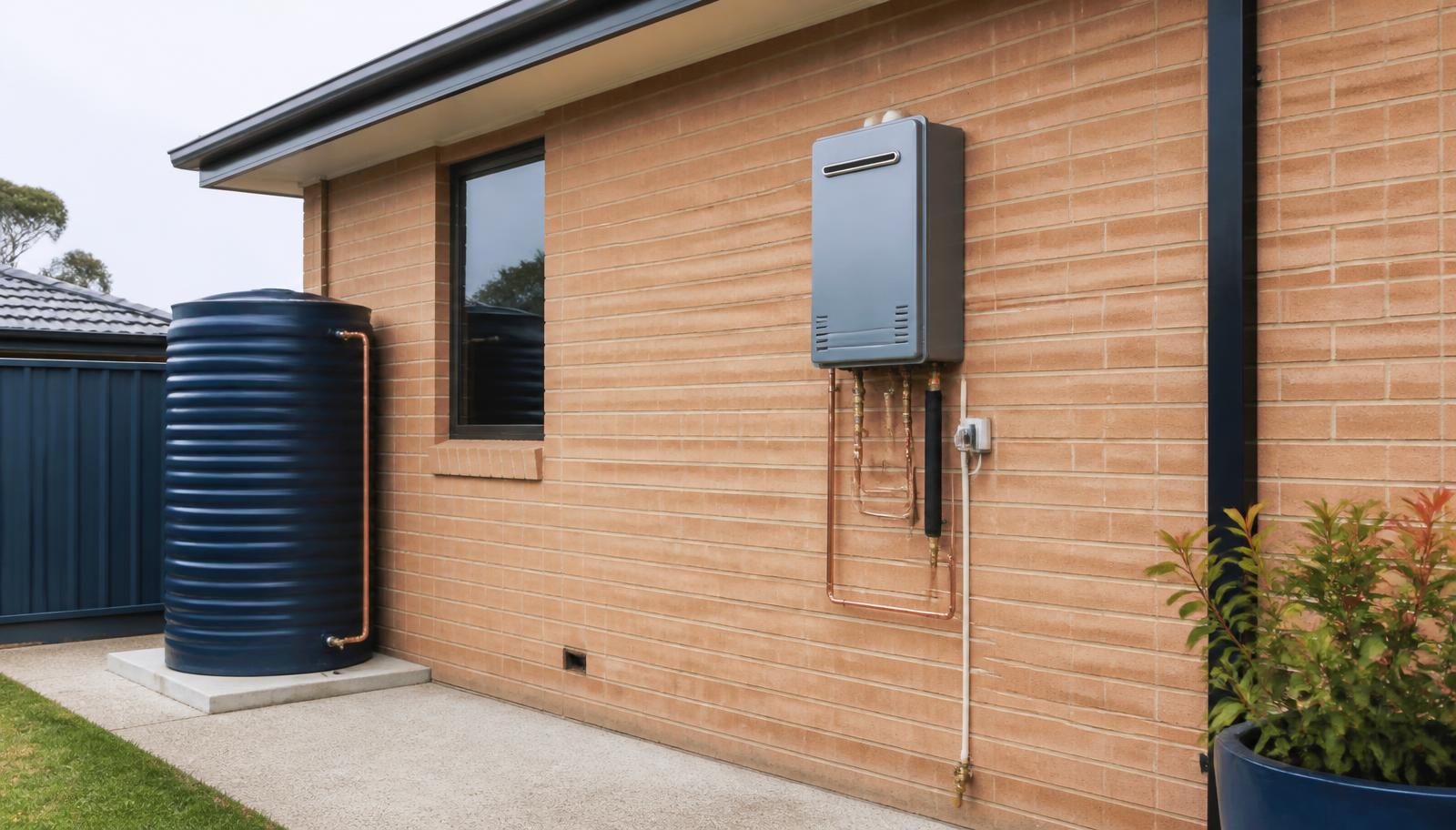
A homeowner in Marrickville rang us last week with a simple question. The tank sits in the laundry cupboard, the renovation is pulling that cupboard out, and can the new one go on the side passage instead. The passage is 900 millimetres wide, the neighbour's bedroom window faces straight into it, and the only drainage nearby is a garden bed. The answer was no, and the reason had nothing to do with the plumbing skill involved.
August is when this conversation happens most. Sydney renovation work stacks up for a September start, tanks that limped through the coldest fortnight of the year are being replaced before spring, and homeowners are switching energy source while the current NSW incentives are still on the table. Position is the part everyone leaves until the plumber is standing in the driveway with the new unit on the truck.
Where a hot water system can legally sit in NSW is decided by four things: the plumbing standard, the manufacturer's instructions, safe discharge of hot water, and what it does to the people next door. This guide walks through each one in plain terms, so you can settle the location before install day rather than after.
Who Is Allowed to Install It
Installing, replacing or relocating a heated water service is licensed plumbing work in New South Wales. Not handyman work, not electrical work with a bit of pipe attached. The person doing it holds a plumbing licence issued through NSW Fair Trading, and they are required to lodge a notice of work and issue you a certificate of compliance.
That certificate matters more than people expect. It is what a conveyancer asks for at sale, what a manufacturer wants to see on a warranty claim, and what an insurer looks for when a failed install floods a floor. A cash job with no paperwork saves a few hundred dollars and costs several thousand the first time something goes wrong.
Gas work adds a second layer. A gas fitting authorisation is required to connect, alter or decommission a gas appliance, and the flue termination rules that follow are among the strictest in the whole install. If you are moving away from gas entirely, our NSW gas hot water guide covers where the rules currently sit.
The Rules Your Plumber Is Actually Working To
There is no single document titled "where to put your hot water system". Three sources overlap.
- AS/NZS 3500.4, the heated water services standard, sets out relief valve drainage, tempering, tray requirements and pipework. Standards Australia publishes the current edition.
- The Plumbing Code of Australia, sitting inside National Construction Code Volume Three, makes that standard enforceable and covers the building side.
- The manufacturer's installation instructions, which are legally binding through the standard. If Rheem specifies 400 millimetres above the unit for element access, that dimension is not a suggestion.
Where the three disagree, the most restrictive wins. That is why two plumbers can quote the same job and give different answers on position, and why the one saying no is usually the one who has read the install manual.
Clearances: How Much Space It Really Needs
Clearance is about two separate things. Servicing space, so the unit can be maintained without demolition, and safety separation, so heat, flue gases or airflow do not cause a problem.
Storage units
A vertical storage tank needs room in front for the plumber to work and room above to withdraw the element and the anode. On a 250 litre electric unit the element is roughly a metre long. If a shelf or a ceiling sits 400 millimetres above the top plate, the anode cannot be changed and the tank quietly runs to failure because nobody can service it.
The base is the other half. A full 250 litre unit is over 300 kilograms. It needs a level, non combustible, load rated surface. Timber decks, paver stacks and lightweight platforms fail this test regularly on Sydney sloping blocks.
Gas continuous flow units
These are wall mounted and take less floor space, but the flue terminal governs everything. Separation distances apply to openable windows, doors, mechanical air intakes, eaves, gas meters and the property boundary. The reason is straightforward: combustion products must disperse outside rather than drift into a bedroom.
In practice this rules out the narrow spot beside a window that looks perfect on a plan, and it is the most common reason we relocate a unit rather than swap it in place.
Heat pumps
A heat pump pulls heat out of the air, so it needs air. Block the evaporator with a fence, a hedge or a storage cupboard and efficiency drops, the compressor works longer, and the unit ices up more often on cold mornings. Most manufacturers want 300 to 500 millimetres clear around the fan and airflow path, with more space in front of the discharge.
Condensate is the second requirement. A heat pump produces litres of water a day in humid Sydney weather, and it needs a drain point rather than a wet patch against a wall.
Relief Valve Drainage: The Detail That Fails Most Often
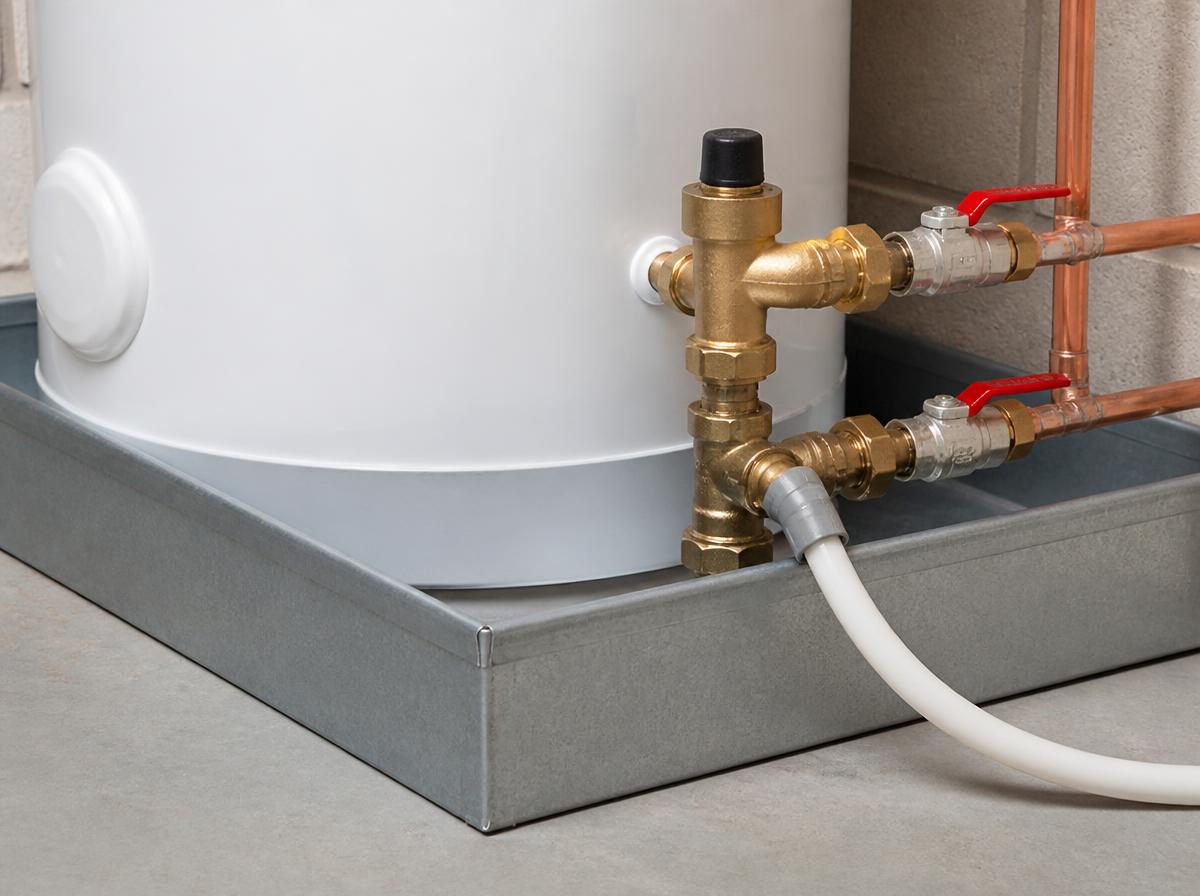
Every storage system has a temperature pressure relief valve that vents hot water during normal heating. That water has to go somewhere safe, and the rules are specific.
- Continuous fall to the discharge point, with no rise or trap anywhere along the line.
- A visible outlet so a fault shows itself, rather than a pipe buried in a garden or connected into stormwater.
- Discharge clear of walkways, because the water leaving that pipe is at storage temperature and will scald.
- The correct line size and material, matched to the valve, not whatever offcut was in the van.
- No shortening or capping, which is a repair we still find on units installed by unlicensed workers.
A poorly graded drain line is also the reason plenty of homeowners think their tank is leaking. Water pools at the base, the assumption is a failed cylinder, and the actual fault is a pipe with back fall. Our guide on a leaking relief valve covers how to tell the two apart before you spend anything.
Safe Trays and Indoor Installations
If the unit sits inside the building envelope, in a roof space, or above a room where a leak would cause damage, it needs a metal safe tray plumbed to a visible drain. Apartment cupboard installations almost always require one, and so does the classic Sydney terrace laundry cupboard with polished boards underneath.
The tray only works if the drain does. We regularly find trays sitting in place with no outlet connected at all, which turns a slow weep into a shallow bath and then a ceiling stain in the unit below. Strata buildings take this seriously for good reason, and the requirements for hot water systems in Sydney apartments are worth reading before you commit to a model.
Tempering Valves and Delivery Temperature
NSW requires water delivered to personal hygiene outlets in a dwelling to be limited to 50 degrees, and 45 degrees in facilities used by young children, older people and people with disability. The storage tank itself still runs at 60 degrees or higher, because that is what keeps legionella under control.
A tempering valve does the mixing. It is a serviceable item with a working life of roughly five to seven years, and a failed one is a common cause of lukewarm showers that owners blame on the tank. The full detail sits in our NSW tempering valve compliance guide.
A replacement install is the trigger point. If your current system predates the requirement and you swap the unit, the valve goes in as part of the job. It is not an upsell.
Noise, Neighbours and Boundaries
Heat pumps have changed this conversation. A compressor running a heating cycle at 2am against a shared boundary in Newtown or Chatswood generates complaints that a gas unit never did. The NSW EPA noise guidance and local council conditions both apply, and neither of them cares that the unit was installed to the plumbing standard.
Practical positioning beats an argument later. Keep the unit away from bedroom windows on both properties, avoid narrow passages that channel sound, use anti vibration mounts, and set the timer to run in the afternoon rather than overnight where the tariff allows. We cover the measurements and fixes in the heat pump noise guide.
New Builds, Granny Flats and Strata
A straight replacement in the same position is routine work. Three situations change that.
- New dwellings and major renovations carry energy commitments through BASIX, which effectively decides the system type before you choose a brand.
- Secondary dwellings need their own compliant service and metering arrangement, set out in our granny flat hot water requirements guide.
- Strata properties require owners corporation approval for anything touching common property, including external walls, balconies and the position of a new outdoor unit.
Water service connection questions sit with Sydney Water, and your plumber deals with them directly rather than leaving it to you.
What a Compliant Sydney Install Includes
When you compare quotes this spring, compare inclusions rather than headline price. A cheap number usually means something below is missing.
- Certificate of compliance issued and handed to you, with the notice of work lodged.
- New relief and expansion control valves, never the old ones carried over onto a new cylinder.
- Tempering valve fitted or verified as serviceable.
- Correctly graded drain lines to a visible, safe discharge point.
- A rated base or bearer suited to the filled weight of the unit.
- Old unit removed and disposed of, not left beside the fence.
- Isolation valves so the next service does not require draining the whole house.
Costs vary with position more than most people expect. A like for like swap in an accessible spot is the cheapest job on the list. Moving the unit adds pipework, drainage and sometimes an electrical run. Current Sydney figures are set out in our installed price guide, and the NSW household energy schemes can still take a significant amount off a heat pump upgrade.
Five Checks Before Install Day
Run these yourself with a tape measure and a torch. Twenty minutes now avoids a truck sitting in your driveway while a new position gets argued out.
- Access. Can someone stand in front of the unit and swing a spanner, and is there room above to pull an element or anode.
- Drainage. Is there a safe, visible discharge point downhill from the position, clear of paths and doorways.
- Base. Is the surface level, non combustible and capable of carrying the filled weight.
- Neighbours. What faces the position across the boundary, and would an overnight compressor be audible from a bedroom.
- Openings. How far is the nearest openable window, air intake, gas meter or switchboard from where a flue or fan would sit.
If any of those five are marginal, say so when you book. Most installers can bring the right fittings and allow the extra hour if they know before the day. The Master Plumbers Association is a reasonable place to sanity check anything a quote tells you that sounds unusual.
The Short Version
Position is a compliance decision, not a convenience one. Servicing space, safe discharge, a rated base, correct separation from openings and a considered answer to noise are what separate an install that lasts twelve years from one that gets rectified inside two.
If your tank came through this winter looking tired, book the assessment now while September installers still have room in the diary. A licensed plumber can confirm the position, the compliance items and the price in one visit, and you go into summer with the paperwork in a drawer instead of a problem in the laundry.
Planning a renovation, a granny flat or a switch to heat pump this spring. Get the location signed off before the walls close in, because that is the point where a simple job turns expensive. See our hot water installation service for what we include, or call us if you need someone on site today through emergency hot water repair.