
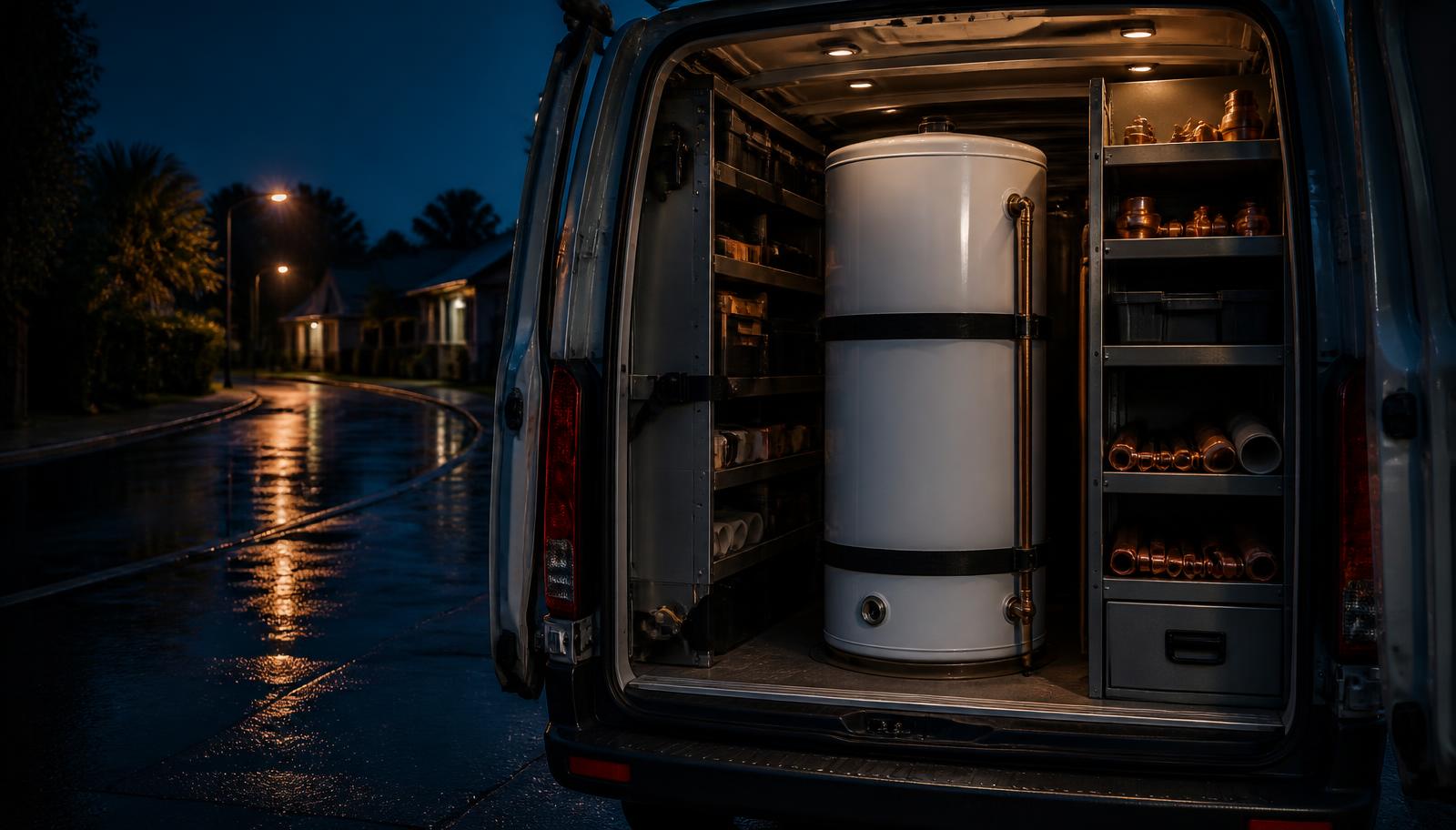
A Ryde family called us at 9.40pm on a Tuesday in early August. Water was running down the side of the garage wall, the laundry floor was already wet, and the first two plumbers they rang quoted an attendance fee over the phone without asking a single question about the unit. By the time we arrived the tank had emptied most of its 250 litres into the driveway.
The repair itself was straightforward. The part of that night that stung was the uncertainty about money, at the exact moment nobody wants to be negotiating. That is the honest problem with emergency plumbing in Sydney. Not many people know what the fee should be, what it should include, or when paying it is the smart move.
August is peak season for these calls. Tanks have worked through the coldest inlet water of the year, elements and thermostats fail under that load, and the last cold snap of winter finds every weakness at once. This guide sets out what a Sydney emergency hot water call-out actually costs in 2026, what you are paying for, and how to make sure the money buys a fix rather than a second visit.
What a Sydney Emergency Call-Out Fee Actually Buys
The attendance fee is not a booking charge. It pays for a licensed plumber, a stocked van and a guaranteed arrival window outside normal trading hours. Priced properly it covers travel, the first block of labour on site, and a diagnosis you can act on.
Across Sydney the structure is fairly consistent, even when the numbers are not. A typical after-hours attendance runs $180 to $350 and includes the first 30 to 60 minutes on site. Anything beyond that is charged at an hourly or fixed-price rate, and parts are quoted separately.
- Travel and dispatch: the plumber leaving home or another job to reach you.
- Initial labour block: usually the first half hour to hour, enough for most diagnoses.
- Testing and isolation: making the system safe, checking electrical supply, gas supply and valves.
- A written finding: what failed, why, and the cost to repair or replace it.
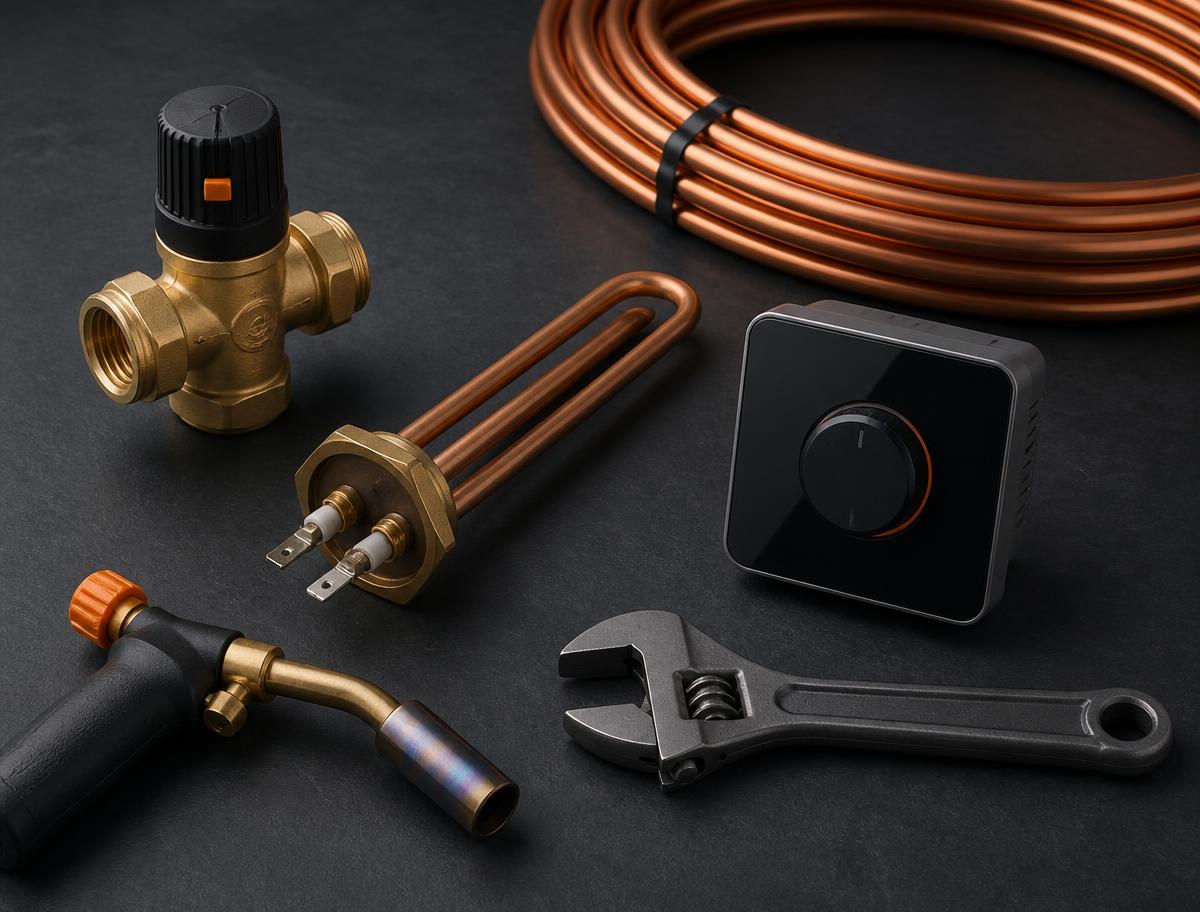
- Common parts on the van: elements, thermostats, valves and fittings for same-night repairs.
What it does not buy is the repair itself. That distinction is where most invoice arguments start, so settle it on the phone.
Sydney Emergency Hot Water Prices in 2026
These are the ranges we see across Sydney, the Central Coast and Newcastle this year, including our own pricing and what customers report from other quotes. Parts pricing barely moves with the clock. Labour does.
| Job | Business hours | After hours, weekend or public holiday |
|---|---|---|
| Attendance and diagnosis | $90 – $180 | $180 – $350 |
| Electric element replacement | $280 – $480 | $420 – $700 |
| Thermostat replacement | $280 – $450 | $400 – $650 |
| Temperature and pressure relief valve | $220 – $380 | $340 – $560 |
| Gas ignition or thermocouple repair | $260 – $520 | $400 – $780 |
| Isolate and make safe a burst tank | $150 – $280 | $220 – $420 |
| Emergency like for like replacement | $1,600 – $3,200 | $1,900 – $3,800 |
For planned work and the full range of system types, our Sydney installed price guide breaks down gas, electric, solar and heat pump replacement costs without the after-hours loading.
Why the Loading Exists
A Sunday night job takes one plumber off the roster for the following morning, requires penalty rates, and often means opening a supplier account out of hours to source a tank. The loading is real cost, not opportunism. What matters is that it is disclosed before dispatch, which is exactly what Australian Consumer Law expects of any trade service.
Is It Actually an Emergency?
This is the single decision that controls your bill. Some faults cannot wait until Monday. Plenty can, and waiting saves several hundred dollars.
Call Immediately
- Water escaping from the tank, pipework or relief drain at any volume you cannot contain.
- Any smell of gas near a gas unit, which is a same minute call, not a same night one.
- Scalding water at a tap or shower, particularly in a home with children.
- A burning smell, tripped circuit that will not reset, or discoloured wiring at the unit.
- No hot water at all in a household with a newborn, an elderly resident or someone with a medical need.
- A rental property with no hot water, where landlord obligations set repair timeframes.
Book Business Hours Instead
- Hot water that runs out faster than usual but still arrives.
- A slow drip from the relief valve into the drain line with no pooling.
- Lukewarm water in one bathroom while the rest of the house is fine.
- A noisy tank that has been rumbling for weeks.
- A pilot light that relights and stays lit.
Before you ring anyone, run the checks in our no hot water checklist. A tripped safety switch or a switched off isolation valve accounts for a genuine share of after-hours calls, and both take two minutes to rule out.
The Five Minutes Before You Call
What you do between noticing the fault and picking up the phone changes both the risk and the price. None of this requires tools.
- Stop the water. Close the isolation valve on the cold inlet above the unit, or the main tap at the meter if you cannot find it.
- Kill the power or gas. Switch off the hot water circuit at the switchboard, or close the gas isolation valve at the unit.
- Photograph the compliance plate. Brand, model, capacity and install date decide which parts come on the van.
- Photograph the failure. A picture of where water is coming from often tells us on the phone whether it is a valve, a fitting or the tank itself.
- Move what matters. Boxes, tools and anything stored near an internal unit, before the floor gets worse.
- Find your paperwork. The original invoice, the warranty card and your insurance policy number.
That last point is worth real money. Many Sydney homes are still inside a five or seven year cylinder warranty without realising it, and our hot water warranty guide explains what the manufacturer covers and what stays with you.
Questions That Protect Your Wallet
Ask these before the van leaves. A reputable operator answers all six without hesitation, and the answers should arrive by text or email.
- What is the attendance fee, and how much labour does it include?
- Is the fee waived or credited if I proceed with the repair tonight?
- Is pricing fixed per job, or charged hourly once the first block is used?
- What is your licence number, and is the attending plumber licensed for gas work if my unit is gas?
- Do you carry elements, thermostats and valves for my model, or is this a diagnosis only visit?
- If replacement is the answer, can you quote repair and replacement on the same visit?
Licence numbers are verifiable. NSW Fair Trading maintains public guidance on licensed plumbers and drainers and sets out what counts as regulated plumbing work. Work on a heated water service is licensed work in New South Wales, without exception.
Repair Tonight or Replace Tomorrow
The most expensive outcome is paying for an emergency repair on a tank that has three months left. The second most expensive is replacing a system at 10pm that only needed a $320 part.
We use a simple test on site. Age against failure type.
| System age | Component failure | Tank or lining failure |
|---|---|---|
| Under 6 years | Repair, and check warranty first | Warranty claim, replacement often covered |
| 6 to 10 years | Repair if the part is under $500 | Replace |
| Over 10 years | Make safe now, plan replacement | Replace |
A leaking tank is never a repair. Steel that has rusted through in one place has thinned everywhere, and our guide to a hot water system leaking from the bottom explains why welding or patching is not an option under the Plumbing Code of Australia.
Weeping from the relief valve is a different story and usually cheap to solve. Our relief valve guide covers when a drip is normal thermal expansion and when it signals pressure trouble upstream.
The Bill After the Bill
A failed hot water system costs money twice. The call-out is visible. The water is not.
A tank that has been seeping quietly into a slab or a garden bed for weeks can push through a considerable volume before anyone notices, and that shows up on your next Sydney Water account. Sydney Water applies a hidden leak allowance for concealed leaks that a reasonable homeowner could not have detected, which can rebate part of the excess usage on a bill once the leak is repaired by a licensed plumber.
Two things matter for that claim. You need the repair invoice showing the date and the nature of the fault, and you need to apply within the period set out on the Sydney Water site. Keep the invoice from the emergency visit for exactly this reason. Our guide to Sydney Water bill spikes and the hidden leak allowance walks through the application and the evidence that gets approved.
Insurance is the other half. Sudden escape of liquid is covered by most home policies, including damage to floors, cabinetry and stored contents, though the tank itself often is not. Our burst tank and insurance guide sets out what to photograph before anything is removed from site.
Landlords, Agents and Strata
Hot water is an essential service in a New South Wales tenancy. That single fact changes the maths on a Saturday night, because urgent repair timeframes apply and a tenant can arrange the repair themselves in some circumstances and seek reimbursement.
For investors the practical advice is unglamorous. Name a plumber on the tenancy paperwork, keep a service record for each property, and replace tanks on age rather than on failure. The details, including the reimbursement limits, are in our NSW landlord hot water obligations guide.
Strata adds a wrinkle. In older Sydney unit blocks, common property pipework and centralised plant sit with the owners corporation while the unit itself may not. Getting that boundary wrong means an owner pays for a repair the body corporate should have funded.
Why August Is the Wrong Month to Gamble
Sydney mains inlet water is at its coldest through July and August, which means elements run longer, burners cycle harder and every marginal component is working at its limit. The Bureau of Meteorology seasonal summaries show how long that cold tail runs across the basin, and it lines up almost perfectly with our call-out volume.
Then comes the second squeeze. From September, spring replacement demand fills installer diaries across Sydney and the Central Coast. Waiting until then to deal with a tank you already suspect means fewer choices, longer lead times, and no room to weigh a heat pump against a straight swap.
If replacement is on the cards, the rebate side is worth checking now rather than at 10pm on a Sunday. The NSW Government household rebates and schemes page lists the current programs, and we translate them into real Sydney numbers in our NSW hot water rebates guide. Emergency replacements rarely capture the full benefit, because the paperwork and the installer accreditation need to line up before the job, not after.
How to Never Pay an Emergency Fee Again
Systems almost always warn you. In fifteen years of call-outs, the genuinely sudden failures are the minority. The rest were visible weeks earlier to anyone who knew what they were looking at.
- Reheat time creeping longer, so the second shower is colder than it used to be.
- Rust staining or a chalky white crust around the base or fittings.
- Relief valve discharge that has changed from a seasonal trickle to a constant run.
- Rumbling or knocking when the burner or element cycles.
- A power bill that rose without a change in household routine.
- A tank past ten years with no service history at all.
Any two of those together justify a business hours booking this month. A service call in daylight costs a fraction of a Sunday attendance, and it gives you the option to plan a replacement on your terms. Our hot water system repair page lists what a standard service visit covers across our Sydney, Central Coast and Newcastle service areas.
The Practical Takeaway
An emergency call-out is not a rip-off when it is priced clearly, credited against the work, and attended by someone carrying the part your unit needs. It becomes expensive when nobody explains the structure, when the van arrives empty, or when a tank that should have been replaced last spring finally gives up at midnight.
Know the fee before dispatch, ask whether it is credited, get repair and replacement quoted on the same visit, and keep the invoice for your water bill claim. Do those four things and the worst night of your plumbing year costs what it should, and nothing more.