
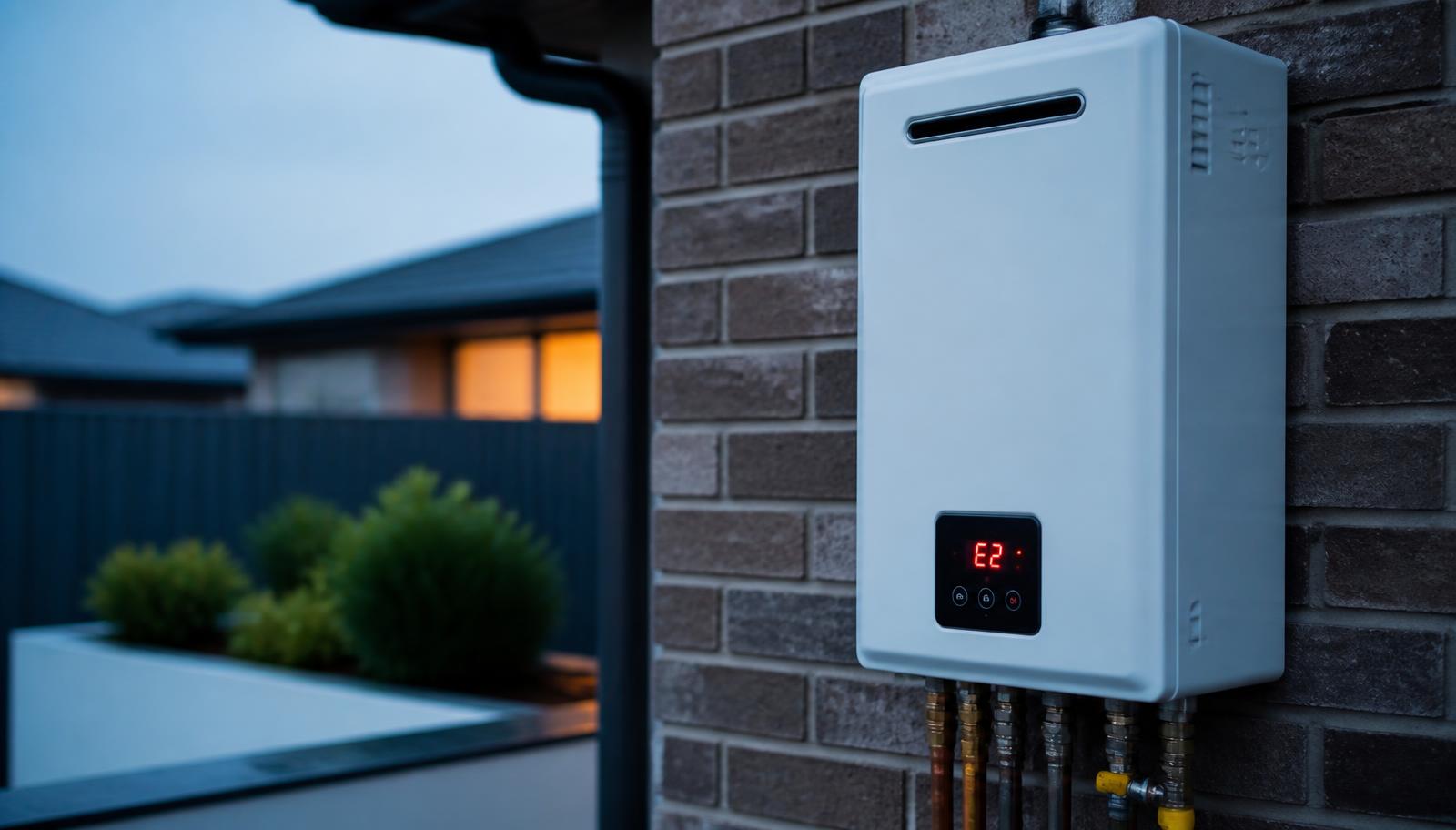
Gas Hot Water Error Codes: A Sydney Owner's Guide
It is a cold Tuesday morning in August, the shower runs lukewarm for thirty seconds, then goes cold, and a two digit number is blinking at you from the little controller on the laundry wall. Nobody in the house knows what it means. The manual went missing three owners ago.
That number is the most useful thing your hot water system will ever tell you. Sydney gas units fault more in the last weeks of winter than at any other point in the year, because mains water coming into homes from Prospect and Warragamba is sitting near its coldest and the burner has to run flat out on every single hot tap. Marginal faults that hid all summer finally trip the safety lockout.
This guide decodes the codes you will actually see on Sydney homes, tells you which ones you can safely clear yourself before spring, and tells you plainly which ones mean stop and call a licensed gas fitter.
What a Fault Code Actually Is
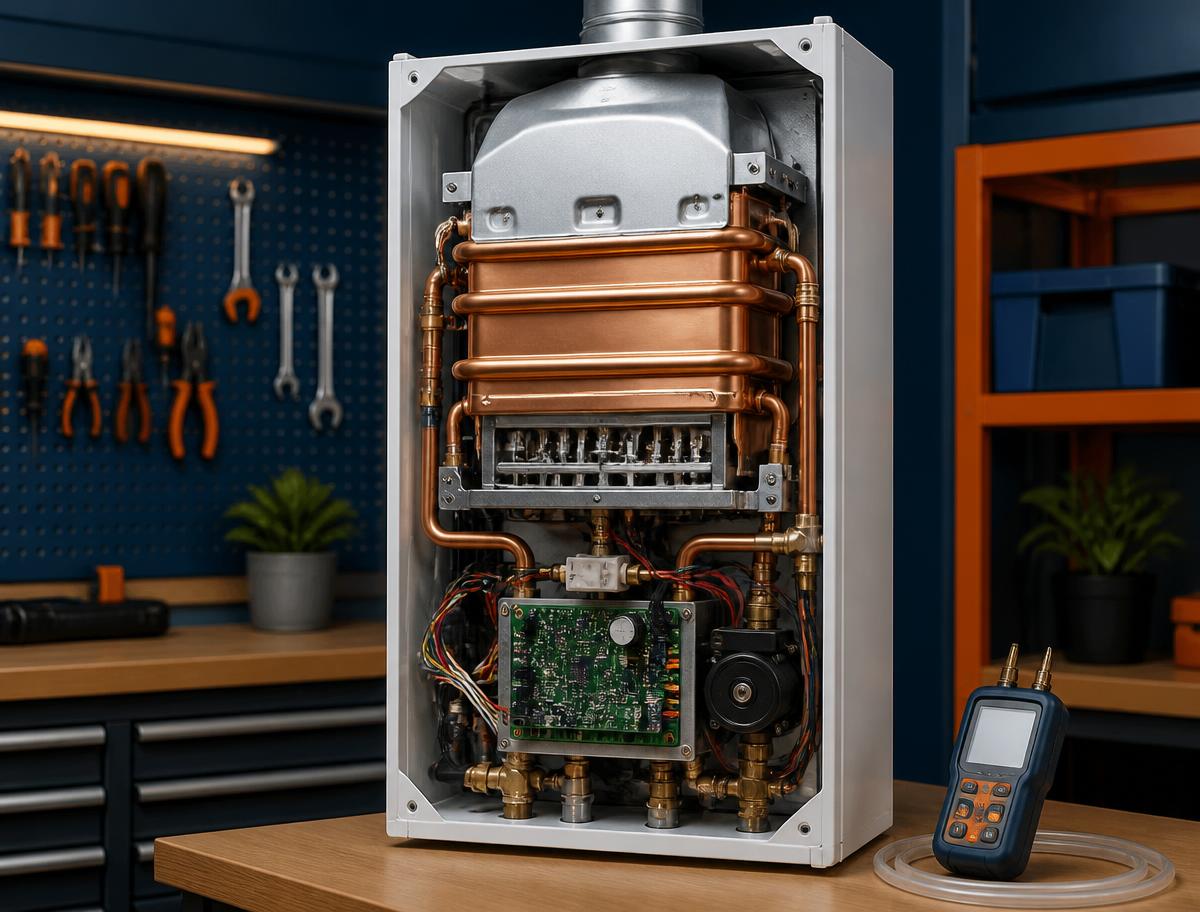
A continuous flow gas unit is a small computer wrapped around a burner. It watches water flow, water temperature in and out, flame presence, fan speed, gas valve position and its own board voltage. When any of those readings falls outside the range the manufacturer set, the unit shuts the gas off and shows a code.
So the code is not the failure. The code is the unit telling you which sensor stopped seeing what it expected. That distinction matters, because the same code can point at four different parts depending on the age of your system and where in Sydney you live.
Storage tanks behave differently. Most older gas storage units have no display at all, so the symptom is the pilot going out rather than a number. If that is your setup, our guide on why a pilot light keeps going out is the better starting point.
The Codes Sydney Homes See Most
Numbering is broadly shared across Rinnai, Rheem, Bosch and Dux continuous flow units sold in Australia, though each brand has its own quirks. Always confirm against your own model plate before ordering parts, using the manufacturer resources at Rinnai Australia or Rheem Australia.
| Code | What the unit is saying | Most likely cause in Sydney |
|---|---|---|
| 10 | Air supply or flue blocked | Leaf litter, spider nest or a new fence built too close |
| 11 | No ignition detected | Gas supply, igniter or a dirty flame rod |
| 12 | Flame lit then dropped out | Low gas pressure, often when the cooktop is running too |
| 14 | Overheat cut out | Scale in the heat exchanger restricting flow |
| 16 | Outlet water too hot | Failing thermistor or a stuck tempering valve |
| 32 or 33 | Thermistor fault | Corroded sensor lead, common in coastal suburbs |
| 52 | Gas solenoid valve fault | Valve or control board, always a trade repair |
| 61 | Combustion fan fault | Worn fan bearing or a blocked air intake |
| 71 | Gas valve circuit fault | Wiring loom or board, replacement often sensible |
| 79 or 99 | Heat exchanger or combustion abnormality | End of life on units past twelve years |
Code 11 is the one you will meet first
Roughly two in five late winter gas callouts we run across Sydney and the Central Coast are a code 11. The burner was asked to light, the spark fired, and the flame rod never confirmed a flame within the few seconds the board allows.
Before you book anything, light a gas cooktop burner. If the cooktop will not light either, the problem is your gas supply, not your water heater, and your first call is your gas retailer or distributor rather than a plumber. Jemena publishes what to do at their gas safety page.
Code 12 usually means the house is short of gas
A 26 litre continuous flow unit at full output is one of the hungriest appliances in a Sydney home. Add a cooktop and a gas heater on the same undersized supply line and pressure at the water heater drops below what the gas valve needs. The flame lights, then starves, and the board throws a 12.
You can test this yourself in one minute. Turn every other gas appliance off, then run the shower. If the fault disappears, the supply line or regulator is the real problem and no amount of parts on the water heater will fix it.
The Safe Four Step Reset
Do this before you book anyone. It clears genuine one off lockouts and it gives your gas fitter the information that halves the diagnosis time.
- Write the code down, along with what was running when it appeared and whether it clears on its own.
- Test another gas appliance so you know whether the fault is the heater or the whole gas supply.
- Power cycle the unit. Off at the power point or isolation switch, wait sixty seconds, back on, then run a hot tap for a full minute.
- Book a licensed gas fitter if the same code returns within a day. Repeated lockouts are a component telling you it is finished.
That is the whole list of homeowner steps. Removing the casing, testing gas pressure or bridging a sensor is licensed work in NSW. NSW Fair Trading sets out who may legally do it, and doing it yourself will void both your manufacturer warranty and, in most policies, your home insurance.
Why Late Winter Breaks More Units
Sydney mains water is around 12 to 14 degrees in August and closer to 22 in February. To deliver a 50 degree shower the burner has to add nearly twice the heat in winter that it does in summer, and it has to do it on every draw.
Three things follow from that.
- Run times are longer, so a worn fan bearing or a tired igniter gets many more cycles per week.
- The unit spends more time at maximum gas rate, which exposes any weakness in supply pressure.
- Longer runs mean more scale deposition inside the heat exchanger on the harder water suburbs west of Parramatta.
We wrote about the underlying temperature effect in more detail in our piece on cold inlet water and Sydney winter bills. The short version is that late August is when marginal systems get found out, and that is why booking a service now beats waiting for the first cold snap of 2027.
Codes That Also Cost You on the Water Bill
Some faults leak. A heat exchanger that has cracked from scale, a failed pressure relief on a hybrid setup or a weeping isolation valve will all keep water moving through your meter while the unit sits locked out.
With Sydney Water's approved price path lifting typical household bills across 2026, that quiet loss costs more than it used to. Sydney Water does offer a hidden leak allowance for concealed leaks on your property that you could not reasonably have known about, and it is worth claiming when a fault has been running unseen. We explain the eligibility rules and how to apply in our Sydney Water bill and hidden leak allowance guide, and current customer information sits on the Sydney Water website.
Practical test: read your meter last thing at night with every tap off, then again before anyone showers. Movement with a locked out water heater means water is escaping somewhere.
Repair or Replace
Continuous flow units in Sydney typically give twelve to twenty years. The decision usually comes down to which part failed and how old the unit is.
| Repair | Typical Sydney cost fitted | Worth doing on a unit older than 12 years? |
|---|---|---|
| Igniter or flame rod | $240 to $380 | Yes |
| Water flow sensor | $260 to $420 | Yes |
| Thermistor set | $280 to $450 | Usually |
| Combustion fan | $480 to $780 | Marginal |
| Gas valve or control board | $550 to $950 | Rarely |
| Heat exchanger | $900 plus | No |
Our rule on the tools is simple. If the quoted repair is more than half the cost of a new installed unit and the system is past its warranty, put the money into the replacement. Our Sydney installed price guide has current figures, and if you are weighing a switch away from gas, the heat pump versus gas running cost comparison is the honest numbers version.
Check your warranty position first. Manufacturer warranties on continuous flow units commonly run ten years on the heat exchanger and three on parts, and your rights under Australian Consumer Law guarantees can extend beyond the printed warranty when a unit fails earlier than a reasonable person would expect.
Faults You Should Never Reset Twice
Most codes are an inconvenience. A short list are not, and repeatedly resetting them is how a nuisance becomes a hazard.
- Any gas smell near the unit. Turn the gas off at the meter and call your distributor before anyone else.
- Soot, scorch marks or discoloured paint above the casing, which points at incomplete combustion.
- A flue or air code such as 10 on a unit that has been boxed in by decking, a pergola or a new fence.
- Overheat codes that return within minutes, which means a temperature control has failed rather than tripped.
- Any code accompanied by water pooling under the unit or steam from the casing.
The installation clearance rules exist precisely for the combustion cases above. If your unit has been enclosed since it was installed, our NSW installation rules guide shows the clearances a compliant install needs, and the technical requirements sit under the plumbing standards published by Standards Australia.
What a Proper Diagnosis Looks Like
When we arrive at a coded unit in Sydney, the sequence rarely changes.
- Read the fault history stored on the board, not just the code on screen.
- Test working gas pressure at the appliance with every other gas appliance running.
- Check inlet water pressure and flow, since low flow triggers false temperature faults.
- Inspect the burner, flame rod and heat exchanger face for scale, soot and corrosion.
- Verify flue clearance and air path against the original install requirements.
- Run the unit under real load and confirm the outlet temperature holds steady.
Anyone who quotes a part before doing step two is guessing. Ask for the gas pressure reading. A gas fitter who took it will tell you the number without hesitating.
Getting Ahead of Next Winter
Spring is the cheapest month of the year to deal with a gas hot water fault in Sydney. Demand drops, after hours premiums disappear, and you get to choose your appointment instead of taking whatever is available at 6am in July.
A worthwhile spring list:
- Clear leaves, cobwebs and garden growth from around the air intake and flue.
- Have working gas pressure tested if you have ever seen a code 11 or 12.
- Descale the heat exchanger if you are west of Parramatta and the unit is over eight years old.
- Confirm the tempering valve is still holding 50 degrees at the bathroom tap.
- Check whether an efficient replacement now attracts support under the NSW household energy rebates and schemes.
Regular servicing also protects your warranty position. Our maintenance guide sets out what a real service includes, and if the codes have already pushed you toward a new system, our installation service covers the compliant swap.
The Short Answer
Your gas unit is not being difficult. It is refusing to burn gas in a condition it cannot verify as safe, and the number on the screen is the shortest description of why. Write it down, test another gas appliance, power cycle once, and if the code comes back, get a licensed gas fitter to read the board rather than replacing parts on a hunch.
Sort it now while the weather is turning. A code that only appears on the coldest mornings of August will be back, and it will be back at the least convenient hour of the year.