

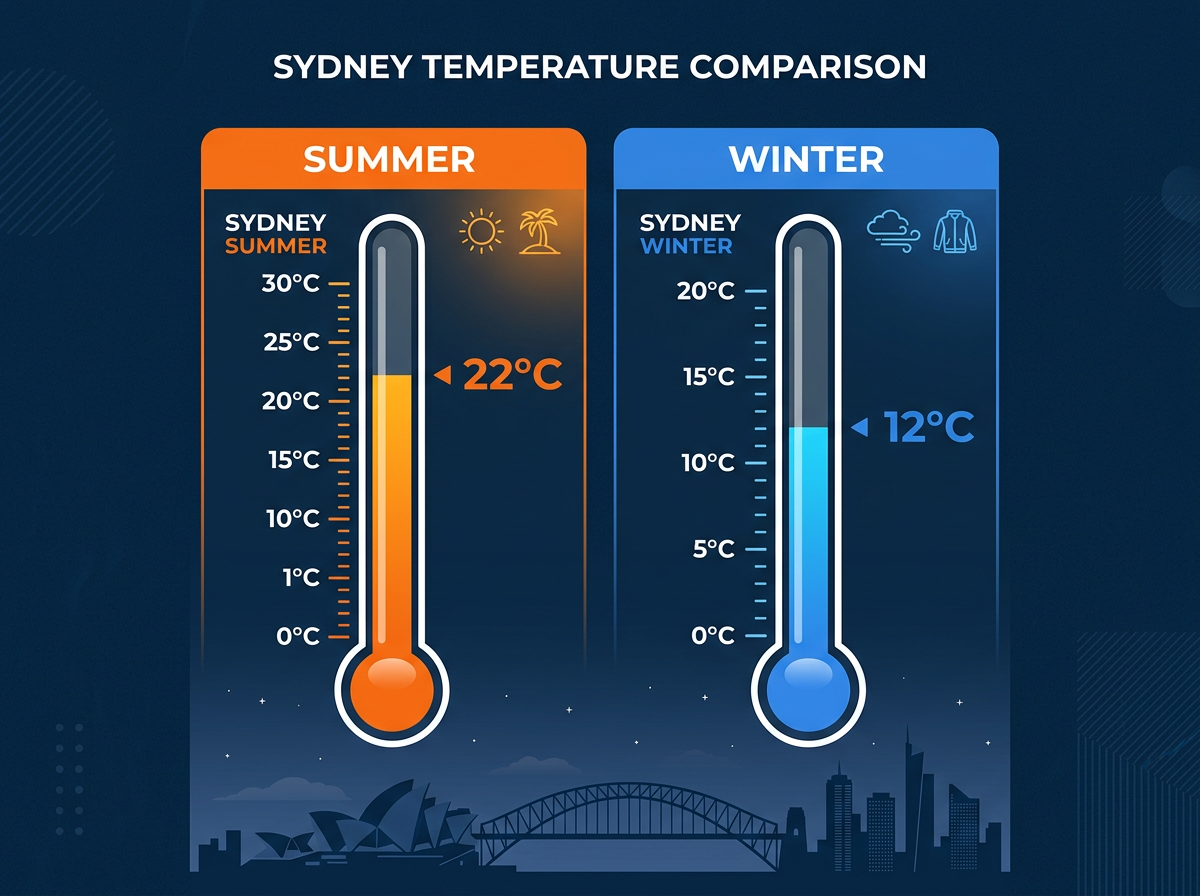
Open the cold tap in your Sydney kitchen on a July morning and the water that comes out is genuinely cold. Not chilled, but close. The mains supply that ran at a mild 22 degrees through February now arrives at around 12 degrees, sometimes lower in the Hills and the Upper North Shore. Your hot water system has to lift every drop of that water by another 10 degrees before your shower feels the same as it did in summer, and your meter notices.
This is the single biggest reason hot water bills jump in Sydney winter, and almost nobody talks about it. The 2026 Sydney Water price rise and the latest Ausgrid network charges get blamed for the whole bump, but the physics of cold inlet water is doing most of the work. This guide explains the numbers, shows what it costs by system type, and runs through the fixes that actually help before August.
What Sydney Mains Water Actually Does in Winter
Sydney drinking water comes mostly from Warragamba Dam and the wider Sydney catchment, with reservoir surface temperatures tracking outdoor air with a few months of lag. The water then runs through trunk mains, distribution mains, and the lead-in pipe to your meter, picking up or losing heat along the way.
The result for most Sydney homes:
- February: mains arrives at 21 to 24 degrees Celsius at the meter.
- April: 17 to 19 degrees.
- July: 11 to 13 degrees.
- August: 10 to 12 degrees, the coldest point of the year.
- October: back to 16 to 18 degrees.
Homes on the Northern Beaches and parts of the Eastern Suburbs run one to two degrees warmer all year because of shorter mains runs and a coastal influence. Homes in the Hills, the Upper Blue Mountains foothills and parts of Western Sydney run one to two degrees colder. The Bureau of Meteorology Observatory Hill record tracks the air pattern that drives all of this.
Why a 10 Degree Drop Costs You 20 Percent More
Hot water energy use follows a simple equation. You pay to lift water from its inlet temperature up to your delivery temperature, usually 50 degrees at the showerhead after the tempering valve.
In a Sydney summer that lift is 50 minus 22, or 28 degrees. In winter it is 50 minus 12, or 38 degrees. That is 36 percent more thermal work for the same shower, the same dishwasher cycle and the same kitchen rinse.
Households do not feel the full 36 percent because hot water makes up roughly 20 to 25 percent of a typical Sydney power bill rather than 100 percent. But on the hot water portion of the bill specifically, you are looking at a real-world bump of 25 to 40 percent between February and July, before any change in usage patterns. The figure climbs further when you add the realistic winter behaviour changes: longer showers, more loads of warm-wash laundry, more hot rinses on dishes.
The federal Energy.gov.au household guidance puts hot water at roughly a quarter of average residential energy use, which lines up with what we see on Sydney bills.
The Cost by System Type
Different hot water systems handle cold inlet very differently. Here is what a typical Sydney 4-person household runs through, using 2026 retail rates and an average usage of 280 litres of hot water per day.
| System Type | Summer Bill (Feb) | Winter Bill (Jul) | Winter Uplift |
|---|---|---|---|
| Electric storage, CL1 tariff | $70 / month | $115 / month | +64% |
| Gas instantaneous | $45 / month | $72 / month | +60% |
| Heat pump (modern) | $22 / month | $44 / month | +100% |
| Solar electric with boost | $18 / month | $58 / month | +222% |
Heat pumps look like they suffer the worst percentage uplift, but they start from such a low summer base that the absolute winter cost is still well under any other system. Solar with electric boost shows the biggest jump because the roof contribution collapses in winter and the booster carries the whole load.
Cost ranges for replacing each system type sit in our 2026 installed price guide, and the year-round running cost comparison is in our running cost guide.
Heat Pumps Pay a Double Cold-Weather Penalty
A heat pump uses an outdoor refrigerant coil to harvest heat from the air around the unit. The colder that air is, the harder the compressor has to work to pull useful heat out of it, and the coefficient of performance falls. A heat pump that delivers a COP of 4.0 on a 25 degree Sydney afternoon often runs at 2.6 to 3.0 on an 8 degree morning.
Stack that on top of colder inlet water and a typical Sydney winter morning is genuinely the worst case scenario for a heat pump. The unit is replacing more thermal energy per litre using each unit of electricity less efficiently. This is exactly what we see in the field, and what we covered in our Sydney winter heat pump performance guide.
The defrost cycle adds another layer when ambient temperatures drop below about 7 degrees, which happens roughly 20 mornings a year across most of Sydney. Our defrost cycle guide covers what is normal and what is a fault.
Electric Tanks Run Longer, Not Hotter
Electric storage tanks do not change their efficiency with the seasons. The element converts kilowatt-hours into hot water at about 99 percent year round. What changes is how many of those kilowatt-hours the tank needs to dump in.
A 315 litre electric tank in Sydney summer cycles the element on for about 4 to 5 hours of off-peak overnight time. In peak winter that climbs to 6 to 8 hours, and on the very coldest mornings the controlled load window is sometimes not long enough, which is when controlled load 2 customers see the tank running into the daytime shoulder period. The Ausgrid understanding network tariffs page sets the boundaries of each window.
We unpack the tariff math in our Sydney controlled load tariff guide.
Gas Instantaneous Units Lose Flow Rate
Continuous flow gas units are rated by how many litres per minute they can lift through a 25 degree temperature rise. In Sydney summer a 26 L/min unit lifts 22 degree mains water to about 47 degrees at full flow, which is fine for two simultaneous showers.
In winter the same unit is asked to lift 12 degree water to 47 degrees, a 35 degree rise. To do that and still deliver hot water at the showerhead, the unit drops its actual flow rate down to roughly 18 L/min. That is why families notice the second shower running lukewarm in July when it never did in February. The fix is not always a bigger unit. Sizing logic for new installs sits in our sizing guide.
Six Fixes That Actually Beat Winter Inlet Cost
1. Lag the Cold Inlet Pipe
Counter-intuitive but real. The first metre of cold pipework feeding into the tank often runs through an unconditioned roof space or external wall, and that pipe can lose a degree or two of warmth back to the air before reaching the heater on a 5 degree morning. Wrapping it in closed-cell foam keeps every degree the mains delivered intact.
Pair this with the hot outlet pipe lagging covered in our pipe insulation guide. Total parts cost is under $60, fitted under $180, and the saving over a Sydney winter is usually $35 to $70.
2. Fit a 7.5 L/min Showerhead
An older 9 to 12 L/min head asks your hot water system to lift 25 to 40 percent more water than a current WELS 3-star head rated at 7.5 L/min or less. On a winter inlet, that translates directly into bill savings of $90 to $180 per household per year, and the showerhead itself costs $40 to $120. The WELS water rating scheme lists certified models.
3. Set the Thermostat at 60 Degrees, Not 65 or 70
Australian Standard AS 3498 requires storage water to be held at 60 degrees minimum for Legionella control. It is a floor, not a target. Every 5 degrees above that adds roughly 6 percent to standing losses, which compounds on top of the cold inlet bill.
Wind the thermostat back to 60 with a screwdriver if you are confident, or fold it into a service visit. The full safety picture is in our hot water safety guide.
4. Service the System Before June
A sediment-loaded tank reads its thermostat through 20 mm of mineral crust on the bottom of the cylinder. The element or burner has to push more energy through that insulating layer to get a real water temperature reading. Combined with cold inlet, the same hot shower might cost 8 to 12 percent more on an unserviced tank than on a serviced one.
A pre-winter flush, anode check and thermostat calibration takes about 90 minutes and is the highest value $200 a Sydney household can spend on a hot water system. Walk through the full pre-winter routine in our winter hot water checklist.
5. Use Your Solar PV in Winter, Not Just Summer
Sydney winter rooftop solar still produces 60 to 70 percent of summer yield on a clear day, because clearer winter skies offset the lower sun angle. A solar PV diverter routes any surplus daytime generation into the hot water element instead of exporting it back to the grid at the feed-in tariff. With current feed-in rates of around 4 to 6 cents and grid power at 32 to 38 cents, every kilowatt-hour you redirect is worth roughly 6 times more inside your home than at the meter.
Our Sydney solar PV diverter guide covers install cost and payback maths.
6. Consider the Switch If Your Tank Is Past 10 Years
A 12-year-old electric storage tank with 25 mm of jacket foam and a fading thermostat is the most punishing combination on a Sydney winter inlet. Replacing it with a modern heat pump cuts annual hot water bills by roughly $700 to $1,100 for a family of four, and current NSW Energy Savings Scheme rebates take a big chunk out of the install cost.
Eligibility, rebate values and the step-by-step are in our 2026 NSW rebates guide and our switch to heat pump guide.
How Cold Inlet Hides Inside Your Sydney Water Bill
The cold inlet penalty is a power or gas cost, not a water cost, but it does interact with your Sydney Water bill in two ways.
First, longer winter showers waste both heated water and metered water. Bringing showers back to 4 minutes from a creeping 7 minute winter average saves roughly 18,000 litres a year for a 4-person household. At 2026 Sydney Water usage charges that is around $50 to $60 of metered water on top of the energy saving.
Second, if a tired tempering valve or relief valve starts to weep in winter when the system is cycling harder, both bills climb together. We walk through the diagnostics in our Sydney Water bill shock guide and the relief valve fault list in our TPR valve guide.
When to Call a Plumber, When to Ride It Out
Some winter bill jumps are physics and you cannot escape them. Others are a quiet fault dressed up as the cold weather. Call a licensed plumber if you see any of these:
- The hot water portion of your bill more than doubles versus the same month last year.
- The tank cycles its element through the middle of the day when no hot water has been used.
- Hot water at the kitchen tap is now visibly cooler than it was last winter, with no thermostat change.
- The relief valve weeps for more than 30 minutes after the daily heating cycle finishes.
- Your gas instantaneous unit drops below 8 L/min in winter and never used to.
Most of these are 90 minute jobs. NSW Fair Trading requires a licensed plumber for any work on a heated water service, so confirm the license number before booking.
The Bottom Line for Sydney 2026
Cold inlet water is the invisible reason Sydney hot water bills run 50 to 100 percent higher in July than in February. The 2026 Sydney Water and Ausgrid price moves are real, but the physics of lifting 12 degree water to 50 degree water is doing far more of the damage on most bills.
Pick two fixes from the list above and book them this month. A pre-winter service, a 7.5 L/min showerhead and inlet pipe lagging together cost under $400 fitted and routinely save Sydney households $200 to $400 across a single winter. By August you will have paid for the work and started banking the rest.