
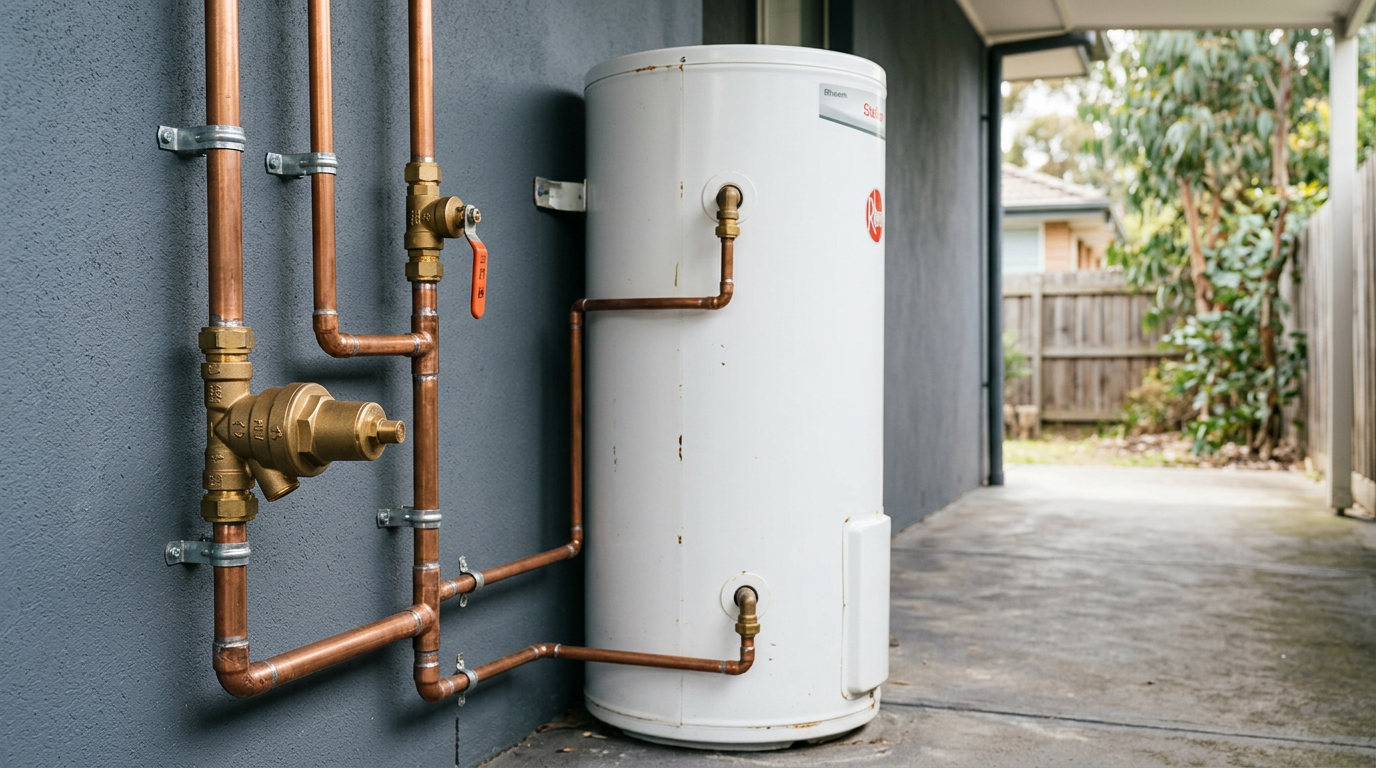
High Water Pressure and Your Sydney Hot Water System
Ashfield, Lane Cove, Hornsby and half of the northern beaches sit on street mains that push harder than the tank in your side passage was ever built to take. You cannot hear it. Your shower feels great. Then one cold July morning a brass valve starts weeping onto the pavers and a plumber tells you the cylinder you bought six years ago is finished.
High mains pressure is the quietest killer of hot water systems in Sydney, and winter is when it finally shows itself. Colder inlet water forces a bigger temperature swing through the tank, expansion volumes climb, and the two small valves protecting the whole system start cycling far more often than they did in February.
This guide covers what your pressure should be, how the pressure limiting valve and expansion control valve differ, the damage they prevent, what a replacement costs in Sydney right now, and how to test your own pressure in about ten minutes with a $25 gauge.
Why Sydney Mains Pressure Runs So High
Sydney's drinking water is delivered largely by gravity from reservoirs sitting well above street level. The bigger the vertical drop between the reservoir and your front tap, the higher the pressure at the meter. Homes low in a valley below a hilltop reservoir cop the worst of it, which is why two houses in the same suburb can read completely different numbers.
Pressure also climbs overnight. Between about 1am and 5am, street demand falls away and the network relaxes. A property reading a comfortable 520 kPa at 6pm can be sitting above 900 kPa at 4am while everyone is asleep. Your hot water tank experiences every hour of that.
Sydney Water supplies the mains and maintains the network up to your meter. Everything past the meter, including the valves protecting your heated water service, is the property owner's responsibility. Their plumbing responsibilities page sets out where that line falls.
What a healthy reading looks like
- Below 350 kPa: low. Showers may feel weak and instantaneous gas units can struggle to fire.
- 350 to 500 kPa: the sweet spot for a Sydney home with a storage tank.
- 500 to 700 kPa: above the accepted limit. Fixtures, flexi hoses and valve seats wear faster.
- Above 700 kPa: genuinely damaging. Expect leaking relief valves, burst flexis and shortened tank life.
If your reading falls at the bottom of that scale rather than the top, the cause is usually different, and our low hot water pressure guide walks through it.
The Two Valves Doing All the Work
Almost every Sydney storage hot water installation relies on two small brass fittings that most homeowners never notice until one fails.
The pressure limiting valve
The pressure limiting valve, often called a PLV or pressure reducing valve, sits near the water meter or on the cold feed to the tank. It caps whatever the street throws at it down to a fixed outlet pressure, usually 500 kPa for a domestic property.
Inside it is a spring and a diaphragm. Both fatigue. A PLV has a working life of roughly seven to twelve years in Sydney conditions, and when it fails it usually fails open, quietly passing full street pressure to the rest of the house. Nothing leaks. Nothing alarms. Your tank simply starts living under pressure it was never rated for.
The expansion control valve
Water expands by roughly 2 percent as it heats from cold to 60 degrees. In a 250 litre cylinder that is about five litres of extra volume with nowhere to go, because the PLV and the non-return valve behind it stop that water pushing back into the street.
The expansion control valve gives that volume a controlled escape. It is set slightly below the relief valve rating, so it opens first and dumps a small amount of water during each heating cycle rather than forcing the temperature pressure relief valve to do the job. When the expansion valve is missing, seized or wrongly rated, the relief valve carries the load instead and wears out fast. That is one of the most common causes behind a leaking relief valve on a tank that is otherwise healthy.
What High Pressure Actually Destroys
The damage is rarely dramatic on day one. It accumulates, and then it arrives all at once.
- The cylinder itself. Constant over-pressure stresses welded seams and accelerates the breakdown of the vitreous enamel lining, exposing steel to water.
- The relief valve. Forced to relieve on every heating cycle, the seat scores and it never seals cleanly again.
- Flexible hoses. Braided flexis under sinks and vanities are the single largest source of internal water damage claims in Australian homes.
- Tap ceramics and mixer cartridges. Dripping taps across the house are often a pressure symptom, not twelve separate faults.
- Pipework and fixings. Water hammer bangs and thumps get louder as pressure rises, loosening clips and joints over time.
That last one is worth listening for. If your pipes bang when the washing machine valve shuts, pressure is a prime suspect. Our guide to hot water system noises separates hammer from kettling and rumbling.
The end point of ignoring all of it is a burst tank, which in a Sydney terrace or an upper level apartment turns a $400 valve job into a five figure insurance claim.
Winter Is When Marginal Valves Give Up
July is peak season for weeping valves, and there is a physical reason for it rather than bad luck.
Sydney mains water arrives at roughly 20 to 23 degrees in February and drops to around 13 to 15 degrees through July and August, tracking the long term winter minimums recorded at Observatory Hill. Heating that colder water to 60 degrees means a wider temperature rise, which means a larger expansion volume through every single cycle.
At the same time, showers get longer and households draw more hot water in the morning peak. The heater fires more often. Each firing is another expansion event through valves that are already tired. A seat that just held on through autumn starts passing water in the first fortnight of a cold snap.
If you have already noticed a wet patch under the tank this month, treat it as a scheduling problem rather than an emergency, but do not leave it until spring. We cover the same seasonal pattern from the energy side in our cold inlet water guide.
How to Test Your Own Pressure in Ten Minutes
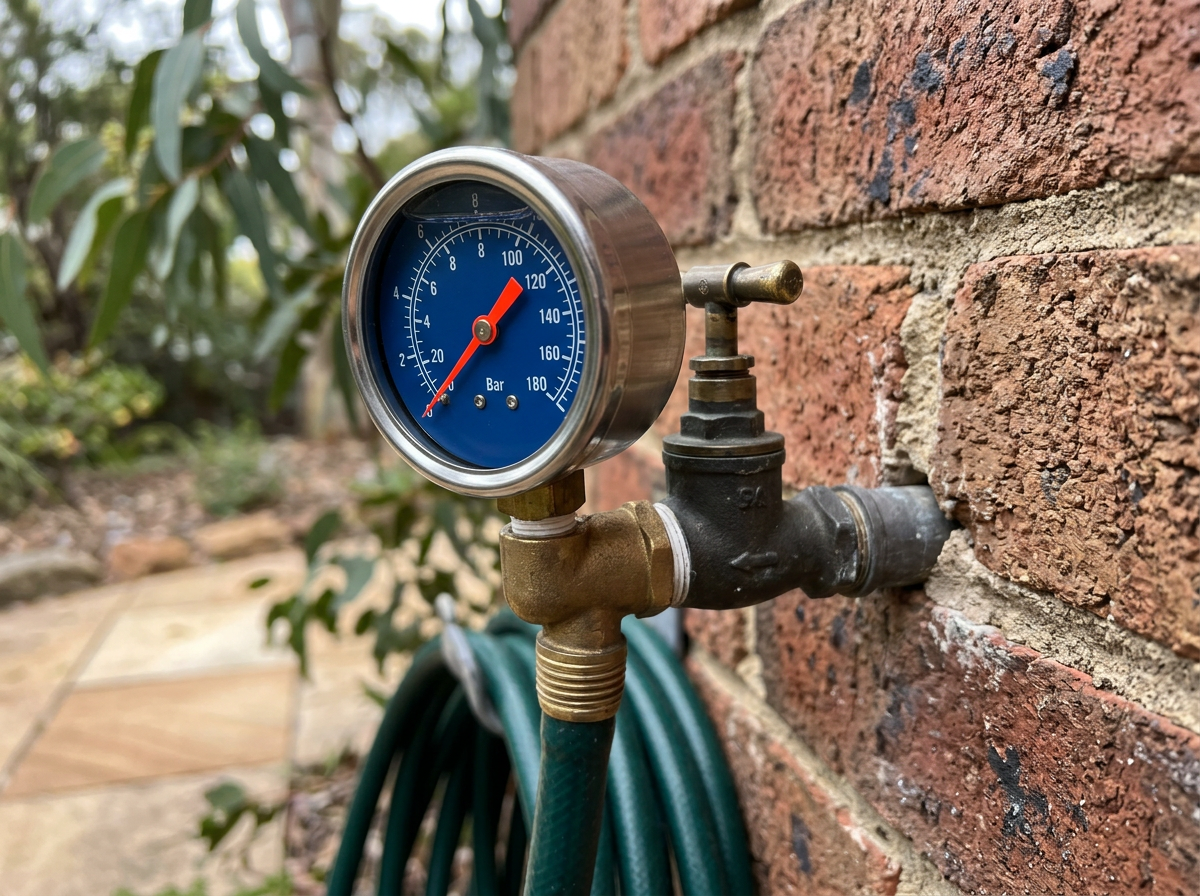
A screw-on pressure gauge from any plumbing supplier costs about $25 and gives you a number worth having before any plumber quotes you.
- Pick the tap closest to the meter. Usually the front garden tap. Long internal pipe runs soften the reading.
- Hand tighten the gauge. The rubber washer seals well enough without tools.
- Turn the tap fully on with nothing else running. Wait for the needle to settle and note the static reading.
- Leave it overnight. Read the peak between 5am and 6am, when network pressure is highest.
- Compare against 500 kPa. Either reading above that means the limiting valve is missing, wrongly set or finished.
One practical note. Gauges sold in Australia may be marked in kPa, bar or psi. 500 kPa equals 5 bar equals roughly 72 psi. If your dial reads in bar and the needle sits past 5, you have your answer.
What NSW Rules Require
Plumbing in New South Wales is governed by the Plumbing Code of Australia within the National Construction Code, which calls up AS/NZS 3500 for heated water services. Between them they set the maximum static pressure at fixtures and require expansion control on unvented storage systems where the cold supply carries a non-return device.
Three points matter for a homeowner:
- Work on pressure limiting valves, expansion control valves and relief valves is licensed plumbing work. Check any tradesperson through NSW Fair Trading.
- Valves must be rated correctly against each other. An expansion valve set too close to the relief valve rating defeats the point of fitting it.
- A Certificate of Compliance should be issued for notifiable work. Keep it. Insurers and warranty assessors ask for it.
Industry guidance from Master Plumbers reinforces the same message on valve servicing intervals.
The Warranty Trap Nobody Reads
Australian manufacturers are direct about this. Warranty terms typically require the unit to be installed in accordance with AS/NZS 3500 and the installation instructions, which means correct pressure limiting and expansion control where applicable. Rheem publishes its conditions on the Rheem warranty page, and the major brands are broadly consistent.
What that means in practice: a cylinder that fails at seven years on a ten year warranty, sitting behind a dead PLV passing 850 kPa, is very likely to be assessed as an installation fault rather than a product defect. You wear the replacement. A $320 valve becomes a $2,800 tank.
If you are unsure what your paperwork covers, our hot water warranty guide explains how claims are actually assessed.
What It Costs in Sydney Right Now
Pricing below reflects typical supplied and fitted work across Sydney, the Central Coast and Newcastle in mid 2026.
| Job | Typical cost fitted |
|---|---|
| Pressure test and valve inspection | $0 with any booked service |
| Pressure limiting valve replacement | $260 to $450 |
| Expansion control valve replacement | $180 to $280 |
| Both valves at the same visit | $380 to $620 |
| Relief valve plus expansion valve combination | $400 to $650 |
| Storage tank replacement after pressure damage | $1,900 to $3,600 |
The economics are not complicated. Two valves fitted together cost less than a fifth of the tank they protect, and they buy back years of cylinder life. Where the tank is already past ten years and showing rust in the discharge water, put the money toward a new system installation instead and have the valves specified correctly on the new install.
A recent job in Ryde
We were called to a 2112 postcode home in June for a relief valve dripping onto a rear deck. The owner had already replaced that valve himself twelve months earlier through a handyman. Static pressure at the front tap read 780 kPa at 9am. The limiting valve had been fitted in 2011 and had failed open. The expansion valve had never been installed at all.
Both valves went in the same morning for $540. The relief valve stopped weeping the same day. The eight year old cylinder is still running.
Where Pressure Bites Hardest Across Sydney
Pressure is a local story, not a citywide one. The pattern we see on the vans repeats across the same pockets year after year.
- Low-lying suburbs under hilltop reservoirs. Parts of Ryde, Gladesville, Hunters Hill and Willoughby sit far enough below their supply reservoirs to read past 800 kPa overnight without anyone noticing.
- Older inner west housing stock. Terraces through Newtown, Marrickville and Leichhardt often still run original copper with a limiting valve that predates the current owner.
- Hills district new builds. Newer estates are usually valved correctly at handover, but the valve is now hitting the twelve year mark on the earliest releases.
- Central Coast ridge suburbs. Homes below the Terrigal and Kincumber ridgelines see the same gravity effect, with salt air shortening valve life further.
None of that means your street is a problem. It means the reading is worth taking rather than assumed. Two neighbours on the same block can be 300 kPa apart depending on where the internal PLV sits and how old it is.
Apartments, Strata and Shared Systems
Units complicate the picture, because the valves protecting your hot water may not be inside your lot at all.
In a building with a central plant, pressure is usually regulated at the plant room and again at each riser. If your unit is on a low floor of a tall building, the static head above you can push your fixture pressure well past what the same brand of tapware would see in a house. Strata handles the common property side, but anything inside your lot boundary is generally yours.
Where each unit has its own small storage or instantaneous heater, the individual expansion and limiting valves are almost always the lot owner's responsibility. Get that confirmed in writing before you pay for a repair the owners corporation should be funding, or before you assume they will fund one that they will not. Our apartment hot water guide covers who owns what in more detail.
One practical warning for unit owners on ground and first floors. A failed limiting valve in a multi storey building does more damage than the same failure in a house, because the water has somewhere to go. A single burst flexi hose behind a vanity can run for hours before anyone is home, and the claim covers every lot below yours.
When to Call and When to Watch
Book a licensed plumber the same day if you see any of the following:
- Water running continuously from the relief valve drain line rather than dripping.
- A wet patch spreading toward an electrical fitting, wall cavity or the floor below.
- Steam or visibly hot discharge water at the drain.
- Loud banging in the walls whenever a tap or appliance shuts off.
Everything else can wait for a routine booking. Test your pressure first so you walk into the conversation with a number. If you have no hot water at all rather than a pressure problem, start with our step by step checklist before calling anyone out.
For anything urgent overnight or on a weekend, our emergency hot water repair team runs 24 hours across Sydney, the Central Coast and Newcastle.
The Simple Version
Set a reminder for the same week each winter. Fit the gauge on Sunday night, read it before the kettle goes on Monday morning, and write the number on the inside of the meter box lid with a marker. Three years of readings on that lid tells you when the limiting valve is drifting, long before a relief valve starts weeping onto the pavers. It costs nothing and it is the single most useful maintenance habit a Sydney homeowner can build around a hot water system.
Sydney pressure is high, it is highest while you sleep, and the two brass valves standing between the street and your cylinder both wear out on a predictable schedule that nobody tracks. Testing takes ten minutes. Replacing both valves costs less than a weekend away. Ignoring them costs a tank, and sometimes a floor.
Grab a gauge, take a reading before the next cold snap, and if the needle sits past 500 kPa, get it capped properly by someone licensed to do it.