
Smelly or Rusty Hot Water in Sydney: Causes & Fixes
A Bondi customer rang us on a Sunday in late July convinced there was a dead animal in her roof cavity. The smell only showed up in the bathroom, and only when the shower ran. Her cold tap was fine. Twenty minutes on site and the answer was sitting in the laundry cupboard: an eleven year old electric storage tank with an anode rod eaten down to wire, quietly making hydrogen sulphide gas every time the element kicked in.
That call is one of dozens we take across Sydney every August. Late winter is when smelly and discoloured hot water complaints peak, because tanks have been cycling hard for months, families have been away over the July school break, and a lot of homeowners have crept the thermostat down to shave a bit off the winter bill. All three of those things feed the same problem.
This guide explains what a rotten egg smell and brown water actually mean, how to work out in fifteen minutes whether the fault is your tank, your pipes or your supply, and what the real fix costs in Sydney before spring installation season books out.
Smell and Colour Are Two Different Faults
Homeowners often report both together, but they come from different chemistry. A smell is biological and chemical. Colour is physical, and it is almost always rust or sediment carried in suspension.
Treating them as one problem is why so many people flush a tank, get two good weeks, and end up back where they started. Sort out which one you have before anyone touches your system.
- Rotten egg or drain smell: hydrogen sulphide gas produced inside the tank.
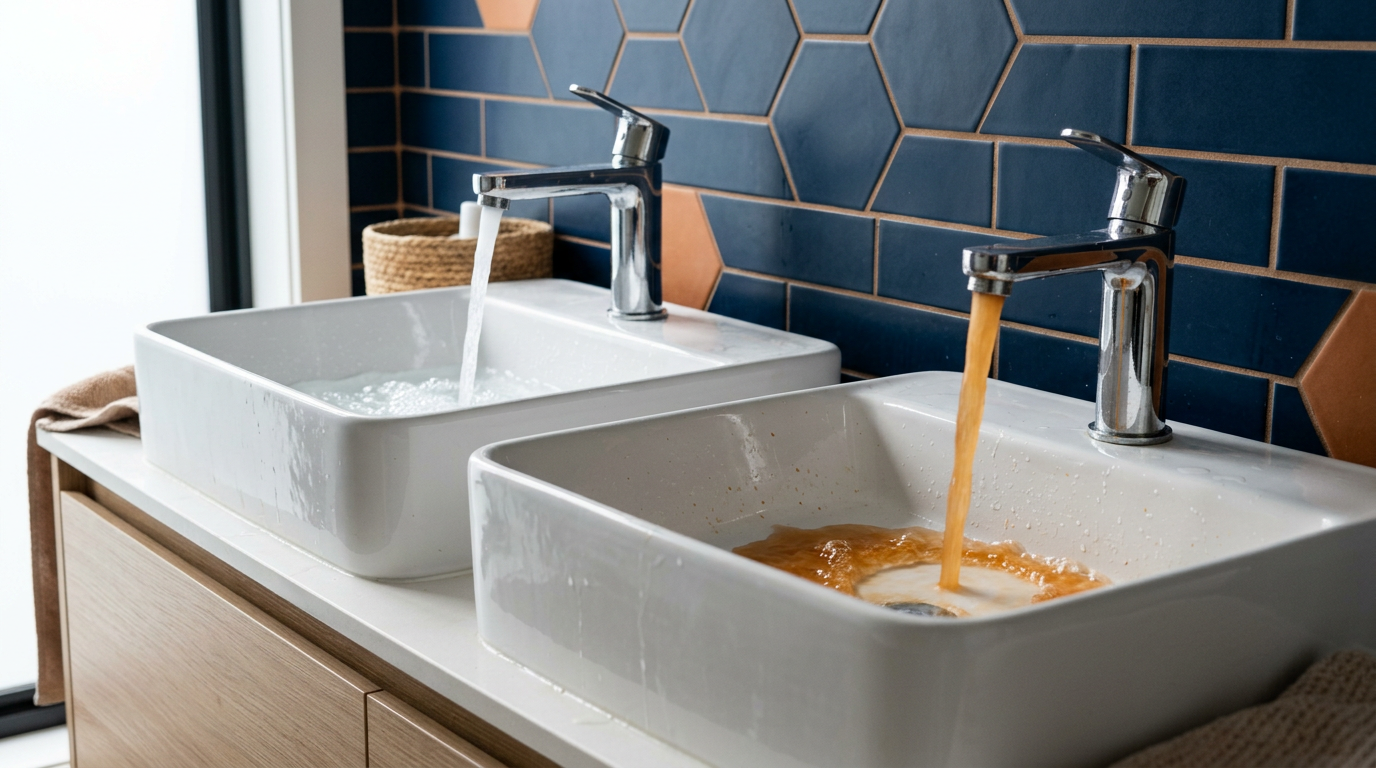
- Brown, tea coloured or orange water: iron oxide from a corroding tank, old galvanised pipe or a disturbed street main.
- Milky or cloudy water that clears: dissolved air, completely harmless.
- Metallic taste with no colour: early stage corrosion, worth a check before it becomes visible.
- Chlorine or pool smell: normal supply disinfection, not a fault in your system.
Why Sydney Hot Water Smells Like Rotten Eggs
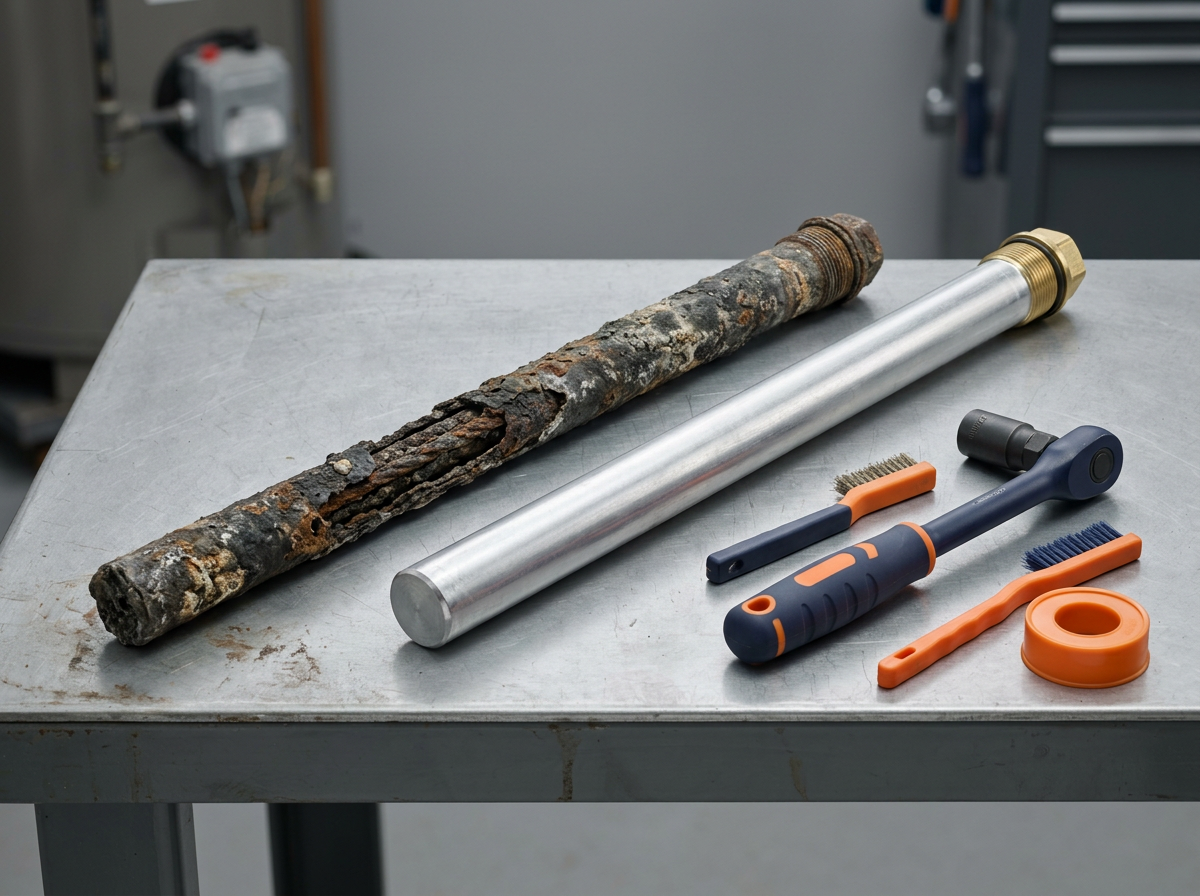
Inside every storage tank sits a sacrificial anode rod, usually magnesium. It corrodes on purpose so the steel tank does not. That is a good trade, and it is the reason a well maintained tank lasts fifteen years instead of six.
The catch is chemistry. Magnesium gives up electrons readily. When sulphate reducing bacteria get into the tank, they use those electrons to turn dissolved sulphate into hydrogen sulphide. You get the classic rotten egg smell, strongest in the first few seconds of a hot shower, and often worst in the bathroom furthest from the unit.
These bacteria are harmless in cold mains water. They only become a nuisance when they find a warm, low flow, low oxygen environment to multiply in. A storage tank sitting at 50 degrees is close to ideal for them. A tank held at 60 degrees is not.
The Three Conditions That Cause It
- A tired magnesium anode. Past six to eight years, corrosion accelerates and so does gas production.
- Tank temperature below 60 degrees. Turning the thermostat down for winter savings removes the one thing keeping bacteria in check.
- Long periods of low use. A week away, a granny flat between tenants, a holiday house on the Central Coast that sits idle.
Take away any one of those and the smell usually goes with it. That is why the fix is rarely just a flush. Our anode rod replacement guide covers how to check the rod condition and which alloy suits your water.
Why Your Hot Water Runs Brown or Rusty
Discolouration has four common sources in Sydney homes, and the pattern of when it appears tells you which one you are dealing with.
1. The Tank Lining Has Failed
Vitreous enamel lined steel tanks rely on that glass layer plus the anode. Once both are gone, raw steel meets hot water and rust forms in flakes. You will see the worst of it on the first draw of the day, and it will slowly get worse over months rather than suddenly appear. A tank at this stage is on borrowed time, and a base leak is usually the next event. We cover the warning signs in our guide to a hot water system leaking from the bottom.
2. Old Galvanised Pipework
Plenty of homes in the Inner West, Marrickville, Leichhardt and the older parts of the North Shore still run galvanised steel pipe. Hot water strips zinc from those pipes faster than cold water does, so the hot side discolours first even though the pipe run is shared. If the tank is only a few years old and the water is brown, suspect the pipes before you condemn the unit.
3. Sediment Stirred Up in the Tank
Sydney supply is comparatively soft, but every tank still accumulates a layer of scale and grit in the bottom. Sudden discolouration after a mains pressure event, a burst nearby, or a tank being drained and refilled is usually settled sediment being pushed back into circulation. It clears with a proper flush, and we explain the process in our hot water flushing guide.
4. Work on the Street Main
If both hot and cold run discoloured at the same time and your neighbours notice it too, the cause is external. Check the Sydney Water outages and incidents page before spending money on your own system. Mains related discolouration usually clears within a few hours of running a cold outside tap.
The Fifteen Minute Home Diagnosis
You can narrow this down yourself before anyone quotes you. All you need is a clear glass and a bit of patience.
- Run the cold tap for a full minute and smell it. Clean cold water means the fault is inside your hot water system. Cold water that smells too means the issue is your supply or a plumbing cross connection.
- Test every hot outlet in the house. One bad tap points at that fixture or its branch pipe. Every hot tap affected points at the tank.
- Fill a clear glass from the hot tap and let it stand five minutes. Grit settling on the bottom is rust or sediment. Cloudiness clearing from the bottom upward is just air.
- Write down the timing. Worst after a holiday means bacteria. Worst first thing each morning means sediment or corrosion. Constant means the tank lining.
- Read the compliance plate on the unit. Note the install date, capacity and model. If it is past eight years and nobody has ever mentioned an anode, you have found your prime suspect.
Do not open the tank, remove the anode, or drain the system yourself. Any work on a heated water service in New South Wales is licensed work, and NSW Fair Trading is clear about who can carry it out.
Is It Safe? The Honest Answer
Hot tap water is not drinking water in Australia. That is not a technicality, it is how the plumbing is designed, and NSW Health says the same thing. Use the cold tap for drinking, cooking, baby bottles and pet bowls.
The hydrogen sulphide smell at household concentrations is unpleasant rather than dangerous. The temperature question matters more. Storage tanks must hold water at 60 degrees or above to suppress Legionella, then a tempering valve brings it down to 50 degrees at the bathroom outlet. Both healthdirect and the Better Health Channel explain why warm water systems are the risk point.
This is where the winter thermostat trick backfires. Dropping the tank to 50 degrees saves a few dollars and creates a bacterial nursery. If someone has turned yours down, put it back to 60 at the tank and manage scald risk at the outlet instead. Our tempering valve compliance guide covers the NSW rules, and the Plumbing Code of Australia sets the delivery temperature requirements.
What the Fix Actually Involves
There are four levels of repair here. A good plumber starts at the cheapest one that will genuinely hold.
Flush and Sanitise
The tank is drained, the sediment layer is broken up and flushed out, and a chlorine dose kills off the bacteria before the system is refilled and brought back to temperature. This clears both the smell and most sediment discolouration on the day. On its own it is a temporary fix, and the smell typically returns within three to six months if nothing else changes.
Anode Replacement
Swapping a spent magnesium rod for an aluminium zinc alloy is the fix that lasts. The alloy produces far less hydrogen sulphide while still protecting the steel, and you reset the corrosion clock on the tank at the same time. On most Sydney installs this is a same visit job, provided there is enough clearance above the unit to withdraw the rod.
Thermostat and Temperature Correction
Sometimes the tank is fine and the setting is wrong. Restoring 60 degrees at the tank, confirming the tempering valve is working, and checking the element or burner cycle removes the conditions the bacteria need. If your thermostat is drifting, our thermostat and element replacement guide explains the symptoms.
Replacement
Once the lining has gone, no chemical fixes it. Persistent brown water on a tank past twelve years, especially alongside relief valve weeping or a damp base, means the money belongs in a new unit rather than another service call. Our Sydney installed price guide sets out current pricing by system type.
Sydney Prices for Each Fix
| Repair | Typical Sydney price (fitted) | How long it holds |
|---|---|---|
| Tank flush and chlorine sanitise | $260 – $420 | 3 to 6 months |
| Aluminium zinc anode replacement | $320 – $520 | 4 to 6 years |
| Thermostat replacement and temperature reset | $280 – $450 | Life of the tank |
| Tempering valve replacement | $260 – $420 | 5 to 8 years |
| Galvanised pipe section replacement | $450 – $1,800 | Permanent |
| Full system replacement | $1,600 – $4,500 | 10 to 15 years |
Combining jobs saves money. A flush plus anode change on the same visit costs far less than booking them separately, and it is the combination we recommend most often on tanks between six and ten years old.
The Holiday Home and Rental Problem
Smell complaints cluster around properties that sit empty. Central Coast weekenders, Airbnb stock between bookings, granny flats waiting on a tenant, and second bathrooms nobody uses all create stagnant water in warm pipework.
If you manage one of these, three habits prevent almost every callout:
- Run every hot outlet for three minutes before guests or tenants arrive.
- Leave the thermostat at 60 degrees rather than turning the system off between stays.
- Book an anode inspection every four years instead of waiting for a complaint.
Landlords have obligations here too, and a hot water system delivering discoloured water can fall short of the minimum standards set out in our NSW landlord hot water obligations guide. Short stay operators will find the same logic applied to guest turnover in our Central Coast Airbnb owner guide.
Why August Is the Month to Deal With This
Two things happen in Sydney between now and October. Tanks that struggled through the coldest inlet temperatures of the year start showing the damage, and installers book out as spring replacement demand arrives.
A tank that smells or discolours in August is telling you something about its internal condition while you still have choices. Wait until a burst in November and you are choosing whichever unit is on the truck that afternoon, at emergency rates, with no time to compare a heat pump against a like for like swap.
There is a rebate angle too. Households replacing an old electric tank with a heat pump can still access support this financial year, which we break down in our NSW rebates guide. Planning the change now means the paperwork is sorted before the system fails.
Signs You Should Stop Diagnosing and Book a Plumber
- Brown water from every hot tap that has not cleared after a week.
- Rust particles visible in the shower filter or tap aerators.
- A rotten egg smell that returned within weeks of a flush.
- Any dampness, staining or rust streaking on the base of the tank.
- Both hot and cold discoloured while neighbours report clear water.
- A vulnerable household member and a tank you know is running below 60 degrees.
Each of those points at something a home check cannot resolve. If you are seeing more than one at once, treat the system as end of life until a licensed plumber tells you otherwise. Full service options for your area are listed on our hot water system repair page.
The Practical Takeaway
Smell and colour are your hot water system talking to you in the only language it has. A rotten egg smell means the chemistry inside your tank has shifted and the anode is nearly spent. Brown water means metal is going somewhere it should not, either from the tank lining or from pipework that predates most of the street.
Neither problem improves on its own, and both are cheaper to solve in the last weeks of winter than in the middle of a summer breakdown. Run the fifteen minute check, note what you find, and get a licensed opinion while the answer is still a service call rather than a replacement.