
How to Flush a Hot Water System: Complete Australian Guide
Sediment is silently stealing your hot water system's efficiency — and shortening its life by years. Here's exactly how to drain and flush your tank the right way.

Every storage hot water system in Australia is slowly accumulating sediment at the bottom of its tank. Minerals like calcium, magnesium, and iron settle out of the water supply over time, forming a layer of sludge that insulates the heating element from the water it's supposed to heat. The result? Higher energy bills, reduced hot water output, strange noises, and a system that fails years before it should.
As autumn 2026 arrives and Australian households begin using more hot water for longer showers and colder morning routines, your system is working harder than ever. This makes March and April the ideal time to flush your tank — clearing out months of accumulated sediment before the heavy winter demand begins. In this comprehensive guide, we'll explain why flushing matters, how to do it safely, when to call a professional, and what it costs across Sydney, the Central Coast, and the Hunter region.
Why You Need to Flush Your Hot Water System
Australian water supplies contain dissolved minerals that are perfectly safe to drink but problematic for hot water systems. When water is heated, these minerals precipitate out of solution and settle as sediment at the bottom of the tank. According to the WaterNSW water quality guidelines, hardness levels vary significantly across NSW — from soft coastal supplies to harder inland sources.
This sediment creates several serious problems:
- Reduced heating efficiency: Sediment acts as an insulating barrier between the heating element and the water. Studies by the Australian Government's energy.gov.au indicate that sediment build-up can increase energy consumption by 15–25%, adding $150–$300 per year to electricity bills.
- Premature tank failure: The trapped heat beneath the sediment layer causes localised overheating of the tank floor, accelerating corrosion and weakening the steel lining. This is the primary reason tanks fail 3–5 years before their expected lifespan.
- Reduced hot water volume: A 250-litre tank with 20 litres of sediment is effectively a 230-litre tank. Over years of neglect, this displacement becomes significant — your hot water runs out faster than it used to.
- Strange noises: Sediment trapping water beneath it creates steam bubbles that pop and rumble — the popping and rumbling sounds that many homeowners report from their hot water system.
- Water quality issues: Disturbed sediment can cause discoloured or gritty water, metallic taste, and in some cases can harbour bacteria if the system isn't maintained at the correct temperature — a concern highlighted by the Department of Health.
The Hidden Cost of Neglect
A tank that has never been flushed over 8–10 years can accumulate 15–30 litres of sediment. At that point, flushing alone may not save the system — complete repair or replacement becomes necessary.
Signs Your Tank Has Sediment Build-Up
How do you know if your hot water system needs flushing? Look for these common warning signs:
Declining Hot Water Volume
If your household usage hasn't changed but hot water doesn't last as long as it used to, sediment is likely displacing usable water inside the tank. A family of four with a correctly sized system should never run out during normal routines.
Discoloured or Gritty Water
Rusty, brown, or sandy-looking hot water (while cold water runs clear) indicates sediment is being disturbed inside the tank. This is particularly noticeable first thing in the morning or after periods of low usage.
Rumbling or Popping Sounds
Steam trapped beneath a sediment layer creates popping, rumbling, or banging sounds during heating cycles. This is a clear sign that a significant sediment layer has formed. Our hot water noises guide covers all sound types.
Rising Energy Bills
If your hot water running costs have increased without a tariff change or usage increase, sediment insulation is forcing the system to run longer heating cycles.
If your system exhibits two or more of these symptoms, a flush should be your first course of action before considering more expensive interventions. Addressing sediment early can restore efficiency and eliminate noises without replacing any components.
How Often Should You Flush Your System?
The recommended flushing frequency depends on your water supply hardness, system type, and usage patterns. Here's a general guide based on Australian conditions:
| Factor | Recommended Frequency |
|---|---|
| Soft water area (coastal Sydney, Wollongong) | Every 2–3 years |
| Moderate hardness (Central Coast, parts of Hunter) | Every 12–18 months |
| Hard water area (Western Sydney, rural NSW) | Every 6–12 months |
| Bore water or tank water | Every 6 months |
| High-usage household (5+ people) | Every 12 months regardless of water type |
If you live in a hard water area on the Central Coast or Western Sydney, annual flushing should be considered essential maintenance — not optional. The mineral content in these regions accelerates sediment accumulation dramatically compared to softer coastal water supplies.
Quick Test for Water Hardness
Check for white, chalky deposits around your taps and showerheads. If you see significant scale build-up on fixtures, your hot water system is experiencing the same mineral accumulation inside the tank — just where you can't see it.
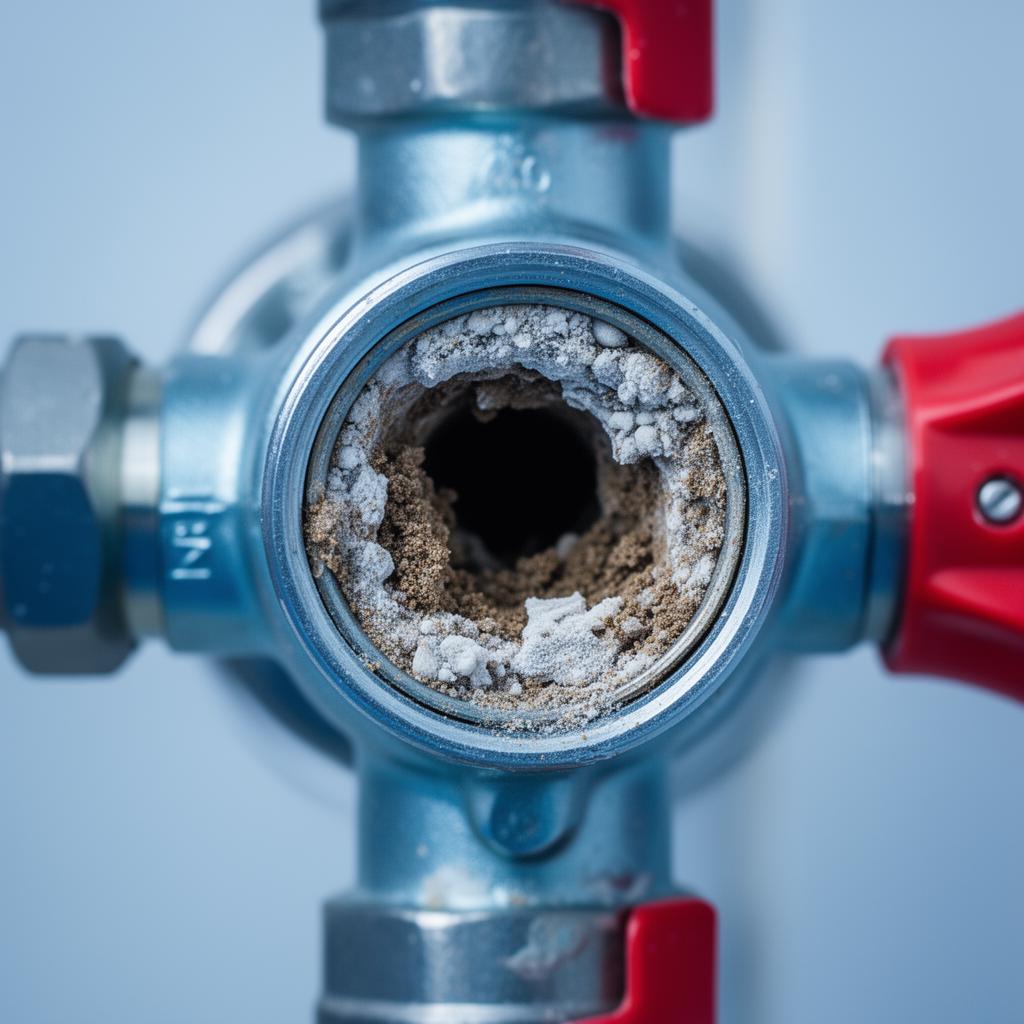
Mineral scale and sediment build-up visible inside a hot water system valve — a common sign that flushing is overdue.
Step-by-Step: How to Flush a Hot Water System
Follow these steps carefully. This process applies to standard electric and gas storage tank systems. For solar and heat pump systems, see the system-specific notes below.
⚠️ Safety First
Hot water stored at 60°C or above can cause severe scalding burns within seconds. Always turn off power and allow the water to cool before attempting to drain the tank. Wear closed-toe shoes and keep children and pets away from the drainage area.
Step 1: Turn Off the Power Supply
Electric systems: Switch off the dedicated circuit breaker at the switchboard. It's usually labelled "HWS" or "Hot Water." Gas systems: Turn the gas control valve to "pilot" or "off." Solar systems: Cover the collector panels with a blanket or tarp and switch off the electric booster at the switchboard.
Step 2: Allow the Water to Cool
Wait at least 2 hours after turning off the power, or run hot water taps inside the house for 15–20 minutes to draw off the hottest water. Water stored at standard thermostat settings of 60–65°C is dangerously hot. Never drain water directly onto garden plants — even cooled tank water may contain sediment concentrations harmful to vegetation.
Step 3: Connect a Garden Hose
Locate the drain valve at the base of the tank — it typically looks like a brass or plastic tap fitting. Attach a standard garden hose and run it to a safe drainage point: a gutter drain, stormwater drain, or onto a gravel area. The hose must run downhill from the tank for gravity to work. If your tank is ground-mounted, you may need a short hose or bucket.
Step 4: Close the Cold Water Inlet Valve
Turn off the cold water supply valve at the top of the tank. This is usually a blue-handled gate valve or ball valve on the pipe entering the top of the tank. Closing this prevents fresh water from continuously entering while you're trying to drain.
Step 5: Open the Drain Valve and a Hot Tap
Open the drain valve at the base of the tank. Then go inside and open one hot water tap (a laundry or bathroom tap works well). This breaks the vacuum inside the tank and allows air in, dramatically speeding up drainage. A 250-litre tank typically takes 20–40 minutes to drain fully.
Step 6: Flush Until the Water Runs Clear
Once the tank is empty, briefly open the cold water inlet for 3–5 minutes. This sends a surge of fresh water through the tank, agitating and flushing remaining sediment out through the drain hose. Watch the water colour — it will start brown or murky and gradually clear. Repeat this flush cycle 2–3 times until the water exiting the hose runs consistently clear.
Step 7: Close the Drain and Refill the Tank
Close the drain valve firmly. Disconnect the garden hose. Open the cold water inlet valve fully to begin refilling the tank. Keep the hot tap inside the house open — when water flows steadily from that tap without air sputtering, the tank is full. Close the tap.
Step 8: Restore Power and Monitor
Critical: Only restore power after the tank is completely full. For electric systems, energising an empty or partially filled tank will burn out the heating element — an expensive mistake. Check for leaks around the drain valve. The system should reach full temperature within 1–2 hours for gas or 3–4 hours for electric systems.
Pro Tip: Combine With Anode Inspection
Since the tank is already drained, this is the perfect time to have the sacrificial anode rod inspected. A single visit covering both tasks saves on labour costs and maximises your system's protection.
Flushing Different Hot Water System Types
While the basic flush process applies to all storage tanks, each system type has specific considerations that affect how you approach the job.
Electric Storage Systems
Electric storage systems are the most straightforward to flush. The key safety concern is ensuring the power is completely isolated at the switchboard — not just at a wall switch, but at the circuit breaker. After refilling, confirm the tank is fully pressurised and water flows from the hot tap before restoring power. Running an electric element dry, even briefly, will destroy it. Replacement elements cost $200–$400 installed.
Gas Storage Systems
Gas storage systems follow the same drain-and-flush process, but you must turn the gas control to "pilot" or "off" before starting. After refilling, you'll need to relight the pilot light — consult your system's manual for the specific procedure, as it varies between brands. If you have a pilot light that won't stay lit, the flush may have disturbed debris near the thermocouple. In NSW, any work on gas fittings must be performed by a licensed gasfitter under the Plumbing and Drainage Act 2011.
Solar Hot Water Systems
Solar hot water tanks require extra caution. Before draining, cover the roof-mounted collector panels with a tarp or blanket to prevent them from overheating without water circulation (a condition called "stagnation"). Switch off the electric or gas booster element. After refilling, remove the panel covers and restore the booster. We recommend professional assistance for solar systems due to the added complexity.
Heat Pump Systems
Heat pump hot water systems have a storage tank that can be flushed using the standard process. However, heat pumps also have a refrigerant circuit and compressor that should not be tampered with. Isolate the heat pump unit at the circuit breaker, flush the tank, refill completely, then restore power. Some premium brands like Stiebel Eltron and Rheem recommend annual professional servicing that includes a flush.
Instantaneous (Tankless) Systems
Instantaneous systems don't have a tank to drain, but their heat exchangers still accumulate mineral scale — particularly in hard water areas. Descaling requires circulating a food-grade descaling solution through the heat exchanger using a pump kit. This is a job for a licensed plumber with the correct equipment. Most manufacturers recommend descaling every 12–24 months, as per the National Construction Code Volume Three maintenance guidelines.
Professional Flushing Costs in Australia
While a basic flush is a feasible DIY task, many homeowners prefer to have a licensed plumber perform the work — especially if the drain valve is old or the system hasn't been flushed in years. Here's what to expect in terms of pricing across our service regions:
| Service | DIY Cost | Professional Cost |
|---|---|---|
| Basic tank flush (drain & refill) | $0 (garden hose only) | $150–$250 |
| Flush + anode rod inspection | N/A | $200–$350 |
| Flush + anode replacement | N/A | $300–$500 |
| Full maintenance service (flush + anode + TPR valve + element check) | N/A | $350–$550 |
| Instantaneous system descale | N/A | $250–$400 |
| Drain valve replacement (if seized) | N/A | $120–$220 |
When you compare these maintenance costs to the price of a full hot water system replacement — typically $2,000–$4,500 installed — regular flushing is one of the most cost-effective ways to protect your investment. It's also worth checking whether your system warranty requires regular maintenance including flushing.
Why Autumn Is the Best Time to Flush
March and April represent the ideal window for hot water system maintenance in Australia, and here's why:
- Pre-winter preparation: Your system will be working at peak demand through June, July, and August. Flushing now removes the sediment layer before winter's heavy workload begins, ensuring maximum efficiency when you need it most.
- Post-summer sediment: Summer's higher water temperatures accelerate mineral precipitation. After three months of peak heat and heavy usage, autumn is when the greatest sediment accumulation has occurred.
- Comfortable outdoor work: Draining a hot water system is an outdoor job. Autumn's mild temperatures in Sydney and the Central Coast (18–25°C) make it far more pleasant than working in summer heat or winter cold.
- Plumber availability: Winter is peak season for emergency hot water repairs. Booking a scheduled maintenance flush in autumn means shorter wait times and more flexible appointment options.
- Energy savings start immediately: A clean tank heading into winter could save $50–$100 on energy costs over the cooler months, as the system no longer fights through a sediment layer to heat your water. Explore energy efficiency ratings to understand how efficiency impacts costs.
Frequently Asked Questions
How long does it take to flush a hot water system?
A basic drain-and-flush takes approximately 30–60 minutes for most residential storage tanks. This includes time to turn off the power, connect a hose, drain the tank, flush with fresh water until it runs clear, refill, and restore power. A professional deep flush with sediment agitation may take 60–90 minutes.
Can I flush my hot water system myself?
A basic drain flush can be performed by most homeowners as a DIY task, provided you follow safety precautions — particularly turning off power before draining and allowing the water to cool first. However, if the drain valve is seized, corroded, or you're uncomfortable working near plumbing fittings, it's best to call a licensed plumber. In NSW, any work on gas connections must be performed by a licensed tradesperson.
How much does a professional hot water flush cost in Australia?
A professional hot water tank flush typically costs between $150 and $300 in Australia, depending on your location and the condition of the tank. This usually includes a system health check, sediment flush, TPR valve test, and anode rod inspection. Many plumbers offer this as part of a maintenance package, which can reduce the individual cost.
What happens if you never flush your hot water system?
Sediment accumulates at the base of the tank over time, acting as an insulating layer between the heating element and the water. This forces the system to work harder, increasing energy consumption by up to 25%. Eventually, the sediment causes overheating of the tank floor, accelerating corrosion, creating rumbling noises, and potentially leading to premature tank failure — turning a simple $200 maintenance job into a $2,500–$4,500 replacement.
Do instantaneous (tankless) hot water systems need flushing?
Yes, though the process differs. Instantaneous systems don't store water, but mineral scale can build up inside the heat exchanger, particularly in hard water areas like parts of Sydney's west and the Central Coast. Manufacturers such as Rinnai and Rheem recommend descaling the heat exchanger every 12–24 months. This typically requires a licensed plumber with specialised flushing equipment.
Keep Your Hot Water System Running at Peak Efficiency
Whether you need a professional flush, a full maintenance service, or advice on whether your system is due for replacement, our licensed plumbers are ready to help across Sydney, the Central Coast, and the Hunter region.