
Hot Water Anode Rod Replacement: When, Why & How Much It Costs
The single most overlooked component in your hot water system could be silently destroying your tank from the inside. Here's everything Australian homeowners need to know about anode rods.

If you own a storage hot water system — whether it's electric, gas, solar, or heat pump — there's a hidden component inside your tank that's quietly sacrificing itself to keep your system alive. It's called a sacrificial anode rod, and it's one of the most important yet least understood parts of your hot water system.
As we enter autumn 2026 and Australian households begin relying more heavily on their hot water as cooler mornings arrive, now is the ideal time to inspect this critical component. A neglected anode rod is the number one cause of premature tank failure — and the difference between a $200 maintenance job and a $3,500 emergency replacement. This comprehensive guide covers exactly what an anode rod does, how to tell when it needs replacing, the different types available, costs across Australia, and why this autumn is the perfect time to act.
What Is a Sacrificial Anode Rod?
A sacrificial anode rod is a metal rod — typically made of magnesium, aluminium, or aluminium-zinc alloy — that sits inside your hot water storage tank. Its sole purpose is to corrode instead of your tank. This process is called cathodic protection, and it's the same principle used to protect ships, bridges, and underground pipelines from rust.
Here's the science in simple terms: water naturally contains dissolved minerals and oxygen that attack metal surfaces. Your hot water tank is made of steel, which is highly susceptible to rust when exposed to heated water. The anode rod is made of a metal that's more "reactive" than steel — meaning the corrosive elements in the water attack the anode rod first, leaving your tank walls protected.
The rod is typically 800mm to 1,200mm long and 20–25mm in diameter when new. It's threaded into the top of the tank and hangs vertically inside the cylinder. Over time, the rod dissolves — sometimes completely — and once it's gone, your tank becomes the next target for corrosion.
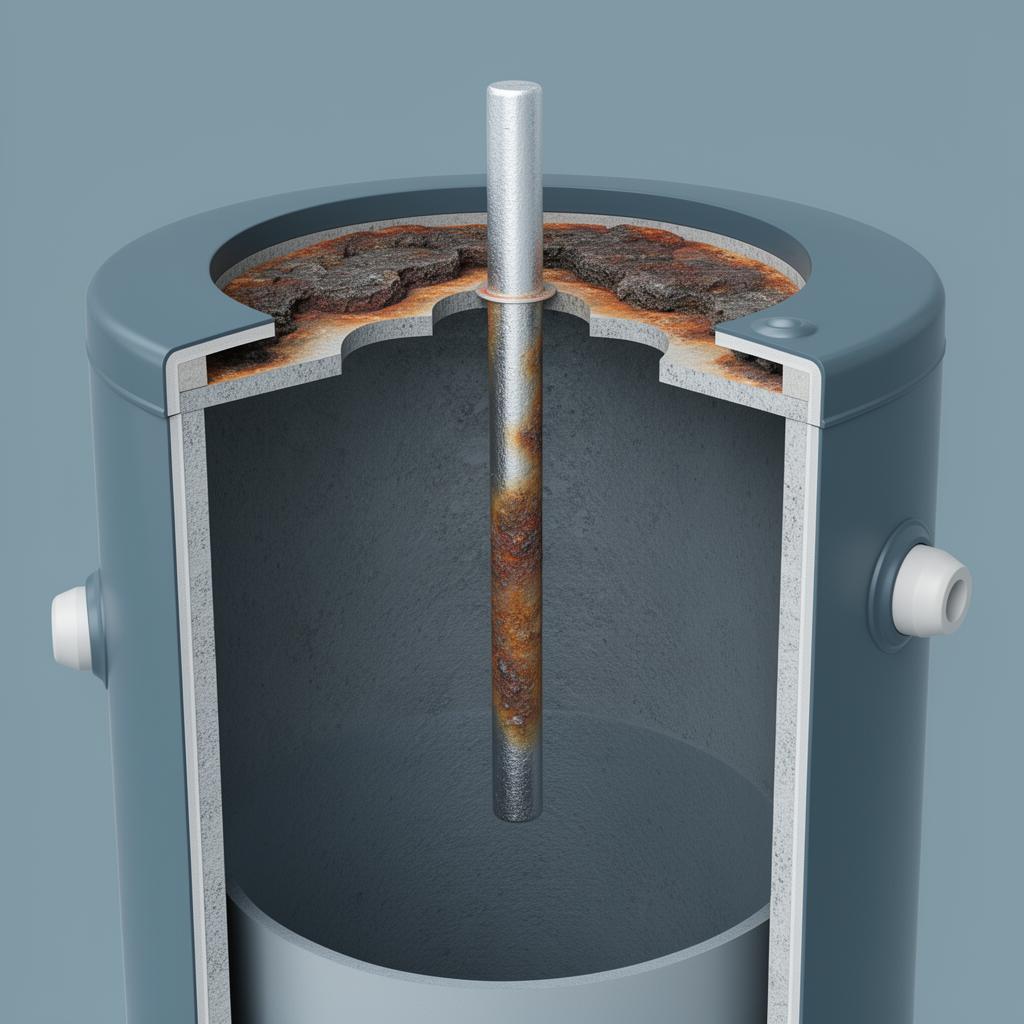
Cross-section of a storage hot water tank showing the anode rod providing cathodic protection to the steel lining.
Why Your Anode Rod Matters More Than You Think
The anode rod is the single most cost-effective component protecting your investment. Consider these facts:
- A new anode rod costs $40–$120 for the part itself — a fraction of a new tank
- Professional replacement costs $150–$350 installed, including inspection and flushing
- A new storage hot water system costs $1,800–$4,500 installed — 10–20× the cost of an anode replacement
- Regular anode replacement can extend tank life by 5–10 years beyond the expected lifespan
According to the U.S. Department of Energy (whose guidelines align with Australian Standards), regular anode rod maintenance is one of the top three actions homeowners can take to maximise hot water system longevity. Australia's WELS (Water Efficiency Labelling and Standards) scheme also emphasises the importance of maintaining all hot water components for optimal efficiency.
Warranty Warning
Most major Australian hot water manufacturers — including Rheem, Rinnai, Dux, and Thermann — explicitly state in their warranty terms that failure to maintain the anode rod can void your tank warranty. Read our complete warranty guide for details.
Signs Your Anode Rod Needs Replacing
Since the anode rod sits inside your sealed tank, you can't visually inspect it without removing it. However, there are several telltale signs that your rod is depleted or failing. If you notice any of the following, it's time to book an inspection with a licensed plumber:
Visible Warning Signs
- Rusty or discoloured hot water — Brown, orange, or reddish tints in your hot water (but not cold) indicate internal tank corrosion has begun
- Metallic taste or smell — A noticeable metallic or sulphur ("rotten egg") smell from hot water taps suggests the anode has deteriorated
- Sediment in hot water — Small flakes or particles coming from the tap may be corroded anode material or rust from exposed tank walls
- Popping or rumbling noises — Excessive sediment build-up from anode deterioration causes these sounds during heating cycles
Time-Based Indicators
- System is 3–5 years old and the anode has never been inspected
- You live in a hard water area — The Central Coast and parts of Sydney have notoriously hard water that accelerates anode consumption
- Previous anode rod was heavily corroded — If the last replacement showed significant deterioration, shorten your inspection interval
Types of Anode Rods Explained
Not all anode rods are the same. The type you need depends on your water quality, hot water system brand, and local conditions. Here's a breakdown of the three main types available in Australia:
| Feature | Magnesium | Aluminium-Zinc | Powered (Impressed Current) |
|---|---|---|---|
| Best For | Soft water areas | Hard water areas | All water types |
| Lifespan | 3–5 years | 4–6 years | 15–20 years |
| Cost (Part Only) | $40–$80 | $50–$100 | $200–$500 |
| Odour Control | Can cause sulphur smell in some water | Excellent — reduces rotten egg odour | Excellent — no chemical reaction |
| Maintenance | Replace every 3–5 years | Replace every 4–6 years | Minimal — check annually |
| Protection Level | Strong | Strong | Superior |
Magnesium Anode Rods
The most common type found in Australian hot water systems. Magnesium rods provide excellent protection in soft to moderately hard water. They're the default rod installed by most manufacturers including Rheem and Dux. However, in water with high sulphate content, magnesium can react with bacteria to produce hydrogen sulphide — the unpleasant "rotten egg" smell some homeowners notice.
Aluminium-Zinc Anode Rods
Increasingly popular across NSW, aluminium-zinc rods are the preferred choice for hard water areas. They last longer than magnesium rods in mineral-rich water and effectively eliminate sulphur odours. Most plumbers on the Central Coast and in western Sydney now recommend these as the standard replacement option.
Powered (Impressed Current) Anode Rods
These electronic anodes use a small electrical current to provide cathodic protection without physically deteriorating. While significantly more expensive upfront ($200–$500), they can last the entire life of the tank and never need replacement. They're an excellent long-term investment for homeowners who want a "set and forget" solution, particularly on premium systems. Some Stiebel Eltron and high-end Rheem models come with powered anodes as standard.
The Replacement Process: DIY vs Professional
While anode rod replacement is conceptually straightforward, there are important reasons most Australian homeowners choose to hire a licensed plumber for this job.
What Professional Replacement Involves
A qualified plumber will typically follow these steps during an anode rod service:
- Isolate the system — Turn off power/gas and close the cold water inlet valve
- Release pressure — Test the TPR valve and open a hot tap to depressurise
- Partially drain the tank — Remove 10–15 litres to lower the water level below the anode fitting
- Remove the old anode — Using a 1-1/16 inch socket with a breaker bar (these can be extremely tight)
- Inspect the tank interior — Check for signs of internal corrosion while the fitting is open
- Install the new rod — Apply thread tape, insert the new anode, and torque to specification
- Flush and refill — Clear sediment, refill the tank completely, then restore power/gas
NSW Licensing Requirements
Under NSW Fair Trading regulations, any plumbing work that involves connecting or disconnecting water supply lines requires a licensed plumber. While removing an anode rod from the top of a tank is a grey area, if any complications arise (such as a stripped fitting or discovered leak), only a licensed professional can legally perform the repair. For peace of mind and warranty protection, professional service is always recommended.
Why DIY Can Be Risky
- Ceiling clearance issues — Many Australian hot water tanks sit in tight spaces. A full-length anode rod (900mm+) needs vertical clearance to remove and install. Plumbers carry flexible or segmented rods for tight installations
- Seized fittings — After years of heat cycling, the anode fitting can be extremely difficult to remove without the right tools and technique. Over-torquing can crack the tank fitting — a catastrophic and expensive failure
- Wrong rod type — Installing the incorrect anode material for your water conditions can actually accelerate corrosion or cause water quality issues
- Scald risk — Working with a pressurised hot water system carries a genuine scalding risk if not properly depressurised
Anode Rod Replacement Costs in Australia (2026)
Costs vary based on the type of rod, accessibility of your system, and whether the plumber performs additional maintenance during the visit. Here's what Australian homeowners can expect to pay in 2026:
| Service | Cost Range (AUD) | Includes |
|---|---|---|
| Anode rod only (DIY) | $40–$120 | Part only — magnesium or aluminium-zinc |
| Professional replacement | $150–$350 | Labour, rod, inspection, basic flush |
| Full service + anode | $250–$450 | Anode, TPR valve test, thermostat check, full tank flush, inspection report |
| Powered anode upgrade | $400–$700 | Impressed current anode, installation, wiring |
When you compare these costs to the price of a full hot water system replacement ($1,800–$4,500+), anode rod maintenance delivers one of the best returns on investment in home maintenance. A system that might last 8–10 years without anode servicing could comfortably reach 15–20 years with regular replacements.
For the best value, ask your plumber to combine the anode rod replacement with a full system service. Many plumbers — including our team at Infinity Hot Water — offer bundled maintenance packages that include the anode check as standard.
Why Autumn Is the Best Time to Check Your Anode Rod
March and April represent the ideal window for hot water system maintenance across NSW, and there are several compelling reasons why autumn 2026 is the perfect time to act:
- Post-summer recovery — Your system has been working through Australia's demanding summer, and components may be showing early fatigue. Catching issues now prevents emergency breakdowns in winter
- Pre-winter preparation — Hot water demand increases significantly in the cooler months. A failing anode rod puts extra stress on a system that's already working harder. Our winter preparation checklist includes anode inspection as a key step
- Plumber availability — Autumn is traditionally a quieter period for plumbers between the summer emergency rush and winter breakdown season. You'll typically get faster bookings and more flexible scheduling
- Comfortable working conditions — Mild autumn temperatures make it easier (and safer) for plumbers to work on outdoor and exposed hot water systems compared to extreme summer heat
- EOFY planning — If your anode inspection reveals the system needs upgrading rather than repairing, you still have time to take advantage of NSW rebates and incentives before 30 June 2026
Brand-Specific Anode Rod Information
Each hot water system manufacturer has specific anode rod requirements. Using the wrong type or size can reduce protection and may void your warranty. Here's what you need to know about Australia's leading hot water brands:
Rheem
Rheem Australia recommends anode inspection every 5 years for standard models and every 3 years in hard water areas. Most Rheem storage tanks use magnesium anode rods. Their premium Stellar range features longer anode rods for extended protection. Rheem explicitly states in their warranty documentation that anode rod maintenance is the owner's responsibility and failure to maintain it may void the cylinder warranty.
Rinnai
Rinnai storage tanks typically use magnesium anode rods and recommend inspection every 3–5 years. Note that Rinnai's continuous flow (tankless) systems do not have anode rods — the anode is only relevant for their storage range. If you're considering a switch, read our guide on switching from gas to heat pump.
Dux
Dux hot water systems use either magnesium or aluminium anode rods depending on the model. Their Prodigy and Proflo ranges include clearly accessible anode fittings designed for easier servicing. Dux recommends professional inspection every 5 years as a minimum.
Stiebel Eltron
The German-engineered Stiebel Eltron range features powered (impressed current) anodes on many of their premium models. This means the anode never needs replacement — it's one of the key advantages of their higher-end systems. Their heat pump models are covered in our energy efficiency ratings guide.
Pro Tip: Keep Records
Always ask your plumber for a written record of the anode rod replacement, including the date, rod type, and brand. This documentation is essential for warranty claims and helps track your maintenance schedule. At Infinity Hot Water, we provide a detailed service report with every maintenance visit.
Frequently Asked Questions
How often should I replace the anode rod in my hot water system?
Most manufacturers recommend inspecting the anode rod every 3–5 years. In areas with hard water or high mineral content (common across parts of NSW, including the Central Coast), the rod may need replacement as frequently as every 2–3 years. Systems used heavily or storing water above 65°C will also degrade the anode faster.
What happens if I don't replace the anode rod?
Once the sacrificial anode rod is fully consumed, the tank's steel lining becomes exposed to corrosion. Rust will attack the tank walls, leading to discoloured water, metallic taste, pinhole leaks, and eventually complete tank failure. A $150–$350 anode replacement can prevent a $2,000–$4,000 full system replacement.
Can I replace the anode rod myself?
While technically possible for experienced DIYers, anode rod replacement involves draining the tank, using specialised tools (typically a 1-1/16 inch socket), and ensuring the correct rod type and size. In NSW, any work involving plumbing connections legally requires a licensed plumber. Incorrect installation can void your warranty and cause leaks.
What type of anode rod is best for hard water areas?
Aluminium-zinc anode rods perform best in hard water areas. They resist calcium and mineral build-up more effectively than magnesium rods and also reduce the 'rotten egg' smell that can occur in water with high sulphate content. For the Central Coast and parts of Sydney with harder water, aluminium-zinc is generally the recommended choice.
Does replacing the anode rod void my hot water system warranty?
No — in fact, many manufacturers require regular anode rod inspection and replacement as a condition of maintaining warranty coverage. Failing to replace a depleted anode rod is one of the most common reasons warranty claims are denied. Always keep records of anode rod replacements to support any future warranty claim.
Protect Your Hot Water Investment This Autumn
Don't wait until your tank fails to discover the anode rod was the problem. Our licensed plumbers service all major brands across Sydney, the Central Coast, and the Hunter region. Book your autumn anode rod inspection today.