
Why Does My Hot Water Run Out So Fast? 8 Common Causes & Solutions
Complete guide for Sydney, Central Coast & NSW homeowners

There's nothing more frustrating than stepping into what you expect to be a hot, relaxing shower—only to have the water turn icy cold after just a few minutes. For thousands of Australian homeowners, running out of hot water too quickly is a daily frustration that disrupts morning routines, creates family conflicts, and signals underlying problems with your hot water system.
If your hot water seems to disappear faster than it should, you're not imagining it. Whether your hot water runs out after one shower, lasts only 5 minutes, or seems to have gotten worse over time, there are specific, identifiable causes behind the problem—and proven solutions that can restore your hot water supply without necessarily replacing your entire system.
The Good News
Most cases of hot water running out too fast can be diagnosed and fixed for $150-$600, far less than the $1,500-$5,000 cost of a full system replacement. Understanding the root cause is the first step toward getting your hot water back to normal.
In this comprehensive 2026 guide, we'll walk you through the 8 most common reasons Australian hot water systems run out of hot water too quickly, how to diagnose each one, and exactly what solutions work—including DIY fixes and when to call a licensed professional. For more warning signs your hot water system needs repair, check out our detailed guide.
Understanding "Normal" vs "Running Out Too Fast"
Before diagnosing problems, it's important to understand what constitutes "normal" hot water capacity for your system type and household size. For detailed sizing calculations, see our comprehensive hot water system sizing guide.
Expected Hot Water Duration by System Type
| System Type | Household Size | Tank Size | Expected Duration |
|---|---|---|---|
| Storage Tank Systems (Electric, Gas, Heat Pump) | 1-2 people | 125L | 1-2 showers (10-15 minutes total) |
| 2-3 people | 160L | 2 showers (15-20 minutes total) | |
| 3-4 people | 250L | 3-4 showers (25-30 minutes total) | |
| 4-6 people | 315L | 4-5 showers (35-40 minutes total) | |
| Continuous Flow Systems (Gas Instantaneous) | 16L/min system | 1 shower OR 1 shower + 1 tap simultaneously | |
| 20L/min system | 1-2 showers simultaneously | ||
| 26L/min system | 2-3 outlets simultaneously | ||
You're Running Out 'Too Fast' If:
- Hot water lasts less than 5 minutes in a single shower
- You suddenly get less hot water than before (with no usage changes)
- A second person can't shower within 30 minutes of the first
- Your tank size should be adequate but isn't performing as expected
- You experience lukewarm (not fully hot) water even at the start
The 8 Most Common Causes Your Hot Water Runs Out Too Fast
What It Is:
Over time, minerals from your water supply—particularly calcium and magnesium—settle at the bottom of your storage tank, forming a layer of sediment. This sediment displaces water volume, effectively reducing your tank's usable capacity. This is especially common in Central Coast hard water areas.
How It Causes Hot Water to Run Out:
A 250L tank with 50L of sediment buildup only holds 200L of usable hot water—reducing your capacity by 20%. In severe cases, sediment can occupy 30-40% of tank volume.
Signs It's Sediment:
- Popping, rumbling, or crackling sounds during heating - learn more about diagnosing popping and rumbling sounds
- Water takes longer to heat up
- Hot water gradually decreased over months/years
- Water may appear slightly discolored or gritty
- System is 3+ years old without ever being flushed
DIY Option (Electric Only)
- 1. Turn off power/gas and water supply
- 2. Connect a hose to the drain valve
- 3. Open hot water taps throughout house
- 4. Flush until water runs clear (15-30 min)
- 5. Restore supply and power
Professional Service
$180-$350 for complete flush and inspection
Prevention: Schedule annual tank flushing, especially in hard water areas.
What It Is:
The dip tube is a long plastic pipe inside your tank that directs incoming cold water to the bottom of the tank (where heating elements are located). This ensures cold water doesn't immediately mix with hot water at the top.
How It Causes Hot Water to Run Out:
When the dip tube breaks, cracks, or deteriorates, cold water enters at the top of the tank instead of the bottom. This cold water immediately mixes with your hot water supply, dramatically reducing the amount of truly hot water available.
Classic Sign
You get hot water for only 2-5 minutes, then it quickly turns lukewarm (not fully cold—just not hot enough).
Other Signs:
- Small white plastic particles in your water or faucet aerators
- Hot water turns lukewarm faster than usual
- Problem appeared suddenly rather than gradually
- Most common in systems 8-15 years old
The Solution:
DIY Difficulty: Moderate
Parts Cost: $15-$40
Professional Cost: $200-$400
When to Call Pro: Gas systems or uncomfortable with plumbing
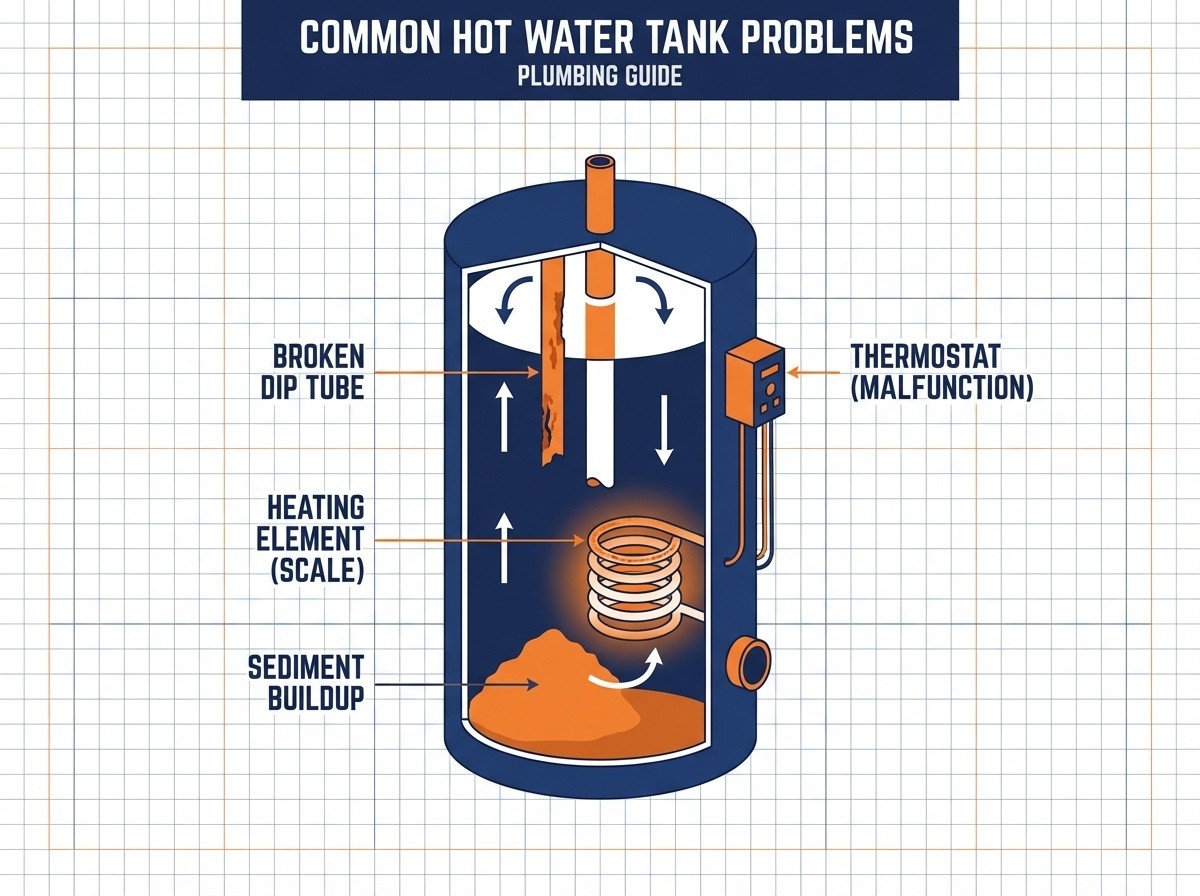
Common hot water tank problems that cause hot water to run out fast: sediment buildup, broken dip tube, heating element scale, and thermostat malfunction.
What It Is:
Electric hot water systems typically have two heating elements: an upper element (heats top portion) and a lower element (heats bottom portion). The lower element does most of the work.
How It Causes Hot Water to Run Out:
When the lower heating element fails, only the top portion of your tank gets heated. You might have 80L of hot water in a 250L tank—enough for one quick shower before running out.
Signs It's a Failed Element:
- Hot water lasts only 3-7 minutes (top of tank only)
- Problem appeared suddenly
- No unusual noises (unlike sediment issues)
- You may trip circuit breakers occasionally
Important Safety Warning
Working with heating elements involves electrical work. Unless you're a qualified electrician or experienced with electrical systems, this repair should be done by a licensed plumber.
Parts Cost: $25-$60 | Professional Cost: $280-$450
Prevention: Sediment accumulation causes elements to overheat and fail prematurely. Annual tank flushing extends element life.
What It Is:
Your thermostat controls the water temperature in your tank. According to Australian government hot water system guidelines, 60°C is recommended for storage tanks (hot enough to prevent Legionella bacteria growth, but not dangerously hot).
How It Causes Hot Water to Run Out:
If your thermostat is set too low (45-50°C), your "hot" water isn't hot enough. When you mix it at the tap/shower, you need more hot water and less cold water to reach a comfortable temperature—using up your supply much faster.
Important Temperature Guidelines
- 60°C = Recommended for storage tanks (bacteria prevention + efficiency)
- 50°C = Maximum for continuous flow systems (Australian standard)
- 45°C = Too low for storage systems (bacteria risk + runs out fast)
- 70°C+ = Too hot (scalding risk + excessive energy use)
Note: Homes with young children or elderly residents should have tempering valves installed to deliver 50°C water to taps while maintaining 60°C in the tank.
What It Is:
If your household has grown, usage patterns changed, or the system was undersized from installation, your tank simply doesn't have enough capacity for your needs. Use our sizing calculator to calculate the right tank size for your family.
Common Scenarios:
- Family expanded (new baby, teenager, moved-in relatives)
- Working from home increased (more showers throughout the day)
- Inherited undersized system (previous owner had different needs)
- 125L-160L tank trying to serve 4+ people
Upgrade Options:
Larger Storage Tank
Replace 160L with 250L tank
$1,800-$3,200 installed
Best for off-peak electric rates
Gas Continuous Flow
Unlimited hot water supply
$2,200-$3,800 installed
Best for natural gas homes
Heat Pump
250-315L capacity, ultra-efficient
$3,500-$5,500 installed
To compare running costs between electric off-peak and heat pump systems, see our detailed analysis.
What It Is:
Even a properly sized system can run out if multiple high-demand appliances run simultaneously—essentially asking your system for more hot water than it can deliver at once.
Common Culprits:
- • Someone showering while dishwasher or washing machine runs hot cycles
- • Multiple people showering at the same time
- • Filling a large bathtub while other hot water is being used
- • Teenagers with 20-minute showers back-to-back
Behavioral Changes (Free)
- • Stagger showers by 20-30 minutes
- • Run appliances overnight or off-peak
- • Set 6-7 minute shower timers
Equipment Upgrades
- • Water-saving shower heads: $30-$120
- • Timer for hot water system: $80-$200
- • Upgrade to larger/continuous flow system
What It Is:
As hot water systems age, overall efficiency declines. Multiple minor issues compound: slight sediment buildup, element efficiency loss, insulation deterioration, minor tank corrosion, and thermostat drift. Learn more about typical hot water system lifespan.
Typical Hot Water System Lifespan:
8-12
Electric Storage
10-12
Gas Storage
15-20
Gas Instantaneous
10-15
Heat Pump
15-20
Solar
Repair vs Replace Decision
- Under 6 years: Almost always worth repairing
- 6-9 years: Compare repair cost to remaining useful life
- 10+ years: Strong consideration for replacement
- Rule of thumb: If repair cost exceeds 50% of replacement cost → replace
Replacement Timing Tip: Don't wait for complete failure. Plan replacements during shoulder seasons (autumn/spring) when plumbers are less busy. Check our guide to the best hot water systems for Australian homes.
What It Is:
Tempering valves (required in NSW since 1990 for new installations) mix cold water with hot water to deliver 50°C water to taps—preventing scalding while maintaining 60°C in the tank.
How It Causes Hot Water to Run Out:
A faulty tempering valve that's set incorrectly or malfunctioning can deliver water that's too cool, requiring you to use far more "hot" water (and less cold) at your taps to reach comfortable temperatures. This rapidly depletes your supply.
Signs It's a Mixing/Tempering Valve Issue:
- Water temperature at taps is inconsistent
- Some taps deliver hotter water than others
- Hot water at system outlet is 60°C but taps deliver only 40-45°C
Professional Service Required:
Tempering valves must be installed and serviced by licensed plumbers. DIY adjustment is not recommended and may violate NSW plumbing codes.
- • Testing and adjustment: $120-$200
- • Tempering valve replacement: $250-$450
- • Complete mixing valve inspection: $150-$280
How to Diagnose Your Specific Hot Water Problem
Follow this diagnostic flowchart to identify your most likely cause:
1Timing Test
Run hot water at a single tap/shower until it turns cold. Time how long you get genuinely hot water.
- <5 minutes: Likely broken dip tube, failed heating element, or severe sediment
- 5-10 minutes: Possibly undersized tank or moderate sediment buildup
- 10-15 minutes but used to last longer: Gradual issues (sediment, age, thermostat drift)
- Varies greatly day to day: Usage pattern issues or faulty thermostat
2Sound Check
Listen when your hot water system is heating.
- Popping, crackling, rumbling: Sediment buildup (most likely)
- Hissing or sizzling: Possible leak or pressure issue
- No unusual sounds: Dip tube, element, or thermostat issue
3Water Quality Check
Check water color and particles.
- Small white plastic bits: Broken dip tube
- Rust-colored water: Tank corrosion (advanced age issue)
- Clear water: Most other causes
4Temperature Test
Run hot water, measure temperature at tap closest to heater.
- Below 50°C: Thermostat set too low or malfunctioning
- 50-55°C: Check tempering valve settings
- 55-60°C+: Thermostat working correctly; look elsewhere
Quick Reference Diagnostic Table
| Symptom | Most Likely Cause | Typical Fix Cost |
|---|---|---|
| Hot for 2-5 min then lukewarm | Broken dip tube | $200-$400 |
| Popping/rumbling sounds | Sediment buildup | $180-$350 |
| Hot for 5-7 min only | Failed lower element | $280-$450 |
| Water not hot enough | Low thermostat setting | $0-$350 |
| Always been inadequate | Undersized system | $1,800-$5,500 |
| Plastic bits in water | Broken dip tube | $200-$400 |
| Gradual decline over years | Age deterioration | $1,500-$5,500 |
| Inconsistent temperature | Mixing valve issue | $250-$450 |
When to DIY vs. When to Call a Professional
Safe DIY Repairs
- • Adjusting thermostat settings (external dial)
- • Flushing sediment from electric storage tank
- • Testing TPR (temperature/pressure relief) valve
- • Installing water-saving shower heads
- • Cleaning faucet aerators
- • Basic visual inspections
Professional-Only Tasks
- • Any gas system work (legally required in NSW)
- • Electrical element replacement
- • Thermostat replacement (electrical connections)
- • Any work on heat pumps or solar systems
- • Tempering valve installation or replacement
- • Tank replacement or new system installation
Why Professional Installation Matters
- Legal Compliance: NSW requires licensed plumbers for most hot water work
- Warranty Protection: DIY repairs often void manufacturer warranties
- Safety: Hot water systems operate under pressure and high temperatures
- Code Compliance: Work must meet Australian plumbing standards
- Insurance: Damage from unlicensed work may not be covered under Australian Consumer Law protections
Average Central Coast Service Costs (2026)
| Standard callout + diagnosis | $120-$180 |
| Tank flush and sediment removal | $180-$350 |
| Heating element replacement | $280-$450 |
| Thermostat replacement | $180-$350 |
| Dip tube replacement | $200-$400 |
| Tempering valve replacement | $250-$450 |
| Complete system replacement | $1,500-$5,500 |
How to Prevent Hot Water Running Out: 7 Maintenance Tips
Regular maintenance can prevent most hot water problems before they start. Follow our maintenance guide and these seven essential tips:
1Annual Tank Flushing
Once per year (twice for hard water areas). Prevents sediment buildup. $180-$350 professionally or DIY for electric systems.
2Test TPR Valve Quarterly
Lift the temperature/pressure relief valve lever briefly. Water should flow freely and stop when released. Critical safety device.
3Check Anode Rod Every 3-5 Years
The sacrificial anode rod protects your tank from corrosion. Professional inspection: $200-$400. Extends tank life by 5-8 years.
4Adjust Thermostat Seasonally
Summer: Can lower to 55-58°C. Winter: Keep at 60°C. Never below 60°C for storage tanks (bacteria risk).
5Insulate Exposed Pipes
Hot water pipes lose heat in winter. Pipe insulation costs $20-$80 DIY. Reduces heat loss by 25-40%.
6Install Water Softener (Hard Water)
Central Coast has moderately hard water. Water softener costs $800-$2,000 installed. Prevents scale buildup in tank and pipes.
7Schedule Professional Inspection Every 2-3 Years
Comprehensive system check: $150-$250. Catches small problems before they become expensive. Recommended for systems 5+ years old.
Maintenance ROI
Every dollar spent on maintenance saves $5-$10 in avoided replacement and repair costs. Annual DIY maintenance costs $0-$50 in supplies, while annual professional maintenance runs $180-$350—compared to $1,500-$5,500 for premature replacement.
Frequently Asked Questions
Why does my hot water run out after one shower?
This typically indicates either a broken dip tube (mixing cold water with hot immediately), a failed lower heating element (heating only top portion of tank), or severe sediment buildup (reducing tank capacity by 40-50%). A 250L tank should provide 2-3 showers, so running out after one suggests you're only getting 80-100L of usable hot water. Professional diagnosis recommended.
How long should hot water last in a 250L tank?
A properly functioning 250L tank should provide approximately 3-4 standard showers (8-10 minutes each at typical flow rates). For a family of 4, this means everyone should get a hot shower if spaced 20-30 minutes apart for recovery. If you're getting significantly less, there's a problem requiring attention.
Why does hot water run out faster in winter?
Cold incoming water temperature requires more energy to heat. In summer, incoming water might be 20-25°C; in winter, it's 10-15°C. This means longer recovery times between uses and your system works harder to maintain temperature. Additionally, people tend to take longer, hotter showers in winter, increasing consumption. See our winter hot water system checklist for preparation tips.
Is it normal for a new hot water system to run out quickly?
No. A properly sized and functioning new system should provide adequate hot water for your household. If a new system runs out quickly, possible causes include: incorrect sizing (installer chose too small a system), installation issues (incorrect thermostat settings or faulty tempering valve), defective components (covered by warranty), or dramatically underestimated usage needs. Contact your installer immediately—this should be covered under installation warranty.
How much does it cost to fix a hot water system that runs out too fast?
Repair costs vary by cause: sediment flush ($180-$350), dip tube replacement ($200-$400), heating element replacement ($280-$450), thermostat replacement ($180-$350), tempering valve replacement ($250-$450). Most repairs fall in the $200-$450 range. If your system is 10+ years old and requires expensive repairs, replacement ($1,500-$5,500) may be more cost-effective long-term.
Why does my gas instantaneous system run out of hot water?
Continuous flow systems shouldn't "run out" but can deliver lukewarm water if: demand exceeds flow rate capacity (e.g., 2 showers on a 16L/min system), incoming water is very cold (winter), gas pressure is insufficient, burner needs cleaning, or heat exchanger has scale buildup. Check our gas instantaneous flow rate guide to ensure your system capacity matches your usage needs.
Conclusion: Get Your Hot Water Supply Back to Normal
Running out of hot water too fast is frustrating, disruptive, and—most importantly—fixable. Whether your issue is sediment buildup, a broken dip tube, failed heating element, or simply an undersized system, understanding the specific cause is the first step toward restoring reliable hot water to your home.
- Most hot water problems can be diagnosed through simple observation (sounds, timing, water quality)
- Sediment buildup is the single most common cause—and the most preventable through annual flushing
- Repairs typically cost $180-$450 and can extend system life by 3-5 years
- Systems 10+ years old with recurring issues are usually better candidates for replacement than repair
- Modern heat pumps offer 60-75% energy savings and qualify for up to $1,500 in NSW rebates
- Professional diagnosis costs $120-$180 but saves money by identifying the exact problem
Don't Let the Problem Get Worse
Ignoring hot water that runs out too fast isn't just inconvenient—it often indicates problems that worsen over time. Sediment continues accumulating, elements work harder and fail faster, and corrosion accelerates tank deterioration. What might be a $250 repair today could become a $3,500 emergency replacement in six months.
Why Choose Infinity Hot Water?
We've helped hundreds of Central Coast homeowners diagnose and solve hot water problems quickly and cost-effectively.
- Licensed, insured, and experienced with all system types
- Same-day service available across Sydney & Central Coast
- Upfront pricing—no hidden costs or surprises
- All work meets NSW plumbing codes and Australian Standards
- 12-month warranty on workmanship
- 24/7 emergency service available
- Expert advice on repair vs. replacement decisions
- Help accessing NSW hot water rebates (up to $1,500)
Service areas: Sydney, Newcastle, Central Coast including Gosford, Wyong, Tuggerah, Erina, Terrigal, The Entrance, Lake Macquarie, and surrounding suburbs.