
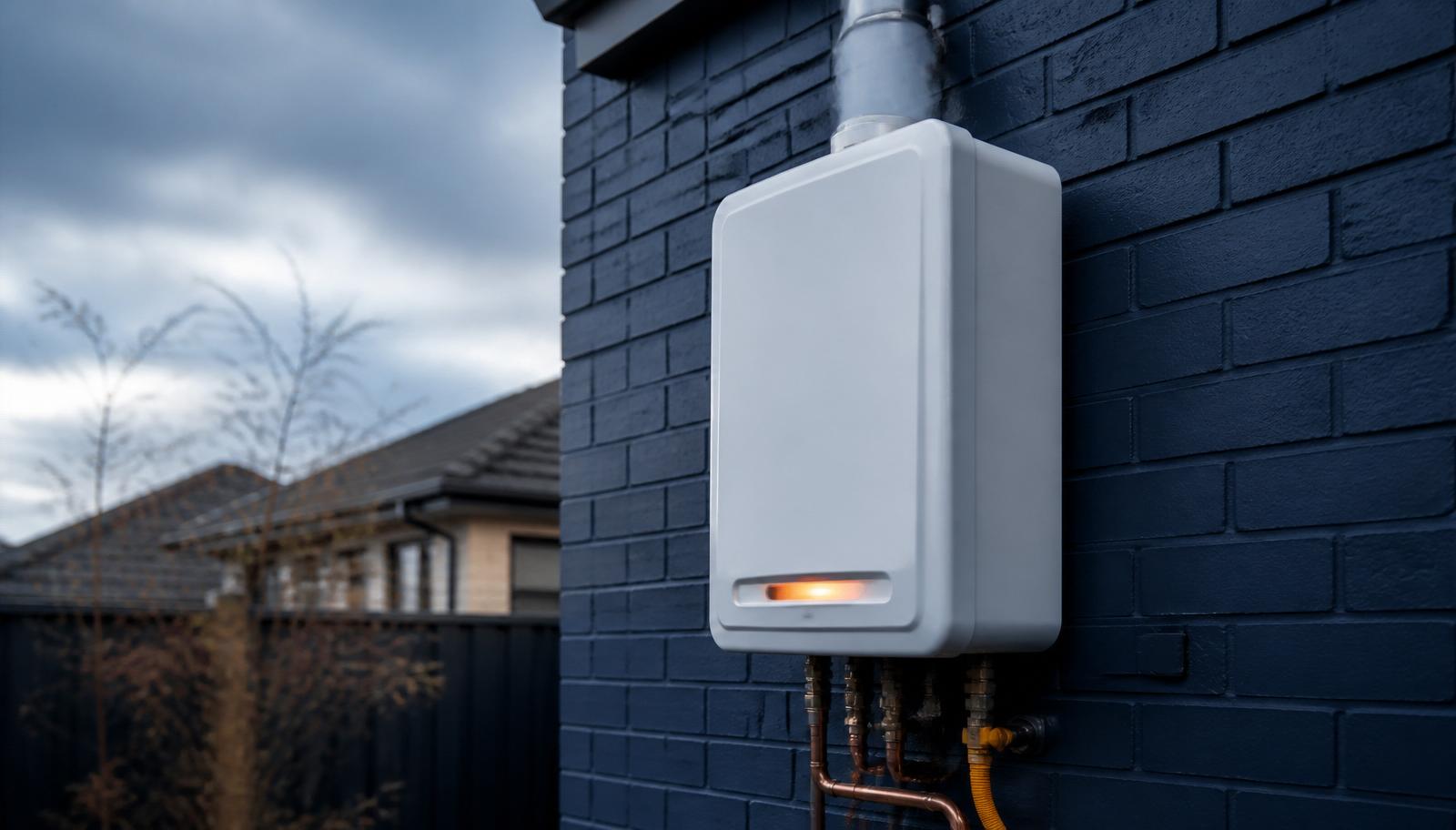
You are halfway through a shower on a 7 degree July morning in Chatswood or Terrigal. The water is finally warm, you close your eyes under the head, and a cold slap of water hits the back of your neck for four or five seconds. Then hot returns. If you own a gas continuous flow hot water unit anywhere in Sydney or on the Central Coast, that little shock has a name. It is the cold water sandwich, and this winter it is the single most common call our techs are taking.
The good news is that most of the time it is not a broken unit. It is a small piece of physics that gets much worse when winter mains temperatures drop below 15 degrees, which is exactly what has happened across the Sydney basin and the Central Coast this winter according to Bureau of Meteorology forecasts. The better news is that once you understand what is happening inside your pipes, you can fix it, or at least tame it, without ripping out your whole system.
What a Cold Water Sandwich Actually Is
Every continuous flow gas hot water unit works the same way. When you open a hot tap, water starts flowing through the unit, a flow sensor tells the burner to fire, and the flame heats the water as it passes through a heat exchanger. When you close the tap, the flame goes out. The unit does not store hot water. It only heats water while it is moving.
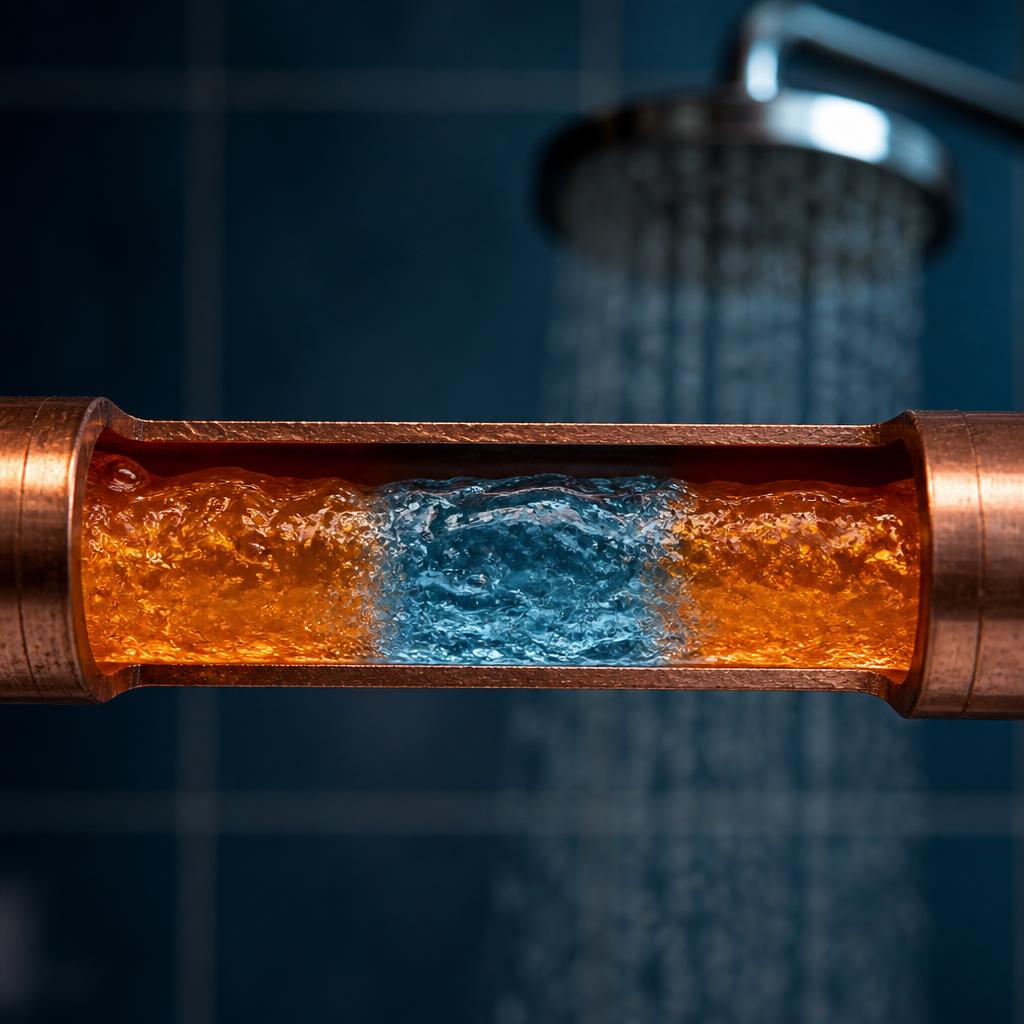
Now picture the pipe between the unit on your outside wall and the shower head in the bathroom. On a typical Sydney home that is anywhere from 6 to 15 metres of copper. When you close the tap for a moment to soap up, the water sitting in that copper pipe stops moving and starts cooling. In summer that cooling is small because the ambient temperature around the pipe is 22 degrees. In winter, with the pipe running through a cold subfloor or wall cavity, that same slug of water can drop from 50 degrees to 25 degrees in under a minute.
When you open the tap again, three things happen in sequence:
- The hot water still in the unit and just downstream of the burner reaches you first, so the first second feels hot.
- The cooled slug that sat in the pipe hits you next. This is the cold layer of the sandwich.
- The unit fires up, new hot water pushes the cold slug out, and normal hot flow resumes.
Two hot layers with a cold layer in the middle. A sandwich. The name has been used by manufacturers such as Rinnai and Rheem for years, and both list it as a normal characteristic of continuous flow units in their technical documentation. You can browse the manufacturer product ranges at Rinnai Australia and Rheem Australia.
Why This Winter Is So Much Worse
Three things are stacking up in July 2026 to make the sandwich feel brutal rather than mild.
Cold inlet water. Sydney Water and Central Coast Council mains are running at 12 to 14 degrees right now. In summer the same mains sit at 22 to 24 degrees. That 10 degree gap means the unit has to work harder to lift each litre to shower temperature, and the pipe run cools faster because the surrounding metal is colder.
Colder pipe surroundings. Overnight temperatures in Penrith, Camden and the Central Coast hinterland have been dropping into single digits. Uninsulated copper in a wall cavity or under a suspended floor sits close to that ambient. If you want the deep detail on this effect, our pipe insulation winter heat loss guide covers it in full.
Behavioural change. In winter people run hot taps in short bursts. Wash hands, off. Rinse a dish, off. Each pause reloads the pipe with a fresh cold slug, and the next person into the shower gets it. In summer the same house draws hot water in longer continuous runs, so the pipe never has time to cool.
Combined, these three factors can turn a 2 second lukewarm dip in summer into a 6 second cold shock in July. Same unit, same pipes, same house.
When It Is Normal and When It Is a Fault
A short cold dip after a brief tap pause is physics you cannot completely engineer away on a continuous flow system. But there is a clear line between normal behaviour and a genuine fault that needs a plumber. Use this as your rule of thumb.
Probably normal:
- Cold burst lasts 2 to 5 seconds.
- Water goes cool or lukewarm, not stone cold.
- Only happens after you have closed the tap for 10 seconds or more.
- Temperature settles back to normal within another 5 seconds and stays there.
Probably a fault:
- Cold burst lasts 8 seconds or more, or the water goes fully cold.
- Temperature keeps swinging while the tap runs steadily without you touching it.
- The unit clicks off and on repeatedly during a single shower.
- You hear popping, roaring or delayed ignition from the outdoor unit before the cold hits.
- An error code appears on the controller, such as Rinnai 11, 12 or 14, or a Rheem flashing red LED.
If any of those fault signs describe what is happening at your place, stop trying to solve it as a sandwich problem. It is likely a modulating gas valve, flow sensor, or ignition issue. Our full walkthrough of these fault modes lives in the hot water common faults guide, and the ignition-specific case is covered in the pilot light guide.
The Six Real-World Fixes, Ranked
These are the six approaches our team uses on Sydney and Central Coast homes, from cheapest to most involved. Pick the one that matches your situation and budget.
1. Set the Controller Temperature, Not the Tap
This costs nothing. If your unit has a wall controller, set it to 50 degrees for kitchens and laundries or the standard 50 degree tempered outlet for bathrooms, and then run the shower with the hot tap fully open. Do not blend cold at the mixer tap.
The reason this helps is that when you mix cold at the tap, you are pulling smaller volumes of hot through the unit, which makes the burner cycle more often, which creates more sandwich events. Full hot flow keeps the burner steady. The NSW tempering valve rules require bathroom outlets to be limited to 50 degrees anyway, so this is not a safety trade off.
2. Insulate the Hot Water Pipe Run
A 15 metre pipe run wrapped in 13 mm closed-cell foam holds heat roughly three times longer than bare copper. That turns a 4 second sandwich into a 1 second dip during typical shower pauses. Materials cost around 40 dollars for a domestic run. Fitting inside wall cavities is trickier and usually a plumber job. Full method in our pipe insulation guide.
3. Fit a Recirculation Loop or Point-of-Use Loop
A small pump keeps warm water constantly moving between the unit and your furthest hot outlet. When you open the tap, hot arrives instantly and there is no cold slug to push out. The trade off is a small ongoing electricity cost and a slightly higher gas bill because the unit fires more often to top up the loop. Best value on Coast homes with detached laundries or bathrooms at the far end of the house. Our deep dive is the hot water recirculation systems guide.
4. Add a Small Buffer Tank on the Outlet
A 15 to 25 litre insulated buffer tank fitted between the unit and the house hot line acts as a thermal battery. Short pauses draw from the tank while the unit reignites, so the sandwich is absorbed before it reaches the tap. Popular in the Hunter and Central Coast on units feeding two bathrooms. Installation is a half day and usually 900 to 1400 dollars fitted.
5. Upgrade to a Unit With Sandwich Prevention
Some newer continuous flow models keep a small internal reservoir warm between draws specifically to eliminate the sandwich. These carry names such as Rinnai Infinity Enviro with Preheat, or Rheem Metro Max with pre-warm. If your existing unit is over 8 years old, replacement with a sandwich-prevention model often makes more sense than adding external fixes.
Before you swap, weigh up the fuel choice. The NSW 2026 gas hot water ban means new gas installations are restricted in most new NSW homes from January 2027, so an electric heat pump may be the smarter long term move. Cost comparison in our Sydney hot water system cost guide.
6. Switch to a Storage or Heat Pump System
Storage tanks and heat pump systems do not have cold water sandwiches. They hold pre-heated water at temperature, so what leaves the tank is what arrives at your tap, minus any pipe cooling. If sandwich events are constant and your household is done with troubleshooting a 10 year old gas unit, a heat pump upgrade solves the problem and cuts running costs by 60 to 75 percent. Sizing and running cost logic in our heat pump versus gas cost comparison.
Sydney and Central Coast Homes Where the Sandwich Bites Hardest
Not every layout is equally vulnerable. From our own service calls this year, these are the situations where the sandwich complaint comes up most often.
- Post-war weatherboards in inner Sydney such as Marrickville, Rozelle and Balmain, where the unit is on an external kitchen wall and the bathroom is 10 metres away through an uninsulated subfloor.
- Split-level Central Coast homes in Terrigal, Kincumber and Green Point, where the unit is under the deck and the ensuite is upstairs at the far end of the house.
- Extended Federation homes in Chatswood, Roseville and Turramurra where a rear extension has doubled the hot pipe run without upgrading the unit.
- Granny flats on the Coast sharing a gas unit with the main dwelling, where dual demand causes constant burner cycling. Our granny flat hot water requirements guide covers when to fit a second unit.
- Apartments and units in the North Sydney corridor with common gas plant far from the bathroom. Different problem, same symptoms. See our apartments hot water guide.
What Not to Do
Every winter we see a handful of homeowners try the following, and every winter they make things worse. Do not do these.
- Do not turn the unit temperature above 60 degrees at the wall controller thinking it will overcome the cold slug. It will not, and it fails AS/NZS 3500.4:2021 compliance for tempered outlets, plus it raises the scald risk.
- Do not run the shower with the cold tap fully closed and the hot tap half open. Half flow triggers more burner cycling, which produces more sandwiches, not fewer.
- Do not remove the tempering valve. It is a legal requirement on all bathroom outlets and there is nothing to gain by bypassing it.
- Do not try to bleed air from the pipes. There is no air. The slug is cold water, not trapped air, and opening fittings will only introduce a leak.
- Do not have a well-meaning handyman rewire the flow sensor. If it is faulty it needs a licensed gas plumber under the National Construction Code and NSW Fair Trading licensing rules.
How We Diagnose Sandwich Complaints on Site
When a homeowner in Erina or Willoughby calls with a sandwich complaint, our tech runs the same 15 minute test before quoting a fix. If you want to check your own system first, this is how we do it.
- Put a bath thermometer or digital probe under the shower head.
- Run hot only, full flow, for 30 seconds. Record the steady temperature.
- Shut the tap for 15 seconds, then reopen at the same flow.
- Watch the reading. Note the minimum temperature and how long before it returns to the original figure.
- Repeat with a 45 second pause, then a 90 second pause.
A healthy unit and a well-insulated pipe run gives a minimum around 5 degrees below setpoint for 2 to 3 seconds. If your minimum is 15 degrees below setpoint or the recovery takes more than 8 seconds, you have a real problem worth fixing. Log the numbers before you call us. It saves a diagnostic hour on site.
The Cost of Ignoring the Problem
A cold shock every morning sounds like an annoyance, not a bill. It is both. Repeated burner cycling wears out flow sensors and modulating gas valves 30 to 40 percent faster than steady operation. A gas valve that should last 12 years fails at 8. On a Rinnai Infinity 26 that is a 400 to 600 dollar repair, or a full unit replacement if it fails outside warranty.
Cycling also burns more gas per litre delivered. Every ignition uses a small purge cycle that vents unburnt gas before the flame lights. Do that 40 extra times a day across a winter and the annual gas bill creeps up 8 to 12 percent for the same hot water output. Our running costs comparison guide has the maths.
The other cost is comfort. Homeowners who live with a bad sandwich for two or three winters usually end up replacing the unit anyway. Doing the fix in year one, whether that is insulation, a buffer tank or an early upgrade, almost always beats waiting.
Ready to Fix Your Cold Water Sandwich
If the shock at the back of your neck this morning was your third this week, it is time to stop guessing. Our licensed gas plumbers cover every suburb from the Inner West through the North Shore, out to the Hills, and across the full Central Coast from Woy Woy to Toukley. We diagnose sandwich complaints on a fixed one-hour call fee, and if a fix is needed we quote before we start.
Call Infinity Hot Water on 0420 102 207, or book a winter service online through the contact page. We keep after-hours slots free for genuine no-hot-water calls right through July and August, and we carry Rinnai and Rheem parts in the van so most sandwich fixes are done same day. For membership benefits and licensed status, our team is registered with the Master Plumbers Association.
You paid for a hot shower. Let us make sure that is what you get, all the way through.